
 Income support
PM-KISAN
Pradhan Mantri Kisan Samman Nidhi
₹6,000a year
₹6,000 a year, paid as three instalments of ₹2,000.
Read from PM-KISAN Operational Guidelines (revised 29.03.2020) · clause 10.1 · p. 10 · Our copy (PDF)
Private, free guide — not a government website. Apply only on the official portal.
Money paid straight into a farmer’s bank account.
Income support₹6,000 a year, paid as three instalments of ₹2,000.
 Income support
A pension of ₹3,000 a month for life from age 60, if you own up to 2 hectares, join between 18 and 40, and pay your monthly contribution until 60.
 Fisheries
If you are a full-time active fisher, BPL, aged 18–60 and in a fishers’ cooperative, you get ₹4,500 in the fishing ban/lean season (₹1,500 a month for 3 months): the government adds ₹3,000 to ₹1,500 you save.
 Income support
Join between 18 and 40, pay the fixed monthly amount until 60, and the government guarantees you a pension of ₹1,000 to ₹5,000 a month (your choice) for life, then the same to your spouse.
 Crops & seeds
₹1,560 per tonne of Grade ‘A’ paddy sold at a Direct Purchase Centre, on top of the purchase price.
Loans & interest helpThe state pays back all the interest on your bank loan of up to ₹50 lakh (after any central interest help), if you repay on time; the loan is collateral-free through a state-paid credit guarantee.
Income support₹4,000 a year (₹2,000 before Kharif and ₹2,000 before Rabi) for each rural small or marginal farm family, including sharecroppers.
Crops & seeds₹3,100 per quintal for paddy sold through the state procurement system — the MSP plus Odisha’s input assistance for the difference.
Crops & seedsPaddy sold to the state is paid at ₹3,100 a quintal in all, for up to 21 quintals an acre.
Income support₹10,000 a year if you have one acre or more of cultivable land; less than one acre gets a pro-rata share, but never below ₹4,000.
Income support₹3,000 a year for each farmer family, in addition to PM-KISAN.
 Crops & seeds
An extra ₹200 for every quintal of Kharif paddy a small or marginal farmer sells to the state at MSP.
Income support₹1,000 a month (₹12,000 a year) to one farmer per household aged 50 or above.
 Dairy & cattle
₹6,000 by DBT if you are selected and keep at least one crossbred cow, 10 adult female goats or one crossbred sow.
Income support₹5,000 paid into the bank account of each enrolled producer, to use as they choose.
Crops & seeds₹3,000 per hectare every year to the owner of paddy land that is kept fit for paddy cultivation.
Crops & seedsA state support price of ₹250 per kg of rubber under the Rubber Production Incentive Scheme.
Income support₹2,000 a month (₹24,000 a year) for a small or marginal farmer aged 60 or more.
 Income support
₹2,000 a year as rain relief for an agricultural labourer registered with the Agriculture Labour Welfare Society.
Income support₹6,000 a year from the state, on top of PM-KISAN, for farmer families who get PM-KISAN.
Income support₹6,000 a year from Maharashtra, as three instalments of ₹2,000, in addition to PM-KISAN.
Income support₹30,000 a year, paid to the Jan Aadhaar-linked bank account, to a small or marginal farmer who farms with a pair of bullocks.
Income support₹14,000 a year from the state, on top of PM-KISAN’s ₹6,000 (₹20,000 in all), for a farmer family owning at least 10 cents of farmland or cultivating RoFR land.
Income support₹12,000 a year for every acre of cultivable land in your name as pattadar (₹6,000 per acre each season).
 Fisheries
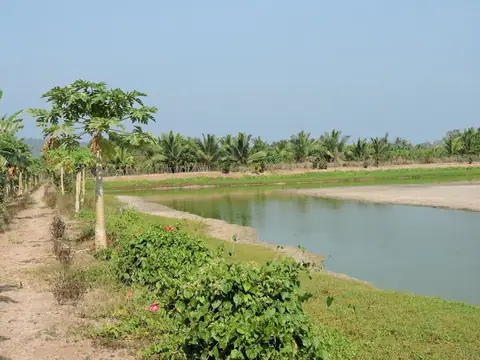
₹7,000 per traditional fishing family for the lean fishing period.
 Dairy & cattle
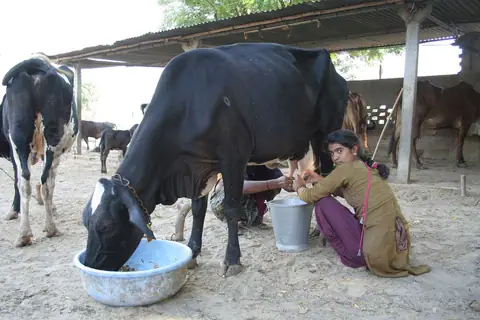
₹3 a litre extra on milk poured to an Aavin cooperative society.
Fisheries₹8,000 per marine fishing family for the annual fishing ban.
Fisheries₹3,000 from the State on top of your own ₹1,500 saving — ₹4,500 paid in the lean months.
Income supportMandi-level lottery every six months: first / second / third prizes of ₹25,000 / ₹15,000 / ₹10,000, drawn from the coupons farmers get for e-NAM sales (one per ₹10,000 sold).
 Fruits, vegetables & flowers
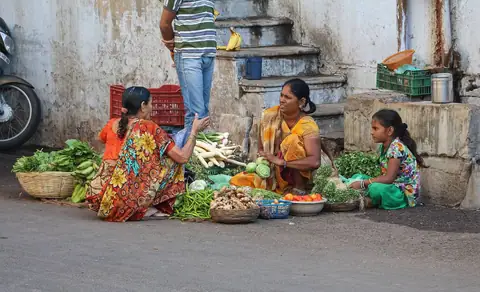
For every tonne of oil-palm fresh fruit bunches sold, the gap between ₹8,500 and the monthly Goa committee price is paid to you.
Highest share of cost any running scheme pays for this kind of work, by who applies. The amount is still capped by each scheme’s cost norm.
₹6,000 a year, paid as three instalments of ₹2,000.
Only families who own cultivable land in the land records (cl. 3). Excluded (cl. 4.1): institutional land holders; families with a member who is or was a holder of a constitutional post; a Union or State Minister, MP, MLA or MLC, Mayor of a Municipal Corporation or Chairperson of a District Panchayat; a serving or retired government or PSU officer or employee (except Multi Tasking Staff / Class IV / Group D); pensioners drawing ₹10,000 a month or more (except Multi Tasking Staff / Class IV / Group D); anyone who paid income tax in the last assessment year; registered practising doctors, engineers, lawyers, chartered accountants and architects; and, for new beneficiaries, NRIs.
“The financial benefit of Rs.6000/- per year is to be released to the eligible farmers in three installments of Rs.2000/- each every 4-month / trimester”A pension of ₹3,000 a month for life from age 60, if you own up to 2 hectares, join between 18 and 40, and pay your monthly contribution until 60.
Only land-owning farmers with up to 2 hectares in the land records qualify (para 3(p)). Not for people in NPS, ESIC or EPFO, those who joined PM-SYM or PM-LVM, income-tax payers, government employees, constitutional post holders and registered professionals (para 5.1). If you die after 60, your spouse gets half the pension, ₹1,500 a month (para 6(xiv)). If you leave early, the government’s matching share is not paid to you (para 6(vii)).
“The Pradhan Mantri Kisan Maan-Dhan Yojana (PM-KMY) provides for an assured monthly pension of Rs. 3000/- to all land holding Small and Marginal Farmers (SMFs), whether male or female, on their attaining the age of 60 years.”Every month you pay ₹55 to ₹200 (fixed by your age when you join), the government puts the same amount into your pension account.
Your monthly contribution by age at joining (para 6(x)): 18 → ₹55, 19 → ₹58, 20 → ₹61, 21 → ₹64, 22 → ₹68, 23 → ₹72, 24 → ₹76, 25 → ₹80, 26 → ₹85, 27 → ₹90, 28 → ₹95, 29 → ₹100, 30 → ₹105, 31 → ₹110, 32 → ₹120, 33 → ₹130, 34 → ₹140, 35 → ₹150, 36 → ₹160, 37 → ₹170, 38 → ₹180, 39 → ₹190, 40 → ₹200. The government adds the same amount. You may pay quarterly, every four months or half-yearly instead (para 6(ix)).
“The Central Government through the Department of Agriculture Cooperation and Farmers Welfare shall also contribute an equal amount as contributed by the eligible subscriber, to the pension Fund.”Join between 18 and 40, pay the fixed monthly amount until 60, and the government guarantees you a pension of ₹1,000 to ₹5,000 a month (your choice) for life, then the same to your spouse.
You pay the whole contribution yourself: for ₹1,000 a month, ₹42 a month if you join at 18 or ₹291 if you join at 40; for ₹5,000, ₹210 to ₹1,454 a month (Annex-1). The 50% government co-contribution applied only to those who joined before 31 Dec 2015, for 2015-16 to 2019-20 (para 5) — it is closed. Income-tax payers cannot join (PIB, Ministry of Finance, 9 May 2026: “open to all bank account holders in the age group of 18 to 40 years who are not income tax payers”). Small and marginal landowners may prefer PM-KMY, where the government matches your contribution.
“(i) Central Government guaranteed minimum pension amount : Each subscriber under APY shall receive a Central Government guaranteed minimum pension of Rs. 1000 per month or Rs. 2000 per month or Rs. 3000 per month or Rs. 4000 per month or Rs. 5000 per month, after the age of 60 years until death. (ii) Central Government guaranteed minimum pension amount to the spouse : After the subscriber’s demise, the spouse of the subscriber shall be entitled to receive the same pension amount as that of the subscriber until the death of the spouse.”Any bank account holder aged 18 to 40 who does not pay income tax can join — land is not required.
“Eligibility : APY is open to all bank account holders in the age group of 18 to 40 years who are not income tax payers and the contributions differ, based on pension amount chosen.”In exceptional cases, a Chief Minister’s Special Package grant of up to ₹1,00,000, based on your project report, when you cannot take a loan.
Only "Targeted Progress Partners" get this: people or groups whose project is recommended by a department’s nodal committee and selected by the Apex Body (the Mizoram State Policy Coordination Committee, chaired by the Chief Minister) on merit and available funds (cl. 2.2.1, 6.2, 7(4)). Farmers come in through the Agriculture & Farmers Welfare, Horticulture, Animal Husbandry & Veterinary, Fisheries, Sericulture and other implementing departments (cl. 4.2). Applying does not guarantee support (Form-1 declaration). Applications for the grant are first received and screened by the Chief Minister’s Office (cl. 6.3.2(1)). If you take the grant you cannot use the scheme’s other incentives until that project is complete, and continued non-performance can mean returning the money (cl. 3.2.2(3), (5)).
“This special provision is made for allowing grant of not more than Rs.1 lakh in exceptional case where the Progress Partner is not in a position to avail loans while having a livelihood project that can be significantly boosted by a small grant.”₹4,000 a year (₹2,000 before Kharif and ₹2,000 before Rabi) for each rural small or marginal farm family, including sharecroppers.
Medium and large farmers, income-tax payers, government and PSU employees and pensioners, holders of constitutional posts, registered professionals, and more than one member of a family are excluded (“Exclusion parameters”, pp.2–3). The 2024-25 guideline also excludes urban farmers, but the 2026-27 Budget speech (para 25) says the scheme now also reaches urban farmers — check with your block office. This is in addition to PM-KISAN.
“financial support to be provided to the eligible rural Small & Marginal Farmers by way of a grant of Rs. 2,000/- per farm family in Kharif& Rabi crop season each totaling to Rs.4000/- per annum.”₹10,000 a year if you have one acre or more of cultivable land; less than one acre gets a pro-rata share, but never below ₹4,000.
The amount stops rising at one acre: ₹10,000 is the most a farmer gets. Below one acre it is pro rata with a floor of ₹4,000 a year — our calculator does not apply that floor, so for under 0.4 acre the real amount is ₹4,000. Recorded bargadars (sharecroppers) are eligible. Status unclear for 2026-27: the Agriculture Department’s circular of 03.07.2026 orders a re-verification of all Krishak Bandhu (Natun) beneficiaries and a match with PM-KISAN, and the 2026-27 Budget Speech (22.06.2026) does not mention Krishak Bandhu — it announces a separate ₹3,000 a year for farmer families instead. Check with your block Assistant Director of Agriculture before counting on this amount.
“Under the new scheme, every enrolled farmer will get financial assistance of Rs. 10000/- per annum for one acre (100 decimal) or more of cultivable land. Farmers having less than one acre of land will be eligible for assistance on pro rata basis subject to a minimum of Rs. 4000/- per annum per farmer. The financial assistance will be given in two equal installments, one in Kharif and the other in Rabi season.”₹3,000 a year for each farmer family, in addition to PM-KISAN.
The announcement sits in the PM-KISAN paragraph, so expect PM-KISAN eligibility to be the test. Announced in the 2026-27 Budget Speech of 22 June 2026. We could not find the implementing order or guidelines on the state’s portals yet, so eligibility details and the application process may change — check with your block agriculture office.
“Under this scheme, ₹6,000 per year is provided to eligible farmers in three equal instalments to support their agricultural needs. In order to further support the agriculture needs of farmers, I hereby announce additional financial assistance of ₹3,000 for each farmer family in a year.”₹1,000 a month (₹12,000 a year) to one farmer per household aged 50 or above.
Who qualifies (cl. 2(c), 6): a Sikkim Subject/COI holder aged 50 or above, solely dependent on agriculture, horticulture or allied farming, holding less than 4 ha, including those cultivating on adhya or kut basis. Only one member per household; on the pensioner’s death it passes to the spouse or another eligible family member (cl. 9). Not for government employees and pensioners, private-sector or contractual workers, landowners who lease out land, people drawing old-age or other welfare pensions, holders of more than 4 ha, trade-licence holders or enlisted contractors (cl. 7). Payments made on false information are recovered (cl. 13). We could not find a 2025-26 or 2026-27 order or budget line confirming the scheme or this rate today — check with your Agriculture office.
“The amount of pension payable to each person shall be Rs. 1,000/- (Rupees One Thousand) only per month.”₹5,000 paid into the bank account of each enrolled producer, to use as they choose.
The 2025-26 Budget Speech (para 24.6) announced raising the annual FOCUS+ support from ₹5,000 to ₹6,000 per household, but the 2026-27 speech reports paying the ₹5,000 instalment, so we show ₹5,000. Neither speech prints how often or when it is paid in 2026-27.
“FOCUS+ is our flagship programme for our producers. Fulfilling my commitment of providing ₹5,000 untied benefit to the enrolled producers, we have released backlog installment to about 93,000 verified beneficiaries this year.”₹3,000 per hectare every year to the owner of paddy land that is kept fit for paddy cultivation.
The 2020 working instructions set the royalty at ₹2,000 per hectare per financial year; the 2026-27 Budget Speech gives the current ₹3,000. Land owners qualify whether they farm it themselves or through other farmers or agencies, and so do owners growing pulses, vegetables, sesame or groundnut in rotation without changing the land’s nature; land left fallow for three years in a row loses the royalty until cultivation restarts (circular 07.09.2020, p.2).
“In all seasons, input assistance of ₹5000, production bonus of ₹1000, and a Royalty of ₹3000 to land owners per hectare are being provided. Assistance of up to ₹40,000 per hectare is provided for cultivating paddy in barren land.”₹2,000 a month (₹24,000 a year) for a small or marginal farmer aged 60 or more.
The Karshaka Pension is paid at the social-security pension rate: the department’s page lists each Finance Department order raising that rate (₹1,300, ₹1,400, ₹1,500, ₹1,600) as the order that fixed the farmers’ pension. The page itself still says ₹1,600; G.O.(P) 136/2025/Fin raised all such pensions to ₹2,000 from November 2025. Eligibility (small and marginal farmers, 60 years and above, with income and other conditions) is set by G.O.(MS) 26/2012/Agri and later orders listed on the page.
“സാമൂഹ്യ സുരക്ഷാ പെൻഷനുകൾ, ക്ഷേമനിധി ബോർഡ് പെൻഷനുകൾ/സർക്കസ്/ അവശകലാകാര പെൻഷനുകൾ, 2025 നവംബർ പ്രാബല്യത്തിൽ നിലവിലെ 1600/- രൂപ നിരക്കിൽ നിന്നും പ്രതിമാസം 2000/- രൂപയായി വർദ്ധിപ്പിച്ച് ഉത്തരവ് പുറപ്പെടുവിക്കുന്നു.”₹2,000 a year as rain relief for an agricultural labourer registered with the Agriculture Labour Welfare Society.
The speech does not say how many instalments; we show it as one payment a year. Only labourers registered with the Society qualify.
“All the Agricultural Labourers who have registered under Agriculture Labour Welfare Society will be provided ₹ 2,000 per annum as Rain Relief, from the Financial Year 2025-26.”₹6,000 a year from the state, on top of PM-KISAN, for farmer families who get PM-KISAN.
The three equal instalments are from the MP Public Relations Directorate release of 28 Oct 2024 (“एक वित्तीय वर्ष में कुल 6 हजार रुपये की राशि तीन समान किश्तों में प्रदान की जाती है”); the budget speech prints only the yearly amount. We found no published scheme order, so eligibility beyond “PM-KISAN families” is not stated here.
“प्रधानमंत्री किसान सम्मान निधि अन्तर्गत किसान परिवारों को रुपये 6 हज़ार प्रतिवर्ष की आर्थिक सहायता प्राप्त हो रही है। हमारी सरकार द्वारा भी “मुख्यमंत्री किसान कल्याण योजना” अंतर्गत रुपये 6 हज़ार प्रतिवर्ष जोड़कर कुल रुपये 12 हज़ार प्रतिवर्ष का लाभ दिया जा रहा है।”₹6,000 a year from Maharashtra, as three instalments of ₹2,000, in addition to PM-KISAN.
Only for PM-KISAN beneficiaries found eligible at each instalment (cl. 2); any change PM-KISAN makes to eligibility applies here automatically (cl. 1(ii)). Money paid to an ineligible person is recovered through the revenue machinery (cl. 5). Together with PM-KISAN this makes ₹12,000 a year.
“पहिला हप्ता — माहे एप्रिल ते जुलै — रु. २०००/-; दुसरा हप्ता — माहे ऑगस्ट ते नोव्हेंबर — रु. २०००/-; तिसरा हप्ता — माहे डिसेंबर ते मार्च — रु. २०००/-”₹30,000 a year, paid to the Jan Aadhaar-linked bank account, to a small or marginal farmer who farms with a pair of bullocks.
You need a pair (2) of bullocks used in farming and a small/marginal certificate (cl. 1.1, 1.2). The earlier conditions that the bullocks be insured and under 15 years, and the upload of their insurance policy and health certificate, were deleted by the amendment of 03.08.2025. Temple-land priests and forest-rights patta holders in tribal areas can also qualify (cl. 1.4, 1.5). Only small and marginal farmers are eligible, first come first served within the sub-district target (cl. 4.1, 4.3, 5.2). The guidelines are for 2025-26; the 2026-27 outcome budget still targets 6,333 farmers.
“प्रदेश में लघु एवं सीमान्त कृषकों को बैलों से खेती करवाये जाने पर प्रोत्साहन राशि के रूप में 30 हजार रूपये प्रतिवर्ष दिये जाने; 7.2 … कृषकों को प्रोत्साहन राशि रूपये 30000/– का भुगतान जनाधार से जुडे खाते में …”₹14,000 a year from the state, on top of PM-KISAN’s ₹6,000 (₹20,000 in all), for a farmer family owning at least 10 cents of farmland or cultivating RoFR land.
State share by instalment (cl. 10, p. 6): ₹5,000 in Kharif, ₹5,000 in Rabi, ₹4,000 in Summer — each paid with PM-KISAN’s ₹2,000. A family is husband, wife and children; married children count separately (cl. 4). For joint holdings the money goes to the family member with the most land (cl. 6.A). Not for (cl. 5): institutional land holders; families with a present or former holder of a constitutional post, Minister, MP, MLA or MLC, or a present Mayor or Zilla Parishad Chairperson; serving or retired government, PSU or local-body employees (except Multi-Tasking Staff / Class IV / Group D below ₹20,000 salary); pensioners drawing ₹10,000 a month or more; income-tax payers; practising doctors, engineers, lawyers, chartered accountants and architects; and owners of farmland converted to house sites, aquaculture or other non-farm use.
“The benefit of the scheme shall be provided to all the landholder farmer families who collectively own cultivable land with a minimum of 10 cents and Farmer families Cultivating ROFR lands @Rs. 20,000/- per annum (Rs. 14,000/- Under Annadatha Sukhibhava scheme and Rs.6000/-under PM-KISAN) per family per annum as per validated Landownership database subject to exclusions.”₹20,000 a year from the state budget for a landless tenant farmer who cultivates leased land, in two instalments of ₹10,000.
Paid ₹10,000 in Rabi and ₹10,000 in Summer (cl. 10, p. 6). You must own no farm land, must not have leased from your own family, and must lease at least 1 acre (0.5 acre for vegetables, flowers and fodder; 0.1 acre for betel vine). Only one tenant per land-owner family is paid; with several tenants the order is ST, SC, BC, Minority, OC. In Scheduled Areas only tribal tenants are recognised (cl. 6.B, pp. 3–4).
“Financial assistance will also be provided to all eligible landless cultivators in the State @ Rs. 20,000/- per year from the Budget allocation of the Government of Andhra Pradesh.”₹12,000 a year for every acre of cultivable land in your name as pattadar (₹6,000 per acre each season).
Clause 3.1 (in Telugu) says crop investment support under Rythu Bharosa is raised to ₹12,000 per acre per year. The order prints no ceiling on acres. Paid only on cultivable land recorded in Bhu Bharati (cl. 3.2); RoFR pattadars included (cl. 3.3). The 2026-27 Budget Speech (para 64) describes it as ₹6,000 per acre per season for two crops.
“రైతుభరోసా పథకం కింద పంట పెట్టుబడి సహాయాన్ని సంవత్సరానికి ఎకరాకు రూ.12,000 కు పెంచబడింది.”Mandi-level lottery every six months: first / second / third prizes of ₹25,000 / ₹15,000 / ₹10,000, drawn from the coupons farmers get for e-NAM sales (one per ₹10,000 sold).
This is a lottery, not a sure payment: you get one gift-coupon number for every ₹10,000 of produce sold through e-NAM on a sale slip that bears mandi fee (cl. 1(4), 4(3)). Mandi-level draws are held separately for gate-pass sale slips and e-payment sale slips; division and state draws pool both (directions letter, point 1). One coupon can win at more than one level (point 2). Prize money goes to the winner’s bank account; income tax on it is borne by the mandi committee (cl. 3(2), 6(1)). The cost is met by the Rajasthan State Agricultural Marketing Board.
“मण्डी स्तर पर … प्रत्येक छः माह में प्रथम पुरस्कार (1) 25 हजार, द्वितीय पुरस्कार (1) 15 हजार, तृतीय पुरस्कार (1) 10 हजार (गेट पास की विक्रय पर्चियों पर तथा E-Payment की विक्रय पर्चियों पर)”Division-level lottery every six months: first / second / third prizes of ₹50,000 / ₹30,000 / ₹20,000, drawn from the coupons farmers get for e-NAM sales (one per ₹10,000 sold).
This is a lottery, not a sure payment: you get one gift-coupon number for every ₹10,000 of produce sold through e-NAM on a sale slip that bears mandi fee (cl. 1(4), 4(3)). Mandi-level draws are held separately for gate-pass sale slips and e-payment sale slips; division and state draws pool both (directions letter, point 1). One coupon can win at more than one level (point 2). Prize money goes to the winner’s bank account; income tax on it is borne by the mandi committee (cl. 3(2), 6(1)). The cost is met by the Rajasthan State Agricultural Marketing Board.
“खण्ड स्तर पर — प्रत्येक छः माह में प्रथम पुरस्कार (1) 50 हजार, द्वितीय पुरस्कार (1) 30 हजार, तृतीय पुरस्कार (1) 20 हजार”State-level lottery once a year: first / second / third prizes of ₹2.5 lakh / ₹1.5 lakh / ₹1 lakh, drawn from the coupons farmers get for e-NAM sales (one per ₹10,000 sold).
This is a lottery, not a sure payment: you get one gift-coupon number for every ₹10,000 of produce sold through e-NAM on a sale slip that bears mandi fee (cl. 1(4), 4(3)). Mandi-level draws are held separately for gate-pass sale slips and e-payment sale slips; division and state draws pool both (directions letter, point 1). One coupon can win at more than one level (point 2). Prize money goes to the winner’s bank account; income tax on it is borne by the mandi committee (cl. 3(2), 6(1)). The cost is met by the Rajasthan State Agricultural Marketing Board.
“राज्य स्तर पर — वर्ष में एक बार प्रथम पुरस्कार (1) 2.5 लाख, द्वितीय पुरस्कार (1) 1.5 लाख, तृतीय पुरस्कार (1) 1 लाख”