PM Matsya Sampada Yojana — insurance for fishers and support during the fishing ban
₹3,000a year
If you are a full-time active fisher, BPL, aged 18–60 and in a fishers’ cooperative, you get ₹4,500 in the fishing ban/lean season (₹1,500 a month for 3 months): the government adds ₹3,000 to ₹1,500 you save.
Read from PMMSY Operational Guidelines (June 2020) · clause Annexure II, item 13.1 Livelihood and nutritional support, (a) funding pattern and (b)(i)–(iv), (viii) · p. 157–159 · Our copy (PDF)
40% of the premium you pay for aquaculture insurance for one crop cycle, at most ₹25,000 per hectare of water area and ₹1 lakh in all, for farms of up to 4 hectares.
Read from PM-MKSSY brochure, Department of Fisheries · clause Key Components, 1-B Incentivising aquaculture insurance · p. 3 · Our copy (PDF)
We could not confirm it is still openNot for you — check conditions
FIDF
Fisheries and Aquaculture Infrastructure Development Fund
FreeConcessional loan up to 80% of project cost, at not less than 5% a year, with the government paying the lender up to 3% a year
A loan of up to 80% of the cost of a fisheries infrastructure project at an interest rate that can go as low as 5% a year, because the government pays the lender up to 3% a year; repay over up to 12 years including 2 years’ moratorium.
Read from FIDF extension order and guidelines (26 Feb 2024) · clause Annexure-I 7.4–7.7; 9; 10.1; 11.1–11.3; 14.1 · p. 7–9, 12 · Our copy (PDF)
We could not confirm it is still openNot for you — check conditions
Fish pond renovation aid
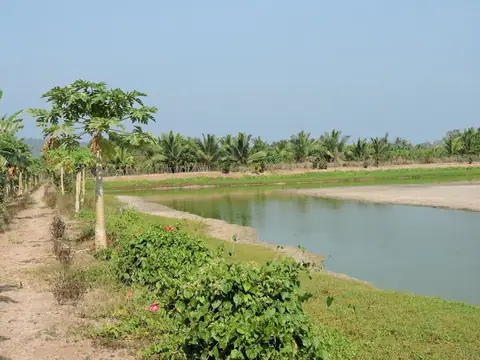
Assistance to renovate inland fish ponds
up to ₹50,000per acre of fish pond renovated
Up to ₹50,000 per acre to renovate your fish pond, if you have farmed fish for more than 5 years.
Read from Puducherry Budget Speech 2025-26 (Chief Minister N. Rangasamy, 12.03.2025) · clause Para 69 (Fisheries and Fishermen Welfare) · p. printed p.26 (PDF p.28) · Our copy (PDF)
Mukhyamantri Talab Matsyiki Vikas Yojana (pond fisheries), Bihar
70%of the cost, at most
50% (SC/ST/EBC 70%) of ₹1,00,000 per 0.5-acre unit for raising advanced fingerlings, for at most 1 acre (2 units).
Read from Bihar Mukhyamantri Talab Matsyiki Vikas Yojana sanction 2026-27 (01.06.2026) · clause para 5 (rates) and 5(I)(vi)–(viii) · p. 2–3 · Our copy (PDF)
₹20,000 a year per family of an eligible sea-going fisherman working mechanised, motorised or non-motorised craft, for the 15 April – 14 June ban period.
Read from AP G.O.Ms.No.12 of 25.04.2025 — fishing ban relief raised to ₹20,000 · clause Para 4 · p. 1 · Our copy (PDF)
Savings-cum-Relief Scheme for marine fishermen and fisherwomen (Tamil Nadu)
₹3,000a year
₹3,000 from the State on top of your own ₹1,500 saving — ₹4,500 paid in the lean months.
Read from Tamil Nadu Fisheries Policy Note 2026-27 · clause 6.1.3 Savings-cum-Relief Scheme for Marine Fishermen; 6.1.4 Savings-cum-Relief Scheme for Marine Fisherwomen · p. PDF 27–28 (printed 24–25) · Our copy (PDF)
We could not confirm it is still openNot for you — check conditions
Otter boards at 50% + free ice box
Otter boards at 50% subsidy and free fish holding boxes for trawler owners (Puducherry)
50%of the cost, at most
50% of the ₹70,000 unit cost of otter boards — ₹35,000 — for a registered trawler owner.
Read from Puducherry Budget Speech 2025-26 (Chief Minister N. Rangasamy, 12.03.2025) · clause Para 68 (Fisheries and Fishermen Welfare) · p. printed p.25 (PDF p.27) · Our copy (PDF)
We could not confirm it is still openNot for you — check conditions
Drag net 50%, deep-sea vessel 20%
Drag nets at 50% subsidy and deep-sea fishing vessels at 20% subsidy for fish farmers (Puducherry)
50%of the cost, at most
50% of a ₹12,000 drag net — ₹6,000 — for an FFDA-registered fish farmer.
Read from Puducherry Budget Speech 2025-26 (Chief Minister N. Rangasamy, 12.03.2025) · clause Para 70 (Fisheries and Fishermen Welfare) · p. printed p.26 (PDF p.28) · Our copy (PDF)
Assistance on nets used in inland fisheries cages, Gujarat
50%of the cost, at most
Individual cage farmers: 50% of ₹300 per cubic metre of cage net (₹150 per m³) or 50% of the actual cost if lower, for up to 1,800 m³ or 18 fish cages, whichever is less.
Read from Gujarat GR amending the inland cage-net assistance (21 Aug 2026) · clause Amendment of 21.08.2026: condition 10 added after condition 9 of the GR of 01.04.2026 · p. 2 · Our copy (PDF)
50% assistance on fishing nets and hook & line for trawler, dolnetter and gillnetter boats, Gujarat
50%of the cost, at most
50% of the actual cost of fishing nets or hook & line (with head rope, foot rope, floats, sinkers and similar), up to ₹4,00,000.
Read from Gujarat GR: 50% assistance on fishing nets and hook & line for trawler, dolnetter and gillnetter boats, 2026-27 · clause Condition (7) (શરત ૭) · p. 2 · Our copy (PDF)
IBM wooden boat replacement (50%, up to ₹22.5 lakh)
Wooden Boat Replacement Scheme for IBM boats, Gujarat
50%of the cost, at most
50% of the cost of the new boat, at most ₹15 lakh (12–14 m), ₹17.5 lakh (14–16 m), ₹20 lakh (16–18 m) or ₹22.5 lakh (18–20 m).
Read from Gujarat GR amending the IBM wooden boat replacement scheme (30 Apr 2026) · clause Amended condition (4) (શરત નં.૪), length table; rate 50% from condition 4 of the GR of 22 May 2025 · p. 2 · Our copy (PDF)
Nanaji Deshmukh Krishi Sanjivani (PoCRA) phase 2 — freshwater fish farming in farm ponds
60%of the cost, at most
Farm-pond owners with up to 5 ha in project villages: 60% (SC, ST, women) or 40% (others) of the printed cost for their pond size, or of the actual cost if lower.
Read from PoCRA phase 2 guidelines: freshwater fish farming in farm ponds · clause अर्थसहाय्य (अनुदान मर्यादा table) and प्रपत्र-१ · p. 3, 12–13 · Our copy (PDF)
Financial Assistance to registered Fish Vendors for fish-vending accessories (Goa)
90%of the cost, at most
90% of your fish-vending kit, counted up to ₹10,000 (so at most ₹9,000), for every category.
Read from Goa notification of 06.07.2026 — fish vendor accessories scheme amended (90% up to ₹9,000) · clause Sr. 5 Sub Point (a) as amended · p. 611 · Our copy (PDF)
Up to ₹50,000 to the family of an enrolled fisher who dies, whatever the cause.
Read from Goa notification of 24.06.2025 — Mukhel Mantri Nustekar Mazat Yevjan (family help on a fisher’s death) · clause cl. 6 D.1 (Sanction of compensation) · p. 410 · Our copy (PDF)
We could not confirm it is still openNot for you — check conditions
Stake net & accessories
Financial Assistance for purchase of Stake net and its accessories (Goa)
60%of the cost, at most
50% of the stake net cost counted up to ₹60,000 (max ₹30,000); 60% (max ₹36,000) for SC, ST and women.
Read from Goa notification of 05.10.2021 — stake net scheme · clause Stake net notification, cl. 5 (Pattern of Assistance) a–b · p. 1938 · Our copy (PDF)
We could not confirm it is still openNot for you — check conditions
Barrier net & accessories
Financial Assistance for purchase of Barrier net and its accessories (Goa)
60%of the cost, at most
50% of the barrier net cost counted up to ₹60,000 (max ₹30,000); 60% (max ₹36,000) for SC, ST and women.
Read from Goa notification of 05.10.2021 — barrier net scheme · clause Barrier net notification, cl. 5 (Pattern of Assistance) a–b · p. 1939 · Our copy (PDF)
We could not confirm it is still openNot for you — check conditions
Outboard motor 2–5 HP for canoe
Financial Assistance to purchase out board Motor of 2 HP to 5 HP for fitting to the fishing canoe below 26 feet (Goa)
60%of the cost, at most
50% of the motor cost counted up to ₹60,000 (max ₹30,000); 60% (max ₹36,000) for SC, ST and women.
Read from Goa notification of 05.10.2021 — 2–5 HP outboard motor scheme · clause Out-board Motor notification, cl. 5 (Pattern of Assistance) a–b · p. 1940 · Our copy (PDF)
We could not confirm it is still openNot for you — check conditions
Daman & Diu boat, engine & gear subsidy
Assistance to Fishermen for purchase of Fisheries Requisites/Equipments etc. (Daman & Diu)
75%of the cost, at most
Ice box for fisherwomen: 75% of the cost up to ₹10,000, at most ₹7,500.
Read from Daman & Diu fisheries notification of 16.10.2017 — U.T. Plan Schemes for Fisheries · clause Annexure-III, B.3, para 3.2, table row 4 a) · p. 3 · Our copy (PDF)
We could not confirm it is still openNot for you — check conditions
Daman & Diu fishermen accident & boat-loss help
Financial Assistance to the Fishermen affected by Natural Calamities/Accident etc. (Daman & Diu)
₹5,00,000to the legal heir
₹5 lakh once to the legal heir of an active fisherman who dies in a calamity, fire or accident at sea or creek.
Read from Daman & Diu fisheries notification of 16.10.2017 — U.T. Plan Schemes for Fisheries · clause Annexure-II, B.2, para 2.2, first bullet · p. 2 · Our copy (PDF)
We could not confirm it is still openNot for you — check conditions
Daman & Diu help for fishermen held by Pakistan
Financial Assistance to Boat owner/Fishermen Captured by Pakistan Marine Security Agency (PMSA) (Daman & Diu)
25%of the cost, at most
25% of a new fishing vessel replacing one held by Pakistan, up to ₹10 lakh, after a five-year wait.
Read from Daman & Diu fisheries notification of 16.10.2017 — U.T. Plan Schemes for Fisheries · clause Annexure-I, B.1, para 1.2, third bullet · p. 2 · Our copy (PDF)
Grant to Fishermen Co-operative Societies, Chhattisgarh
₹3,00,000per society, at most
₹3 lakh per fishermen co-operative society, paid over three years, for fish seed, nets and boats and the lease deposit.
Read from Chhattisgarh Fisheries Department administrative report 2025-26 · clause 3.1.10 “मत्स्य सहकारी समिति को अनुदान” · p. printed p.16 (PDF p.24) · Our copy (PDF)
50% of the printed cost of one 1-hectare chaur model (40% for an entrepreneur): ₹8.88 lakh (two ponds), ₹7.32 lakh (four ponds) or ₹9.69 lakh (one pond + land development), including fish inputs.
Read from Bihar Mukhyamantri Samekit Chaur Vikas Yojana sanction 2026-27 (02.06.2026) · clause cl. 5(vi); unit cost cl. 5(vii) and Annexure-II · p. PDF p.3; pp.9–11 · Our copy (PDF)
Vishesh Ghatak Package Yojana (fish ponds for SC, ST and EBC farmers)
80%of the cost, at most
Plateau (pathari) pond scheme, for SC/ST farmers in the identified plateau districts of south Bihar: 80% of the unit cost — ₹13,36,000 on a 1-acre pond (₹16.70 lakh) or ₹8,27,200 on a 0.4-acre unit (₹10.34 lakh).
Read from Bihar Vishesh Ghatak Package Yojana (fisheries, SC/ST/EBC) sanction 2026-27 (01.06.2026) · clause cl. 4(ख) and 5(II)(i)–(vi) · p. PDF pp.2, 4–5 · Our copy (PDF)
Freshwater Prawn, Desi Magur and Pearl Culture (Fisheries Extension, Research and Training Scheme), Jharkhand
80%of the cost, at most
Giant freshwater prawn farming in a private pond, unit cost ₹4,00,000 a hectare: 80% for ST, SC and women (₹3,20,000/ha), 70% for others (₹2,80,000/ha).
Read from Jharkhand Fisheries Extension, Research & Training scheme sanction 2026-27 (Order 25, 11.08.2026) · clause Para 12(ख) · p. 9 · Our copy (PDF)
New pond (Component-I): 40% — ₹4.40 lakh a hectare — or 50% — ₹5.50 lakh a hectare — of the ₹11 lakh unit cost (₹7 lakh digging + ₹4 lakh inputs), for 0.1 to 5 hectares of water.
Read from Odisha Machha Chasa Pain Nua Pokhari Khola Yojana revised guideline (Letter 16141, 27.11.2025) · clause Para 4 — Unit cost and subsidy pattern (Component-I) · p. 3–4 · Our copy (PDF)
MMKY — Input Assistance to Farmers for Fish Farming in Farm Ponds
60%of the cost, at most
40% (60% for SC/ST/women/transgender/PwD) of the printed input cost of your farm pond: ₹16,000 (20×20 m), ₹9,000 (15×15 m) or ₹4,000 (10×10 m).
Read from Odisha MMKY farm-pond fish input guideline 2025-26 · clause Para 6 — Type of farm pond with unit cost and pattern of assistance · p. 2 · Our copy (PDF)
MMKY — Promotion of Intensive Aquaculture through Bio-Floc Technology
60%of the cost, at most
50% (60% for SC/ST/women/transgender/PwD) of ₹2, ₹4 or ₹6 lakh for a 2-, 4- or 6-tank biofloc unit — up to ₹3 lakh (₹3.60 lakh).
Read from Odisha MMKY biofloc revised guideline (Letter 3142, 09.03.2026) · clause Para 8 — Unit cost and pattern of assistance · p. 9 · Our copy (PDF)
Supply of kerosene to motorised traditional fishing boats — ₹35 a litre rebate (Karnataka Fisheries)
₹35per litre of kerosene, at most
₹35 off every litre of industrial kerosene supplied to your permitted motorised fishing boat.
Read from Karnataka Department of Fisheries — Annual Report 2023-24 · clause Section 3.2 “Supply of Kerosene to traditional boats (2405-00-103-0-17)” · p. p.8 · Our copy (PDF)
White Kerosene Subsidy Scheme for traditional fishermen (Matsyafed, Kerala)
₹75 subsidyon white kerosene for fishing
(earlier ₹25 a litre)
Subsidised white kerosene for fishing boats with outboard motors; the subsidy is now ₹75 (Matsyafed’s page still shows the earlier ₹25 per litre).
Read from Kerala Revised Budget Speech 2026-27 (19.06.2026) · clause Para 84 — “The kerosene subsidy being provided to fishermen is enhanced to ₹75.” · p. printed p.35 (PDF p.43) · Our copy (PDF)
Scheme for setting up aeration systems for intensive fish farming, Uttar Pradesh
60%of the cost, at most
Aerator costing ₹50,000: 50% subsidy (₹25,000), 60% (₹30,000) for Scheduled Caste fish farmers; at most two aerators.
Read from UP fish-pond aeration system scheme — amended guidelines GO (2 Feb 2026) · clause संशोधित व्यवस्था, प्रस्तर 5 “इकाई लागत व फण्डिंग पैटर्न” and table · p. 2–3 · Our copy (PDF)
We could not confirm it is still openNot for you — check conditions
HADP trout & fish units
HADP — Fish seed and trout production: hatcheries, raceways, RAS, cold storage and feed mills, Jammu & Kashmir
60%of the cost, at most
50% of the printed unit cost (60% for SC, ST and women), e.g. trout raceway ₹3 lakh → ₹1.50 lakh (₹1.80 lakh); trout hatchery ₹50 lakh → ₹25 lakh (₹30 lakh).
Read from J&K HADP — implementation guidelines of the 29 projects · clause Project 26 “Technological interventions for fish seed and trout production in J&K”, table columns (iv)–(vi): unit cost; Government Assistance General (50%), SC/ST/Women (60%) · p. printed 112–117 (PDF 113–118) · Our copy (PDF)
Up to ₹2.80 lakh per hectare for a new grow-out pond (₹4.20 lakh for SC, ST and women), up to 2 hectares.
Read from PMMSY Operational Guidelines (June 2020) · clause Annexure II, A.1, item 1.4 (with 5.2.2) · p. 78–80 · Our copy (PDF)
What the document says, word for word
Unit cost Rs. 7.00 lakh per ha. Ponds must hold at least 1.5 m of water. Assistance is restricted to 2 ha per individual; for groups (SHGs, JLGs, cooperatives) it is 2 ha × members, up to 20 ha per group — we show the individual limit (item 1.4(vi)–(vii)).
“1.4 Construction of New Grow-out ponds (Ha) 7.00 2.80 4.20”
02
60%of the cost, at most
Up to ₹1.60 lakh per hectare (₹2.40 lakh for SC, ST and women) for the first crop’s inputs in a newly built pond.
Read from PMMSY Operational Guidelines (June 2020) · clause Annexure II, A.1, item 1.5 (with 5.2.2) · p. 80 · Our copy (PDF)
What the document says, word for word
Unit cost Rs. 4.00 lakh per ha, for the initial crop only, in newly constructed ponds/tanks. Item 1.5 prints no area limit of its own; we cap it at the 2 ha allowed for new ponds under item 1.4.
“1.5 Inputs for fresh water Aquaculture including Composite fish culture, Scampi, Pangasius, Tilapia etc. (Ha) 4.00 1.60 2.40”
03
60%of the cost, at most
Up to ₹5.6 lakh per 0.1-hectare biofloc unit (₹8.4 lakh for SC, ST and women), up to 2 units.
Read from PMMSY Operational Guidelines (June 2020) · clause Annexure II, A.1, item 1.12 (with 5.2.2) · p. 86–87 · Our copy (PDF)
What the document says, word for word
Unit cost Rs. 14 lakh per 0.1 ha, including inputs. Restricted to 2 units of 0.1 ha per individual; groups get 2 units × members, up to 20 units — we show the individual limit (item 1.12(ix)).
“1.12 Construction of Biofloc ponds for Freshwater areas including inputs of Rs 4 lakhs/Ha 0.1 Ha 14 5.6 8.4”
04
60%of the cost, at most
Up to ₹10,00,000 (₹15,00,000 for SC, ST and women) for a new freshwater finfish hatchery.
Read from PMMSY Operational Guidelines (June 2020) · clause Annexure II, A.1, item 1.1 (with 5.2.2, 19.4) · p. 74–76 · Our copy (PDF)
What the document says, word for word
Unit cost Rs. 25 lakh. Minimum capacity 15 million fry or 6 crore spawn a year on at least 0.5 ha; a DPR and land (owned, or a registered lease of at least 10 years) are needed. In Islands, Himalayan States/UTs and North-Eastern States the unit cost may be up to 20% higher (para 19.5).
“1.1 Establishment of New Freshwater Finfish Hatcheries (No) 25.00 10.00 15.00”
05
60%of the cost, at most
Up to ₹20,00,000 (₹30,00,000 for SC, ST and women) for a new freshwater scampi (prawn) hatchery.
Read from PMMSY Operational Guidelines (June 2020) · clause Annexure II, A.1, item 1.2 (with 5.2.2, 19.4) · p. 76–77 · Our copy (PDF)
What the document says, word for word
Unit cost Rs. 50 lakh. Minimum capacity 30 million PL a year on at least 0.5 ha; you must be trained or experienced in hatchery work. In Islands, Himalayan States/UTs and North-Eastern States the unit cost may be up to 20% higher (para 19.5).
“1.2 Establishment of New Freshwater Scampi Hatcheries (No) 50.00 20.00 30.00”
06
60%of the cost, at most
Up to ₹2,80,000 per hectare (₹4,20,000 for SC, ST and women) for a new nursery / seed-rearing pond, for at most 2 hectares.
Read from PMMSY Operational Guidelines (June 2020) · clause Annexure II, A.1, item 1.3 (with 5.2.2, 19.4) · p. 77–79 · Our copy (PDF)
What the document says, word for word
Unit cost Rs. 7.00 lakh per ha; ponds need at least 1.5 m of water. Restricted to 2 ha per individual; groups get 2 ha × members, up to 20 ha — we show the individual limit. In Islands, Himalayan States/UTs and North-Eastern States the unit cost may be up to 20% higher (para 19.5).
“1.3 Construction of New Rearing ponds (nursery/seed rearing ponds) (Ha) 7.00 2.80 4.20”
07
60%of the cost, at most
Up to ₹20,00,000 (₹30,00,000 for SC, ST and women) for a new brackish-water hatchery (shellfish or finfish).
Read from PMMSY Operational Guidelines (June 2020) · clause Annexure II, A.1, item 1.6 (with 5.2.2, 19.4) · p. 80–82 · Our copy (PDF)
What the document says, word for word
Unit cost Rs. 50 lakh. Minimum 5 lakh fry (finfish) or 10 million PL (shrimp) a year on at least 0.4 ha; Coastal Aquaculture Authority clearance where it applies. In Islands, Himalayan States/UTs and North-Eastern States the unit cost may be up to 20% higher (para 19.5).
“1.6 Establishment of need based New Brackish Hatcheries (shell fish and fin fish) (No) 50.00 20.00 30.00”
08
60%of the cost, at most
Up to ₹3,20,000 per hectare (₹4,80,000 for SC, ST and women) for a new brackish-water aquaculture pond, for at most 2 hectares.
Read from PMMSY Operational Guidelines (June 2020) · clause Annexure II, A.1, item 1.7 (with 5.2.2, 19.4) · p. 82–85 · Our copy (PDF)
What the document says, word for word
Unit cost Rs. 8.00 lakh per ha. Restricted to 2 ha per individual; groups get 2 ha × members, up to 20 ha — we show the individual limit. If the pond is lined with polythene to DoF specification, up to Rs. 2 lakh per ha more may be given to every category (item 1.7(iv)) — not added here. In Islands, Himalayan States/UTs and North-Eastern States the unit cost may be up to 20% higher (para 19.5).
“1.7 Construction of New ponds for Brackish Water Aquaculture (Ha) 8.00 3.20 4.80”
09
60%of the cost, at most
Up to ₹3,20,000 per hectare (₹4,80,000 for SC, ST and women) for a new pond in saline / alkaline areas, for at most 2 hectares.
Read from PMMSY Operational Guidelines (June 2020) · clause Annexure II, A.1, item 1.8 (with 5.2.2, 19.4) · p. 82–85 · Our copy (PDF)
What the document says, word for word
Unit cost Rs. 8.00 lakh per ha. Restricted to 2 ha per individual; groups get 2 ha × members, up to 20 ha — we show the individual limit. If the pond is lined with polythene to DoF specification, up to Rs. 2 lakh per ha more may be given to every category (item 1.7(iv)) — not added here. In Islands, Himalayan States/UTs and North-Eastern States the unit cost may be up to 20% higher (para 19.5).
“1.8 Construction of New ponds for Saline /Alkaline areas (Ha) 8.00 3.20 4.80”
10
60%of the cost, at most
Up to ₹2,40,000 per hectare (₹3,60,000 for SC, ST and women) for first-crop inputs in a new brackish-water pond, for at most 2 hectares.
Read from PMMSY Operational Guidelines (June 2020) · clause Annexure II, A.1, item 1.9 (with 5.2.2, 19.4) · p. 85 · Our copy (PDF)
What the document says, word for word
Unit cost Rs. 6.00 lakh per ha, for the initial crop only in newly built ponds, released once they are ready. No area limit is printed for inputs; we cap it at the 2 ha allowed for the pond. In Islands, Himalayan States/UTs and North-Eastern States the unit cost may be up to 20% higher (para 19.5).
“1.9 Inputs for Brackish Water Aquaculture (Ha) 6.00 2.40 3.60”
11
60%of the cost, at most
Up to ₹2,40,000 per hectare (₹3,60,000 for SC, ST and women) for first-crop inputs in a new saline / alkaline pond, for at most 2 hectares.
Read from PMMSY Operational Guidelines (June 2020) · clause Annexure II, A.1, item 1.10 (with 5.2.2, 19.4) · p. 85 · Our copy (PDF)
What the document says, word for word
Unit cost Rs. 6.00 lakh per ha, for the initial crop only in newly built ponds. No area limit is printed for inputs; we cap it at the 2 ha allowed for the pond. In Islands, Himalayan States/UTs and North-Eastern States the unit cost may be up to 20% higher (para 19.5).
“1.10 Inputs for Saline /Alkaline Water Aquaculture (Ha) 6.00 2.40 3.60”
12
60%of the cost, at most
Up to ₹7,20,000 per 0.1-hectare unit (₹10,80,000 for SC, ST and women) for a brackish / saline / alkaline biofloc pond, for at most 2 0.1-hectare units.
Read from PMMSY Operational Guidelines (June 2020) · clause Annexure II, A.1, item 1.11 (with 5.2.2, 19.4) · p. 85–87 · Our copy (PDF)
What the document says, word for word
Unit cost Rs. 18 lakh per 0.1 ha, including inputs. Restricted to 2 units of 0.1 ha per individual; groups get 2 × members, up to 20 units. In Islands, Himalayan States/UTs and North-Eastern States the unit cost may be up to 20% higher (para 19.5).
“1.11 Construction of Biofloc ponds for Brackish water/Saline/ Alkaline areas including inputs of Rs 8 lakhs/Ha 0.1 Ha 18 7.2 10.8”
13
60%of the cost, at most
For fisher groups stocking a reservoir at 1,000 fingerlings a hectare: Rs. 1.20 a fingerling (Rs. 1.80 for SC, ST and women).
Read from PMMSY Operational Guidelines (June 2020) · clause Annexure II, A.1, item 1.13 (with 5.2.2, 19.4) · p. 87–88 · Our copy (PDF)
What the document says, word for word
Unit cost Rs. 3 per fingerling. Approved only as a group activity, with permission to fish the reservoir; the outlay is decided by the Department of Fisheries. Groups get the general 40% here; a group of SC/ST members or a women SHG may be entitled to 60% under para 5.2.2 — ask the State fisheries department. In Islands, Himalayan States/UTs and North-Eastern States the unit cost may be up to 20% higher (para 19.5).
“1.13 Stocking of Fingerlings in Reservoirs @1000FL/ha (3.0/1lakh FL) (Ha) Rs 3/Fingerling Rs 1.2/Fingerling Rs 1.8/Fingerling”
14
60%of the cost, at most
For fisher groups stocking a wetland at 1,000 fingerlings a hectare: Rs. 1.20 a fingerling (Rs. 1.80 for SC, ST and women).
Read from PMMSY Operational Guidelines (June 2020) · clause Annexure II, A.1, item 1.14 (with 5.2.2, 19.4) · p. 88–89 · Our copy (PDF)
What the document says, word for word
Unit cost Rs. 3 per fingerling. Approved only as a group activity, with permission to fish the wetland. Groups get the general 40% here; a group of SC/ST members or a women SHG may be entitled to 60% under para 5.2.2 — ask the State fisheries department. In Islands, Himalayan States/UTs and North-Eastern States the unit cost may be up to 20% higher (para 19.5).
“1.14 Stocking of Fingerlings in Wet lands @1000FL/ha (3.0/1lakh /FL) (Ha) Rs 3/Fingerling Rs 1.2/Fingerling Rs 1.8/Fingerling”
15
60%of the cost, at most
Up to ₹20,00,000 (₹30,00,000 for SC, ST and women) for a small marine finfish hatchery.
Read from PMMSY Operational Guidelines (June 2020) · clause Annexure II, A.2, item 2.1 (with 5.2.2, 19.4) · p. 90–92 · Our copy (PDF)
What the document says, word for word
Unit cost Rs. 50 lakh. Minimum 5 lakh fry or 10 million PL a year on at least 0.4 ha; land owned or on a registered lease of at least 10 years. In Islands, Himalayan States/UTs and North-Eastern States the unit cost may be up to 20% higher (para 19.5).
“2.1 Establishment of Small Marine Finfish Hatcheries (No) 50.00 20.00 30.00”
16
60%of the cost, at most
Up to ₹1,00,00,000 (₹1,50,00,000 for SC, ST and women) for a large marine finfish hatchery.
Read from PMMSY Operational Guidelines (June 2020) · clause Annexure II, A.2, item 2.2 (with 5.2.2, 19.4) · p. 90–92 · Our copy (PDF)
What the document says, word for word
Unit cost Rs. 250 lakh. Minimum 2–3 million fry or 100 million PL a year on at least 1 ha. In Islands, Himalayan States/UTs and North-Eastern States the unit cost may be up to 20% higher (para 19.5).
“2.2 Construction of large Marine Finfish Hatcheries (No) 250.00 100.00 150.00”
17
60%of the cost, at most
Up to ₹6,00,000 (₹9,00,000 for SC, ST and women) for a marine finfish nursery.
Read from PMMSY Operational Guidelines (June 2020) · clause Annexure II, A.2, item 2.3 (with 5.2.2, 19.4) · p. 92–94 · Our copy (PDF)
What the document says, word for word
Unit cost Rs. 15 lakh. One nursery of at least 2 lakh fingerlings a year on 500 sq m per individual, cooperative or SHG. In Islands, Himalayan States/UTs and North-Eastern States the unit cost may be up to 20% higher (para 19.5).
Up to ₹2,00,000 per cage (₹3,00,000 for SC, ST and women) for an open-sea cage, for at most 5 cages.
Read from PMMSY Operational Guidelines (June 2020) · clause Annexure II, A.2, item 2.4 (with 5.2.2, 19.4) · p. 94–96 · Our copy (PDF)
What the document says, word for word
Unit cost Rs. 5 lakh per cage, including capital and one-time running costs. At most 5 cages per individual; groups 2 × members, up to 50. Sea area is allotted by the State. In Islands, Himalayan States/UTs and North-Eastern States the unit cost may be up to 20% higher (para 19.5).
“2.4 Establishment of Open Sea cages (100-120 cubic meter volume) (No) 5.00 2.00 3.00”
19
60%of the cost, at most
Up to ₹600 per raft (₹900 for SC, ST and women) for seaweed culture rafts (fisher cooperatives and women SHGs), for at most 500 rafts.
Read from PMMSY Operational Guidelines (June 2020) · clause Annexure II, A.2, item 2.5 (with 5.2.2, 19.4) · p. 96–97 · Our copy (PDF)
What the document says, word for word
Unit cost Rs. 1,500 per raft including inputs. Only fishermen/fisherwomen cooperatives, SC/ST cooperatives, women SHGs etc.: 15 rafts per member, up to 500 per group. Groups get the general 40% here; a group of SC/ST members or a women SHG may be entitled to 60% under para 5.2.2 — ask the State fisheries department. In Islands, Himalayan States/UTs and North-Eastern States the unit cost may be up to 20% higher (para 19.5).
“2.5 Establishment of Seaweed culture rafts including inputs (per raft). (No) 0.015 0.006 0.009”
20
60%of the cost, at most
Up to ₹3,200 per unit of 15 ropes (₹4,800 for SC, ST and women) for monoline / tube-net seaweed culture (groups), for at most 300 units.
Read from PMMSY Operational Guidelines (June 2020) · clause Annexure II, A.2, item 2.6 (with 5.2.2, 19.4) · p. 97–98 · Our copy (PDF)
What the document says, word for word
Unit cost Rs. 8,000 per unit. Normally up to 100 units per group for Kappaphycus and 300 for Gracilaria — we cap at 300. Groups get the general 40% here; a group of SC/ST members or a women SHG may be entitled to 60% under para 5.2.2 — ask the State fisheries department. In Islands, Himalayan States/UTs and North-Eastern States the unit cost may be up to 20% higher (para 19.5).
“2.6 Establishment of Seaweed culture with Monoline/tubenet Method including inputs (one unit is approximately equal to 15 ropes of 25m length) No 0.08 0.032 0.048”
21
60%of the cost, at most
Up to ₹8,000 per unit (₹12,000 for SC, ST and women) for bivalve culture (mussels, clams, pearl), for at most 5 units.
Read from PMMSY Operational Guidelines (June 2020) · clause Annexure II, A.2, item 2.7 (with 5.2.2, 19.4) · p. 98–99 · Our copy (PDF)
What the document says, word for word
Unit cost Rs. 20,000 per unit. 5 units per individual; 50 for cooperatives and women SHGs of at least 10 members. In Islands, Himalayan States/UTs and North-Eastern States the unit cost may be up to 20% higher (para 19.5).
In North-Eastern and Himalayan States/UTs: up to ₹20,00,000 (₹30,00,000 for SC, ST and women) for a trout hatchery.
Read from PMMSY Operational Guidelines (June 2020) · clause Annexure II, A.3, item 3.1 (with 5.2.2, 19.4) · p. 99–101 · Our copy (PDF)
What the document says, word for word
Unit cost Rs. 50 lakh. Minimum 10 lakh fry or 15 lakh eyed ova a year on at least 0.4 ha, with at least 4 raceways. Sub-component 3 is for the North-Eastern and Himalayan States/UTs; remoteness is already priced into these unit costs, so no 20% mark-up is added (para 19.5).
“3.1 Establishment of Trout Fish Hatcheries. (No) 50.00 20.00 30.00”
23
60%of the cost, at most
In North-Eastern and Himalayan States/UTs: up to ₹1,20,000 per raceway (₹1,80,000 for SC, ST and women) for trout raceways of at least 50 cubic metres, for at most 4 raceways.
Read from PMMSY Operational Guidelines (June 2020) · clause Annexure II, A.3, item 3.2 (with 5.2.2, 19.4) · p. 101–103 · Our copy (PDF)
What the document says, word for word
Unit cost Rs. 3 lakh per raceway. 4 raceways per individual; 20 for cooperatives and SHGs of at least 10 members. Sub-component 3 is for the North-Eastern and Himalayan States/UTs; remoteness is already priced into these unit costs, so no 20% mark-up is added (para 19.5).
“3.2 Construction of Raceways of minimum of 50 cubic meter (No) 3.00 1.20 1.80”
24
60%of the cost, at most
In North-Eastern and Himalayan States/UTs: up to ₹1,00,000 per raceway (₹1,50,000 for SC, ST and women) for first-crop inputs for trout rearing, for at most 4 raceways.
Read from PMMSY Operational Guidelines (June 2020) · clause Annexure II, A.3, item 3.3 (with 5.2.2, 19.4) · p. 103 · Our copy (PDF)
What the document says, word for word
Unit cost Rs. 2.50 lakh, for the initial crop only, released when the rearing units are ready; 4 raceways per individual. Sub-component 3 is for the North-Eastern and Himalayan States/UTs; remoteness is already priced into these unit costs, so no 20% mark-up is added (para 19.5).
“3.3 Inputs for Trout Rearing Units. (No) 2.50 1.00 1.50”
25
60%of the cost, at most
In North-Eastern and Himalayan States/UTs: up to ₹3,36,000 per hectare (₹5,04,000 for SC, ST and women) for a new fish pond, for at most 2 hectares.
Read from PMMSY Operational Guidelines (June 2020) · clause Annexure II, A.3, item 3.4 (with 5.2.2, 19.4) · p. 103–105 · Our copy (PDF)
What the document says, word for word
Unit cost Rs. 8.40 lakh per ha. Inputs come from item 1.5 at Rs. 4.0 lakh per ha. Restricted to 2 ha per individual; groups get 2 ha × members, up to 20 ha — we show the individual limit. Sub-component 3 is for the North-Eastern and Himalayan States/UTs; remoteness is already priced into these unit costs, so no 20% mark-up is added (para 19.5).
“3.4 Construction of New Ponds. (Ha) 8.40 3.36 5.04”
26
60%of the cost, at most
In North-Eastern and Himalayan States/UTs: up to ₹8,00,000 (₹12,00,000 for SC, ST and women) for a medium cold-water RAS (4 tanks, 4 tonnes a crop).
Read from PMMSY Operational Guidelines (June 2020) · clause Annexure II, A.3, item 3.5 (with 5.2.2, 19.4) · p. 105–108 · Our copy (PDF)
What the document says, word for word
Unit cost Rs. 20 lakh. One unit per individual; 2 units per group of at least 10 members. Sub-component 3 is for the North-Eastern and Himalayan States/UTs; remoteness is already priced into these unit costs, so no 20% mark-up is added (para 19.5).
“3.5 Establishment of Medium RAS for Cold water Fisheries. (with 4 tank of minimum 50 m3/tank capacity and fish production capacity of 4 ton/crop) (No) 20.00 8.00 12.00”
27
60%of the cost, at most
In North-Eastern and Himalayan States/UTs: up to ₹20,00,000 (₹30,00,000 for SC, ST and women) for a large cold-water RAS (10 tanks, 10 tonnes a crop).
Read from PMMSY Operational Guidelines (June 2020) · clause Annexure II, A.3, item 3.6 (with 5.2.2, 19.4) · p. 105–108 · Our copy (PDF)
What the document says, word for word
Unit cost Rs. 50 lakh. One unit (10 tanks) per individual; 2 units per group of at least 10 members. Sub-component 3 is for the North-Eastern and Himalayan States/UTs; remoteness is already priced into these unit costs, so no 20% mark-up is added (para 19.5).
“3.6 Establishment of large RAS for cold water fisheries (with 10 tanks of minimum 50 m3/tank capacity and fish production capacity of 10 ton/crop) (No) 50.00 20.00 30.00”
28
60%of the cost, at most
In North-Eastern and Himalayan States/UTs: up to ₹40,000 per hectare (₹60,000 for SC, ST and women) for integrated fish farming inputs (paddy-cum-fish, livestock-cum-fish), for at most 2 hectares.
Read from PMMSY Operational Guidelines (June 2020) · clause Annexure II, A.3, item 3.7 (with 5.2.2, 19.4) · p. 108–110 · Our copy (PDF)
What the document says, word for word
Unit cost Rs. 1.00 lakh per ha; ponds need at least 1 m of water, and in paddy-cum-fish 10–20% of the area is a trench at least 1 m deep. At most 2 ha per individual. Sub-component 3 is for the North-Eastern and Himalayan States/UTs; remoteness is already priced into these unit costs, so no 20% mark-up is added (para 19.5).
“3.7 Input support for Integrated fish farming (paddy cum fish cultivation, livestock cum fish, etc). (Ha) 1.00 0.40 0.60”
29
60%of the cost, at most
In North-Eastern and Himalayan States/UTs: up to ₹2,00,000 per cage (₹3,00,000 for SC, ST and women) for cages in cold-water regions, for at most 5 cages.
Read from PMMSY Operational Guidelines (June 2020) · clause Annexure II, A.3, item 3.8 (with 5.2.2, 19.4) · p. 110–111 · Our copy (PDF)
What the document says, word for word
Unit cost Rs. 5 lakh per cage, including inputs. At most 5 cages per individual; groups 2 × members, up to 50. Sub-component 3 is for the North-Eastern and Himalayan States/UTs; remoteness is already priced into these unit costs, so no 20% mark-up is added (para 19.5).
“3.8 Establishment of Cages in cold water regions. No 5.00 2.00 3.00”
30
60%of the cost, at most
Up to ₹1,20,000 (₹1,80,000 for SC, ST and women) for a backyard ornamental fish rearing unit.
Read from PMMSY Operational Guidelines (June 2020) · clause Annexure II, A.4, item 4.1 (with 5.2.2, 19.4) · p. 112–113 · Our copy (PDF)
What the document says, word for word
Unit cost Rs. 3 lakh (shed and tanks). You need your own house with at least 300 sq ft of vacant land and water, or such land on a 7-year lease next to your house. One unit per individual beneficiary. In Islands, Himalayan States/UTs and North-Eastern States the unit cost may be up to 20% higher (para 19.5).
“4.1 Backyard Ornamental fish Rearing unit (both Marine and Fresh water) (No) 3.00 1.20 1.80”
31
60%of the cost, at most
Up to ₹3,20,000 (₹4,80,000 for SC, ST and women) for a medium-scale ornamental fish rearing unit.
Read from PMMSY Operational Guidelines (June 2020) · clause Annexure II, A.4, item 4.2 (with 5.2.2, 19.4) · p. 114–115 · Our copy (PDF)
What the document says, word for word
Unit cost Rs. 8 lakh. At least 150 sq m of land with water, owned or on a 7-year lease. One unit per individual beneficiary. In Islands, Himalayan States/UTs and North-Eastern States the unit cost may be up to 20% higher (para 19.5).
“4.2 Medium Scale Ornamental fish Rearing Unit (Marine and Freshwater Fish) (No) 8.00 3.20 4.80”
32
60%of the cost, at most
Up to ₹10,00,000 (₹15,00,000 for SC, ST and women) for an integrated freshwater ornamental fish unit (breeding and rearing).
Read from PMMSY Operational Guidelines (June 2020) · clause Annexure II, A.4, item 4.3 (with 5.2.2, 19.4) · p. 115–117 · Our copy (PDF)
What the document says, word for word
Unit cost Rs. 25 lakh. At least 500 sq m of land and a capacity of 1 lakh fry a year. One unit per individual beneficiary. In Islands, Himalayan States/UTs and North-Eastern States the unit cost may be up to 20% higher (para 19.5).
“4.3 Integrated Ornamental fish unit (breeding and rearing for fresh water fish ) (No) 25.00 10.00 15.00”
33
60%of the cost, at most
Up to ₹12,00,000 (₹18,00,000 for SC, ST and women) for an integrated marine ornamental fish unit (breeding and rearing).
Read from PMMSY Operational Guidelines (June 2020) · clause Annexure II, A.4, item 4.4 (with 5.2.2, 19.4) · p. 115–117 · Our copy (PDF)
What the document says, word for word
Unit cost Rs. 30 lakh. At least 500 sq m of land and a capacity of 1 lakh fry a year. One unit per individual beneficiary. In Islands, Himalayan States/UTs and North-Eastern States the unit cost may be up to 20% higher (para 19.5).
“4.4 Integrated Ornamental fish unit (breeding and rearing for marine fish ) (No) 30.00 12.00 18.00”
34
60%of the cost, at most
Up to ₹40,00,000 (₹60,00,000 for SC, ST and women) for a freshwater ornamental fish brood bank.
Read from PMMSY Operational Guidelines (June 2020) · clause Annexure II, A.4, item 4.5 (with 5.2.2, 19.4) · p. 117–118 · Our copy (PDF)
What the document says, word for word
Unit cost Rs. 100 lakh, estimated on current Schedules of Rates. One unit per individual; up to 2 per group. In Islands, Himalayan States/UTs and North-Eastern States the unit cost may be up to 20% higher (para 19.5).
“4.5 Establishment of Fresh water Ornamental Fish Brood Bank. (No) 100.00 40.00 60.00”
35
60%of the cost, at most
Up to ₹20,00,000 (₹30,00,000 for SC, ST and women) for a recreational (angling/tourism) fisheries project.
Read from PMMSY Operational Guidelines (June 2020) · clause Annexure II, A.4, item 4.6 (with 5.2.2, 19.4) · p. 118–120 · Our copy (PDF)
What the document says, word for word
Costed case by case, up to a ceiling of Rs. 50 lakh per project, in open waters (sea, rivers, lakes, reservoirs); traditional marine fisher youth get preference. In Islands, Himalayan States/UTs and North-Eastern States the unit cost may be up to 20% higher (para 19.5).
“4.6 Promotion of Recreational Fisheries. No 50.00 20.00 30.00”
36
60%of the cost, at most
Up to ₹20,00,000 (₹30,00,000 for SC, ST and women) for a large RAS (8 tanks, 40 tonnes a crop) or biofloc system (50 tanks).
Read from PMMSY Operational Guidelines (June 2020) · clause Annexure II, A.5, item 5.1 (with 5.2.2, 19.4) · p. 120–122 · Our copy (PDF)
What the document says, word for word
Unit cost Rs. 50 lakh. One RAS/biofloc unit (large, medium, small or mini) per individual; groups get up to 2 large, 3 medium or 4 small units (item 5.4(viii)–(ix)). In Islands, Himalayan States/UTs and North-Eastern States the unit cost may be up to 20% higher (para 19.5).
“5.1 Establishment of large RAS (with 8 tanks of minimum 90 m3/tank capacity 40 ton/crop)/ Biofloc (50 tanks of 4m dia and 1.5 high) culture system. No. 50 20 30”
37
60%of the cost, at most
Up to ₹10,00,000 (₹15,00,000 for SC, ST and women) for a medium RAS (6 tanks, 10 tonnes a crop) or biofloc system (25 tanks).
Read from PMMSY Operational Guidelines (June 2020) · clause Annexure II, A.5, item 5.2 (with 5.2.2, 19.4) · p. 120–122 · Our copy (PDF)
What the document says, word for word
Unit cost Rs. 25 lakh. One RAS/biofloc unit (large, medium, small or mini) per individual; groups get up to 2 large, 3 medium or 4 small units (item 5.4(viii)–(ix)). In Islands, Himalayan States/UTs and North-Eastern States the unit cost may be up to 20% higher (para 19.5).
“5.2 Establishment of Medium RAS (with 6 tank of minimum 30m3/tank capacity 10ton/crop)/ Biofloc culture system(25 tanks of 4m dia and 1.m high) (No) 25.00 10.00 15.00”
38
60%of the cost, at most
Up to ₹3,00,000 (₹4,50,000 for SC, ST and women) for a small RAS (1 tank of 100 m³) or biofloc system (7 tanks).
Read from PMMSY Operational Guidelines (June 2020) · clause Annexure II, A.5, item 5.3 (with 5.2.2, 19.4) · p. 121–122 · Our copy (PDF)
What the document says, word for word
Unit cost Rs. 7.50 lakh. One RAS/biofloc unit (large, medium, small or mini) per individual; groups get up to 2 large, 3 medium or 4 small units (item 5.4(viii)–(ix)). In Islands, Himalayan States/UTs and North-Eastern States the unit cost may be up to 20% higher (para 19.5).
“5.3 Establishment of small RAS (with 1 tank of 100m3 capacity/Biofloc (7 tanks of 4m dia and 1.5 high) culture system No 7.50 3.00 4.50”
39
60%of the cost, at most
Up to ₹20,000 (₹30,000 for SC, ST and women) for a backyard mini RAS unit.
Read from PMMSY Operational Guidelines (June 2020) · clause Annexure II, A.5, item 5.4 (with 5.2.2, 19.4) · p. 121–122 · Our copy (PDF)
What the document says, word for word
Unit cost Rs. 50,000. Groups doing it in members’ backyards get 1 unit × members, up to 20. One RAS/biofloc unit (large, medium, small or mini) per individual; groups get up to 2 large, 3 medium or 4 small units (item 5.4(viii)–(ix)). In Islands, Himalayan States/UTs and North-Eastern States the unit cost may be up to 20% higher (para 19.5).
“5.4 Establishment of Backyard mini RAS units No. 0.50 0.20 0.30”
40
60%of the cost, at most
Up to ₹1,20,000 per cage (₹1,80,000 for SC, ST and women) for cages in a reservoir, for at most 5 cages.
Read from PMMSY Operational Guidelines (June 2020) · clause Annexure II, A.5, item 5.5 (with 5.2.2, 19.4) · p. 123–124 · Our copy (PDF)
What the document says, word for word
Unit cost Rs. 3 lakh per cage. The reservoir must hold about 8 m of water all year at the cage site. At most 5 cages per individual; 20 per group of at least 10 members. In Islands, Himalayan States/UTs and North-Eastern States the unit cost may be up to 20% higher (para 19.5).
“5.5 Installation of Cages in Reservoirs No. 3.00 1.20 1.80”
41
60%of the cost, at most
Up to ₹1,20,000 per hectare (₹1,80,000 for SC, ST and women) for pen culture in open water, for at most 2 hectares.
Read from PMMSY Operational Guidelines (June 2020) · clause Annexure II, A.5, item 5.6 (with 5.2.2, 19.4) · p. 124–126 · Our copy (PDF)
What the document says, word for word
Unit cost Rs. 3 lakh per ha, with the State’s permission for the water body. Restricted to 2 ha per individual; groups get 2 ha × members, up to 20 ha — we show the individual limit. In Islands, Himalayan States/UTs and North-Eastern States the unit cost may be up to 20% higher (para 19.5).
“5.6 Pen culture in open water bodies Ha. 3.00 1.20 1.80”
42
60%of the cost, at most
Up to ₹30,000 (₹45,000 for SC, ST and women) for a motorcycle with an ice box for selling fish.
Read from PMMSY Operational Guidelines (June 2020) · clause Annexure II, B.6, item 6.5 (with 5.2.2, 19.4) · p. 130–131 · Our copy (PDF)
What the document says, word for word
Unit cost Rs. 75,000. The vehicle may be used only to carry fish and fisheries items; misuse means the central assistance is recovered with interest (items 6.3–6.8 (vi)–(vii)). In Islands, Himalayan States/UTs and North-Eastern States the unit cost may be up to 20% higher (para 19.5).
“6.5 Motor cycle with Ice Box No 0.75 0.30 0.45”
43
60%of the cost, at most
Up to ₹4,000 (₹6,000 for SC, ST and women) for a bicycle with an ice box for selling fish.
Read from PMMSY Operational Guidelines (June 2020) · clause Annexure II, B.6, item 6.6 (with 5.2.2, 19.4) · p. 130–131 · Our copy (PDF)
What the document says, word for word
Unit cost Rs. 10,000. The vehicle may be used only to carry fish and fisheries items; misuse means the central assistance is recovered with interest (items 6.3–6.8 (vi)–(vii)). In Islands, Himalayan States/UTs and North-Eastern States the unit cost may be up to 20% higher (para 19.5).
“6.6 Cycle with Ice Boxes No 0.10 0.04 0.06”
44
60%of the cost, at most
Up to ₹1,20,000 (₹1,80,000 for SC, ST and women) for a three-wheeler or e-rickshaw with an ice box for fish vending.
Read from PMMSY Operational Guidelines (June 2020) · clause Annexure II, B.6, item 6.7 (with 5.2.2, 19.4) · p. 130–131 · Our copy (PDF)
What the document says, word for word
Unit cost Rs. 3 lakh. The vehicle may be used only to carry fish and fisheries items; misuse means the central assistance is recovered with interest (items 6.3–6.8 (vi)–(vii)). In Islands, Himalayan States/UTs and North-Eastern States the unit cost may be up to 20% higher (para 19.5).
“6.7 Three wheeler with Ice Box including e-rickshaws for fish vending No 3.00 1.20 1.80”
45
60%of the cost, at most
Up to ₹8,00,000 (₹12,00,000 for SC, ST and women) for a live fish vending centre (fixed, mobile or both).
Read from PMMSY Operational Guidelines (June 2020) · clause Annexure II, B.6, item 6.8 (with 5.2.2, 19.4) · p. 130–131 · Our copy (PDF)
What the document says, word for word
Unit cost Rs. 20 lakh. The centre can be stationary, a mobile vehicle or both (item 6.8(ix)). In Islands, Himalayan States/UTs and North-Eastern States the unit cost may be up to 20% higher (para 19.5).
“6.8 Live fish vending Centres (No) 20.00 8.00 12.00”
46
60%of the cost, at most
Up to ₹40,00,000 (₹60,00,000 for SC, ST and women) for a fish retail market (including ornamental fish / aquarium markets).
Read from PMMSY Operational Guidelines (June 2020) · clause Annexure II, B.7, item 7.1 (with 5.2.2, 19.4) · p. 134–138 · Our copy (PDF)
What the document says, word for word
Unit cost Rs. 100 lakh. An owned shop or one on a 10-year lease can be modernised; up to 10% of the cost is for e-marketing and branding. One unit per individual beneficiary. In Islands, Himalayan States/UTs and North-Eastern States the unit cost may be up to 20% higher (para 19.5).
“7.1 Construction of fish retail markets including ornamental fish/aquarium markets. No 100.00 40.00 60.00”
47
60%of the cost, at most
Up to ₹4,00,000 (₹6,00,000 for SC, ST and women) for a fish kiosk (including aquarium / ornamental fish kiosks).
Read from PMMSY Operational Guidelines (June 2020) · clause Annexure II, B.7, item 7.2 (with 5.2.2, 19.4) · p. 134–138 · Our copy (PDF)
What the document says, word for word
Unit cost Rs. 10 lakh; a self-contained proposal is enough for a kiosk. One unit per individual beneficiary. In Islands, Himalayan States/UTs and North-Eastern States the unit cost may be up to 20% higher (para 19.5).
“7.2 Construction of fish kiosks including kiosks of aquarium/ornamental fish No 10.00 4.00 6.00”
48
60%of the cost, at most
Up to ₹48,00,000 (₹72,00,000 for SC, ST and women) for a deep-sea fishing vessel for traditional fishermen.
Read from PMMSY Operational Guidelines (June 2020) · clause Annexure II, B.8, item 8.1 (with 5.2.2, 19.4) · p. 139–141 · Our copy (PDF)
What the document says, word for word
Unit cost Rs. 120 lakh. Only traditional/artisanal fishermen and their societies, SHGs and FFPOs; 1 vessel per individual, 2 per group of 10. It replaces an old bottom trawler, which must be disposed of. The vessel needs ReALCraft registration and fishing licence, and the owner and crew need biometric/QR-coded Aadhaar ID cards. In Islands, Himalayan States/UTs and North-Eastern States the unit cost may be up to 20% higher (para 19.5).
“8.1 Support for acquisition of Deep-sea fishing vessels for traditional fishermen No 120.00 48.00 72.00”
49
60%of the cost, at most
Up to ₹6,00,000 (₹9,00,000 for SC, ST and women) for upgrading an existing fishing vessel for export (insulated fish hold, RSW, bio-toilet, FRP sheathing).
Read from PMMSY Operational Guidelines (June 2020) · clause Annexure II, B.8, item 8.2 (with 5.2.2, 19.4) · p. 141–143 · Our copy (PDF)
What the document says, word for word
Unit cost Rs. 15 lakh. Vessels already upgraded under any scheme are not eligible, and the vessel cannot be sold for 5 years. The vessel needs ReALCraft registration and fishing licence, and the owner and crew need biometric/QR-coded Aadhaar ID cards. In Islands, Himalayan States/UTs and North-Eastern States the unit cost may be up to 20% higher (para 19.5).
“8.2 Up gradation of existing fishing vessels for export Competency No 15.00 6.00 9.00”
50
60%of the cost, at most
Up to ₹20,000 (₹30,000 for SC, ST and women) for a bio-toilet on a mechanised fishing vessel.
Read from PMMSY Operational Guidelines (June 2020) · clause Annexure II, B.8, item 8.3 (with 5.2.2, 19.4) · p. 143–144 · Our copy (PDF)
What the document says, word for word
Unit cost Rs. 50,000. The vessel needs ReALCraft registration and fishing licence, and the owner and crew need biometric/QR-coded Aadhaar ID cards. In Islands, Himalayan States/UTs and North-Eastern States the unit cost may be up to 20% higher (para 19.5).
“8.3 Establishment of Bio-toilets in mechanised fishing vessels No 0.50 0.20 0.30”
51
60%of the cost, at most
Up to ₹10,00,000 (₹15,00,000 for SC, ST and women) for a fish disease diagnostic and quality testing lab.
Read from PMMSY Operational Guidelines (June 2020) · clause Annexure II, B.9, item 9.1 (with 5.2.2, 19.4) · p. 145–148 · Our copy (PDF)
What the document says, word for word
Unit cost Rs. 25 lakh — Rs. 40 lakh if ELISA and RT-PCR machines are included (item 9.1(iv)); we count Rs. 25 lakh. For young graduates in fisheries, life sciences, marine biology, microbiology, zoology or biochemistry, with at least 1,000 sq ft of space; the lab must run 5 years. In Islands, Himalayan States/UTs and North-Eastern States the unit cost may be up to 20% higher (para 19.5).
“9.1 Establishment of Disease diagnostic and quality testing labs No 25.00 10.00 15.00”
52
60%of the cost, at most
Up to ₹14,00,000 (₹21,00,000 for SC, ST and women) for a mobile fish disease diagnostic and testing lab / clinic.
Read from PMMSY Operational Guidelines (June 2020) · clause Annexure II, B.9, item 9.2 (with 5.2.2, 19.4) · p. 145–148 · Our copy (PDF)
What the document says, word for word
Unit cost Rs. 35 lakh. For young graduates in fisheries or life sciences; the lab must run 5 years and report samples tested every quarter. In Islands, Himalayan States/UTs and North-Eastern States the unit cost may be up to 20% higher (para 19.5).
“9.2 Disease diagnostic and quality testing Mobile labs/clinics No 35.00 14.00 21.00”
53
60%of the cost, at most
Up to ₹14,000 (₹21,000 for SC, ST and women) for a communication / tracking device (VHF, DAT, NavIC, transponder) on a fishing vessel.
Read from PMMSY Operational Guidelines (June 2020) · clause Annexure II, C.10, item 10.1 (with 5.2.2, 19.4) · p. 148–150 · Our copy (PDF)
What the document says, word for word
Unit cost Rs. 35,000: one device for a traditional vessel, up to two (DAT plus one more) for a motorised vessel within that cost. The vessel needs ReALCraft registration and fishing licence, and the owner and crew need biometric/QR-coded Aadhaar ID cards. In Islands, Himalayan States/UTs and North-Eastern States the unit cost may be up to 20% higher (para 19.5).
“10.1 Communication and /or Tracking Devices for traditional and motorised vessels like VHF/DAT/NAVIC/Transponders etc. No. 0.35 0.14 0.21”
54
60%of the cost, at most
Up to ₹40,000 (₹60,000 for SC, ST and women) for a safety kit for a fishing vessel (life jackets, lifebuoy, GPS, flares, first-aid, beacons).
Read from PMMSY Operational Guidelines (June 2020) · clause Annexure II, C.11, item 11.1 (with 5.2.2, 19.4) · p. 150–151 · Our copy (PDF)
What the document says, word for word
Unit cost Rs. 1 lakh; given only once to each eligible operational vessel, and the items cannot be sold or transferred. The vessel needs ReALCraft registration and fishing licence, and the owner and crew need biometric/QR-coded Aadhaar ID cards. In Islands, Himalayan States/UTs and North-Eastern States the unit cost may be up to 20% higher (para 19.5).
“11.1 Support for providing safety kits for fishermen of Traditional and motorized fishing vessels (other than Communication and/or Tracking Device mentioned at 10.1 above) 1.00 0.40 0.60”
55
60%of the cost, at most
Up to ₹2,00,000 (₹3,00,000 for SC, ST and women) for a replacement boat and nets for traditional fishermen.
Read from PMMSY Operational Guidelines (June 2020) · clause Annexure II, C.11, item 11.2 (with 5.2.2, 19.4) · p. 151–152 · Our copy (PDF)
What the document says, word for word
Unit cost Rs. 5 lakh. For traditional (including artisanal) fishermen actively fishing; QR-coded Aadhaar is mandatory, and marine fishers also need vessel ownership, ReALCraft registration and a fishing licence. The old boat must be disposed of safely. In Islands, Himalayan States/UTs and North-Eastern States the unit cost may be up to 20% higher (para 19.5).
“11.2 Providing boats (replacement) and nets for traditional fishermen No. 5.00 2.00 3.00”
56
60%of the cost, at most
Up to ₹4,400 (₹6,600 for SC, ST and women) for a Potential Fishing Zone (PFZ) device, with 5 years of maintenance.
Read from PMMSY Operational Guidelines (June 2020) · clause Annexure II, C.11, item 11.3 (with 5.2.2, 19.4) · p. 152–153 · Our copy (PDF)
What the document says, word for word
Unit cost Rs. 11,000, including installation and annual maintenance for 5 years; only one device per beneficiary. The vessel needs ReALCraft registration and fishing licence, and the owner and crew need biometric/QR-coded Aadhaar ID cards. In Islands, Himalayan States/UTs and North-Eastern States the unit cost may be up to 20% higher (para 19.5).
“11.3 Support to Fishermen for PFZ devices and network including the cost of installation and maintenance etc. No 0.11 0.044 0.066”
57
60%of the cost, at most
Up to ₹10,00,000 (₹15,00,000 for SC, ST and women) for a Matsya Seva Kendra (fisheries extension and service centre).
Read from PMMSY Operational Guidelines (June 2020) · clause Annexure II, C.12, item 12.1 (with 5.2.2, 19.4) · p. 154–157 · Our copy (PDF)
What the document says, word for word
Unit cost Rs. 25 lakh. For young graduates in fisheries or life sciences with at least 1,000 sq ft of space; the centre may charge fees and must run 5 years. A consortium may get at most 2 units. In Islands, Himalayan States/UTs and North-Eastern States the unit cost may be up to 20% higher (para 19.5).
“12.1 Extension and support Services. No 25 10 15”
If you are a full-time active fisher, BPL, aged 18–60 and in a fishers’ cooperative, you get ₹4,500 in the fishing ban/lean season (₹1,500 a month for 3 months): the government adds ₹3,000 to ₹1,500 you save.
Read from PMMSY Operational Guidelines (June 2020) · clause Annexure II, item 13.1 Livelihood and nutritional support, (a) funding pattern and (b)(i)–(iv), (viii) · p. 157–159 · Our copy (PDF)
What the document says, word for word
Of the ₹4,500 a year, ₹3,000 is government money (Centre and State ₹1,500 each in general states; ₹2,400 and ₹600 in North East and Himalayan states; ₹3,000 from the Centre in UTs) and ₹1,500 is your own contribution (item 13.1(a)). States may add cash or kind such as subsidised ration or fuel (item 13.1(b)(v)).
“The accumulated amount of Rs. 4500/- indicated above would be disbursed to enrolled beneficiary by the respective states/UTs at the rate of Rs. 1500/- per month.”
A performance grant of up to 25% of the investment, at most ₹35 lakh, for a fisheries micro-enterprise in the general category.
Read from PM-MKSSY brochure, Department of Fisheries · clause Key Components, 2 Support for improving fisheries sector value chain efficiencies; 3 Incentives for adoption of safety and quality assurance systems · p. 4 · Our copy (PDF)
What the document says, word for word
Paid as a performance grant: part for each job created and kept (₹15,000 a year per woman, ₹10,000 per man, up to half the grant) and part after the investment is complete (up to half the grant).
“Performance Grant for a Micro enterprise shall not exceed 25% of the total investment or ₹ 35 lakhs, whichever is lower, for General Category”
02
35%of the cost, at most
A performance grant of up to 35% of the investment, at most ₹45 lakh, for a fisheries micro-enterprise owned by SC, ST or women.
Read from PM-MKSSY brochure, Department of Fisheries · clause Key Components, 2 and 3 (scale of performance grant) · p. 4 · Our copy (PDF)
What the document says, word for word
Paid as a performance grant: part for each job created and kept (₹15,000 a year per woman, ₹10,000 per man, up to half the grant) and part after the investment is complete (up to half the grant).
“35% of total investment or ₹ 45 lakhs, whichever is lower, for SC, ST and Women owned microenterprises.”
03
35%of the cost, at most
A performance grant of up to 35% of the investment, at most ₹2 crore, for village organizations and federations of SHGs, fish farmer producer organizations and cooperatives.
Read from PM-MKSSY brochure, Department of Fisheries · clause Key Components, 2 and 3 (scale of performance grant) · p. 4 · Our copy (PDF)
What the document says, word for word
Paid as a performance grant: part for each job created and kept (₹15,000 a year per woman, ₹10,000 per man, up to half the grant) and part after the investment is complete (up to half the grant).
“Performance Grant for Village Level Organizations and Federations of SHGs, FFPOs and Cooperatives shall not exceed 35% of total investment or ₹ 200 lakhs, whichever is lower.”
FIDF Fisheries and Aquaculture Infrastructure Development Fund
01
FreeConcessional loan up to 80% of project cost, at not less than 5% a year, with the government paying the lender up to 3% a year
A loan of up to 80% of the cost of a fisheries infrastructure project at an interest rate that can go as low as 5% a year, because the government pays the lender up to 3% a year; repay over up to 12 years including 2 years’ moratorium.
Read from FIDF extension order and guidelines (26 Feb 2024) · clause Annexure-I 7.4–7.7; 9; 10.1; 11.1–11.3; 14.1 · p. 7–9, 12 · Our copy (PDF)
What the document says, word for word
We do not show this as “3% off your interest”: the up-to-3% also covers a 0.6% management margin for the lender (11.3), and it is paid only on the cost within the unit costs of Table-1 — any cost above that is yours (21.3). The order names marginal farmers, SCs, STs, women, entrepreneurs, SHGs, cooperatives and fish-farmer groups; for projects of entrepreneurs, individual farmers and cooperatives it also offers a credit guarantee from the Department of Animal Husbandry’s Infrastructure Development Fund (cl. 23).
“10.1 The project under the FIDF shall continue to be eligible for loan up to 80% of the estimated/actual project cost. Beneficiaries are required to contribute at least 20% of the project cost as margin money. … 11. Interest Subvention and Lending Rate of Interest — Interest Subvention : Up to 3% per annum for all EEs for development of identified fisheries based infrastructure facilities. Lending Rate of Interest : Not lower than 5% per annum for all EEs for development of identified fisheries based infrastructure facilities. The interest subvention as at 11.1 above also includes cost of reduction of interest rate and uniform margin of 0.6% towards funds management charge and risk coverage costs to the NLEs.”
40% of ₹4,00,000 per hectare (₹1,60,000 per hectare) for first-year fish farming inputs on an improved leased pond, up to 2 hectares.
Read from UP Fisheries GO on MMMSY, …/सत्रह-म-2022-17-1002(009)/2/2022 पार्ट-3 (30 Dec 2022) · clause 4(2)(क); 6(3) · p. 2–3 · Our copy (PDF)
What the document says, word for word
Only for ponds of a gram sabha or other lease, improved through MGNREGA convergence or by the lease-holder, with at least 4 years of lease left; at most 2.0 ha per beneficiary and one project per lease period (cl. 6(3)–6(5)). If fish farming stops within 4 years, the subsidy is recovered with 12% interest (cl. 6(11)).
“मनरेगा कनवर्जेन्स अथवा पट्टाधारक स्वयं तथा अन्य विभागों के माध्यम से सुधारे गये ग्राम सभा व अन्य पट्टे के तालाबों में प्रथम वर्ष निवेश पर अनुदान हेतु इकाई लागत धनराशि रू0 4.00 लाख प्रति हेक्टेयर पर 40 प्रतिशत अनुदान दिया जायेगा(कंपोनेंट-A)”
02
40%of the cost, at most
40% of ₹4,00,000 per hectare (₹1,60,000 per hectare) to set up a fish seed bank on an improved leased pond, up to 2 hectares.
Read from UP Fisheries GO on MMMSY, …/सत्रह-म-2022-17-1002(009)/2/2022 पार्ट-3 (30 Dec 2022) · clause 4(2)(ख); 6(3) · p. 2–3 · Our copy (PDF)
What the document says, word for word
Only for ponds of a gram sabha or other lease, improved through MGNREGA convergence or by the lease-holder, with at least 4 years of lease left; at most 2.0 ha per beneficiary and one project per lease period (cl. 6(3)–6(5)). If fish farming stops within 4 years, the subsidy is recovered with 12% interest (cl. 6(11)).
“मनरेगा कनवर्जेन्स अथवा पट्टाधारक स्वयं तथा अन्य विभागों के माध्यम से सुधारे गये ग्राम सभा व अन्य पट्टे के तालाबों में मत्स्य बीज बैंक की स्थापना योजना हेतु इकाई लागत रू0 4.00 लाख प्रति हेक्टेयर पर 40 प्रतिशत अनुदान दिया जायेगा(कंपोनेंट-B)।”
40% of the cost of a 15–18 ft wooden or FRP boat with net, life jacket and ice box; the cost counted is capped at the year’s unit cost.
Read from UP Nishadraj Boat Subsidy Scheme GO (31 Mar 2023) · clause Para 2(3) योजना का कार्यान्वयन, items 1–5 · p. 2 · Our copy (PDF)
What the document says, word for word
Eligible: lease-holders of fish ponds of 0.4 ha or more, owners of private ponds, and people of the fishing community engaged in fishing with boating, who do not already have a boat and have not got a boat under any other scheme (para 2(5)3–5). The 12 fishing communities named in the Revenue Code 2016 get priority, first Antyodaya card holders, then those without a pucca house (para 2(5)7). The scheme runs for five years, 2022-23 to 2026-27 (para 3).
“1. " निषादराज बोट सब्सिडी योजना ’’ के अन्तर्गत रु0 0.67 लाख की अधिकतम सीमा तक की वुडेन फिशिंग बोट अथवा फाइबर रिइनफोर्स्ड प्लास्टिक बोट (एफ.आर.पी.बोट), जाल, लाइफ जैकेट एवं आइसबाक्स आदि पर 40 प्रतिशत अनुदान की सुविधा प्रदान की जायेगी।”
40% of a heavy-duty moped (₹56,000) and a 50-litre ice box (₹4,000) for selling fish — up to ₹24,000.
Read from UP Matsya Palak Kalyan Kosh — guidelines for 4 items (3 Apr 2025) · clause Para 1.1 table (मद 1–2, योग) · p. 1–2 · Our copy (PDF)
What the document says, word for word
For traditional fishing communities (Kewat, Mallah, Nishad, Bind, Dhimar, Kashyap and others named in para 1.2) or anyone who has earned a living from fish farming for a year or more, living in UP. Not for those who already got a moped/ice-box type subsidy, e.g. under the Nishadraj boat scheme or PMMSY fish marketing (para 1.1, 1.4). You must keep using it for fish work for at least 5 years or the money is recovered (para 1.5(3)).
“1.मछली पकड़ने के जाल /उपकरणों की सुविधा की व्यवस्था करना और मछली विक्रय हेतु मोपेड आइस बॉक्स आदि उपलब्ध कराना: … आइस बॉक्स (न्यूनतम क्षमता 50 ली0) 01 — 4000 — 2400 — 1600; हैवी ड्यूटी मोपेड 01 — 56000 — 33600 — 22400; योग 60000 — 36000 — 24000 [परियोजना धनराशि (₹) — लाभार्थी अंश (%60) — अनुदान (%40)]”
02
40%of the cost, at most
40% of the electricity bills you paid for a tube well that fills fish ponds or a hatchery, on a commercial connection, for ponds of 0.2 to 2 ha.
Read from UP Matsya Palak Kalyan Kosh — guidelines for 4 items (3 Apr 2025) · clause Para 2.1(अ)–(द), 2.2 · p. 3–4 · Our copy (PDF)
What the document says, word for word
The connection must be commercial (LMV5) and only for fisheries, in the name of the lease-holder/fish farmer; pond area 0.2–2.0 ha (for RAS/biofloc/hatchery the project is the unit) (para 2.2).
“(द) आवेदक द्वारा भुगतान किए गए बीजक एवं भुगतान रसीद के साथ आवेदन प्रस्तुत करने पर संबंधित मत्स्य पालक/मछुआ को उसके द्वारा विद्युत विभाग को कुल भुगतान की गई धनराशि का 40% धनराशि अनुदान सहायता के रूप में उ.प्र. मत्स्य पालक कल्याण कोष से प्रदान किया जाएगा ।”
45% of the project cost for your fish farming unit as a front-ended state subsidy, with a 45% bank loan; you put in 10%.
Read from Anjaw district circular of 28.01.2025 — Atma Nirbhar Matsya Palan Yojana 2024-25 · clause Para 1 (funding pattern) · p. 1 · Our copy (PDF)
What the document says, word for word
The Changlang 2025-26 notice says the scheme is only for Arunachal Pradesh Scheduled Tribes (APST), applicants must be at least 18, have suitable land for aquaculture, not be bank defaulters and have fisheries experience; SHGs must be under ArSRLM or NERCOMP and FPOs need at least 100 shareholders and one audited balance sheet (eligibility i–viii). Anjaw sets an age limit of 18–60 and excludes government servants.
“ANMPY Anjaw District is credit linked Front Ended Subsidy Scheme with a funding pattern of 45% subsidy,45% Bank loan and 10% beneficiary contributions.”
Cluster fish pond in the hills: ₹500 a cubic metre (₹600 for women, SC, ST), up to 500 m³ for an individual.
Read from “Meri Yojana — State Government”, 2nd edition, Part 2 · clause मुख्यमंत्री मत्स्य सम्पदा योजना प्रारूप तालिका-1 · p. 206 · Our copy (PDF)
What the document says, word for word
General category 50% of the unit cost; women, SC and ST 60%. Fish farming needs land and a water source, or you must already be farming fish.
“पर्वतीय क्षेत्रों में कलस्टर आधारित मत्स्य पालन (तालाब निर्माण) — 1 हजार प्रति धन मी0 — रू0 500 प्रति धन मी0 — रू0 600 प्रति धन मी0 — अधिकतम 500 धन मी0 व्यक्तिगत एवं 1000 धन मी0 समिति/समूह आदि”
02
60%of the cost, at most
New fish pond in the plains: ₹5,50,000 a hectare (₹6,60,000 for women, SC, ST), up to 2 ha for an individual.
Read from “Meri Yojana — State Government”, 2nd edition, Part 2 · clause मुख्यमंत्री मत्स्य सम्पदा योजना प्रारूप तालिका-1 · p. 206 · Our copy (PDF)
What the document says, word for word
General category 50% of the unit cost; women, SC and ST 60%. Fish farming needs land and a water source, or you must already be farming fish.
“मैदानी क्षेत्र में तालाब निर्माण — 11 लाख प्रति हैक्टेयर — 5 लाख 50 हजार — 6 लाख 60 हजार — अधिकतम 2 हैक्टेयर व्यक्तिगत एवं 10 हैक्टेयर समिति/समूह आदि”
03
60%of the cost, at most
Trout rearing unit: ₹45,000 a unit (₹54,000 for women, SC, ST), up to 2 units for an individual.
Read from “Meri Yojana — State Government”, 2nd edition, Part 2 · clause मुख्यमंत्री मत्स्य सम्पदा योजना प्रारूप तालिका-1 · p. 205 · Our copy (PDF)
What the document says, word for word
General category 50% of the unit cost; women, SC and ST 60%. Fish farming needs land and a water source, or you must already be farming fish.
“ट्राउट रियरिंग यूनिट — 90 हजार प्रति यूनिट — 45 हजार — 54 हजार — अधिकतम 2 यूनिट व्यक्तिगत एवं 4 अथवा 6 यूनिट समिति/समूह आदि”
04
60%of the cost, at most
Small RAS or biofloc unit: ₹2,25,000 a unit (₹2,70,000 for women, SC, ST), up to 2 units for an individual.
Read from “Meri Yojana — State Government”, 2nd edition, Part 2 · clause मुख्यमंत्री मत्स्य सम्पदा योजना प्रारूप तालिका-1 · p. 205 · Our copy (PDF)
What the document says, word for word
General category 50% of the unit cost; women, SC and ST 60%. Fish farming needs land and a water source, or you must already be farming fish.
“लद्यु आर॰ए॰एस॰ यूनिट की स्थापना (50 वर्ग मीटर का 1 टैक)/बायोफ्लाॅक कल्चर सिस्टम (4 मीटर डायामीटर एवं 1.5 मीटर ऊॅचाई के 3 टैंक) — 4 लाख 50 हजार प्रति यूनिट — 2 लाख 25 हजार — 2 लाख 70 हजार — अधिकतम 2 यूनिट व्यक्तिगत एवं 4 यूनिट समिति/समूह आदि”
Up to ₹50,000 per acre to renovate your fish pond, if you have farmed fish for more than 5 years.
Read from Puducherry Budget Speech 2025-26 (Chief Minister N. Rangasamy, 12.03.2025) · clause Para 69 (Fisheries and Fishermen Welfare) · p. printed p.26 (PDF p.28) · Our copy (PDF)
What the document says, word for word
The speech gives only the maximum; it does not say whether this is a share of the cost. We show it as a ceiling, not a promised amount.
“To augment Inland fish production in Union Territory of Puducherry, it is proposed to provide a maximum of ₹ 50,000 per acre for the fishermen who are fish farming for over 5 years, to renovate the fishing ponds.”
Talab Matsyiki Vikas Mukhyamantri Talab Matsyiki Vikas Yojana (pond fisheries), Bihar
01
70%of the cost, at most
50% (SC/ST/EBC 70%) of ₹1,00,000 per 0.5-acre unit for raising advanced fingerlings, for at most 1 acre (2 units).
Read from Bihar Mukhyamantri Talab Matsyiki Vikas Yojana sanction 2026-27 (01.06.2026) · clause para 5 (rates) and 5(I)(vi)–(viii) · p. 2–3 · Our copy (PDF)
What the document says, word for word
Cost above the unit cost is yours (para 5(I)(vii)). Seed producers must sell the advanced seed at ₹200/kg (about 25 g fish) or ₹250/kg (about 50 g) (para 5(I)(ix)). Extremely Backward Classes (अति पिछड़ी जाति) also get 70% (para 5) — the calculator has no EBC option, so pick SC/ST or read the 70% yourself.
“योजना में उन्नत बीज उत्पादन हेतु ₹ 1.00 लाख (एक लाख रूपये)/0.5 एकड़ (प्रति इकाई) की दर से आवर्ती व्यय आंकलित की गयी है … एक व्यक्ति/परिवार को अधिकतम एक एकड़ जलक्षेत्र तक के तालाब में मत्स्य बीज उत्पादन के लिए सब्सिडी देय होगा।”
02
70%of the cost, at most
50% (SC/ST/EBC 70%) of a ₹80,000 tube well and a ₹40,000 pump set or submersible (up to 5 HP) on a pond of at least 0.25 acre — or of your actual cost, if lower.
Read from Bihar Mukhyamantri Talab Matsyiki Vikas Yojana sanction 2026-27 (01.06.2026) · clause para 5(II)(iv), (v), (vii), (ix) · p. 4–5 · Our copy (PDF)
What the document says, word for word
One tube well and one pump set for a pond of 0.25 to 2.5 acres; up to two of each for 2.5 to 5 acres; a fishermen's cooperative can get up to five (para 5(II)(vii)–(viii)). If the pond already has a boring pump set you cannot get it again, but you can still get the missing item (para 5(II)(v)). Extremely Backward Classes (अति पिछड़ी जाति) also get 70% (para 5) — the calculator has no EBC option, so pick SC/ST or read the 70% yourself.
“प्रति ट्यूबवेल तथा पम्पसेट (समरसेबुल सहित) का इकाई लागत क्रमशः ₹ 80000 (अस्सी हजार) रुपये एवं ₹ 40000 (चालीस हजार) रुपये इकाई लागत निर्धारित है।”
03
70%of the cost, at most
50% (SC/ST/EBC 70%) of ₹50,000 per 2 HP paddle-wheel aerator, two per acre of pond; the pond must be at least 0.40 acre.
Read from Bihar Mukhyamantri Talab Matsyiki Vikas Yojana sanction 2026-27 (01.06.2026) · clause para 5(III)(iv)–(viii) · p. 5–6 · Our copy (PDF)
What the document says, word for word
The order allows two aerators per acre; the calculator counts at most two (one acre) so it never overstates — a bigger pond can get more. Buy from an agency empanelled by NFDB or the Bihar department; power or a standby generator is needed. Ponds helped in earlier years are not eligible again (para 5(III)(v)–(viii)). Extremely Backward Classes (अति पिछड़ी जाति) also get 70% (para 5) — the calculator has no EBC option, so pick SC/ST or read the 70% yourself.
“"यांत्रिक एरेटर" (पैडल व्हील) का इकाई लागत ₹ 50000 (पचास हजार रुपये) (अधिकतम अधिष्ठापन व्यय सहित) निर्धारित है … योजना के तहत एक लाभुक/परिवार को अधिकतम दो एरेटर/एकड़ की अनुमान्यता होगी।”
₹20,000 a year per family of an eligible sea-going fisherman working mechanised, motorised or non-motorised craft, for the 15 April – 14 June ban period.
Read from AP G.O.Ms.No.12 of 25.04.2025 — fishing ban relief raised to ₹20,000 · clause Para 4 · p. 1 · Our copy (PDF)
What the document says, word for word
Only for sea-going fishermen families, from the financial year 2025-26 (para 4). Eligibility is as amended by G.O.Rt.No.139 of 22.04.2025: all sea-going boats are eligible whether or not they drew HSD oil subsidy; the family must not be covered by the NTR Bharosa (fishermen) pension; income limits follow the government’s six-step validation.
“Government after careful examination, hereby order to enhance the marine fishing ban relief from Rs.10,000/- to Rs.20,000/- per family to all the eligible fishermen who are operating Mechanized, Motorized and Non-Motorized fishing crafts during the Marine Ban period/Lean period from 15th April to 14th June”
₹7,000 per traditional fishing family for the lean fishing period.
Read from Tamil Nadu Revised Budget speech 2026-27 (5 Aug 2026) · clause 72 (Fisheries and Fishermen Welfare) · p. 38 · Our copy (PDF)
What the document says, word for word
Only for families engaged in traditional fishing. The speech does not say whether it is paid in one or more instalments; we show one.
“The State Government has been providing lean-period fishing assistance of Rs.6,000 per family to fishermen engaged in traditional fishing activity. This Government will now increase this assistance from Rs.6,000 to Rs.7,000 per family, benefiting 1.93 lakh traditional fishermen families”
Fishing ban relief ₹8,000 Fishing Ban Period Relief Assistance of ₹8,000 for marine fishing families (Tamil Nadu)
01
₹8,000a year
₹8,000 per marine fishing family for the annual fishing ban.
Read from Tamil Nadu Fisheries Policy Note 2026-27 · clause 6.1.2 Fishing Ban Period Relief Assistance · p. PDF 25–26 (printed 22–23) · Our copy (PDF)
What the document says, word for word
The ₹8,000 already includes the Centre’s ₹1,500 PMMSY share — it is not paid on top of it. The Policy Note does not say how many instalments; we show one.
“To support fishing families during this mandatory closure, the Government provides Rs.8,000/- as Ban Period Relief Assistance, of which Rs.1,500/- is contributed by the Government of India under Pradhan Mantri Matsya Sampada Yojana (PMMSY). For beneficiaries above 60 years of age, the entire assistance is borne by the Government of Tamil Nadu.”
₹3,000 from the State on top of your own ₹1,500 saving — ₹4,500 paid in the lean months.
Read from Tamil Nadu Fisheries Policy Note 2026-27 · clause 6.1.3 Savings-cum-Relief Scheme for Marine Fishermen; 6.1.4 Savings-cum-Relief Scheme for Marine Fisherwomen · p. PDF 27–28 (printed 24–25) · Our copy (PDF)
What the document says, word for word
The amount shown is the State’s share only; your own ₹1,500 comes back to you as part of the ₹4,500. The same pattern applies to fisherwomen (6.1.4).
“Under the scheme, each beneficiary contributes Rs.1,500/- which, along with the assistance of Rs.3,000/- from the State Government provides a relief of Rs.4,500/- during these challenging periods.”
FreeSales-tax-exempted diesel: 19,000 litres a year (mechanised boat) or 4,400 litres (motorised country craft)
Diesel without sales tax: up to 19,000 litres a year per mechanised boat, 4,400 litres per motorised country craft.
Read from Tamil Nadu Fisheries Policy Note 2026-27 · clause 6.1.5 Supply of Sales tax-exempted Diesel · p. PDF 28 (printed 25) · Our copy (PDF)
What the document says, word for word
“To reduce operational costs of fishing vessels, the Government supplies sales tax-exempted diesel at the rate of 19,000 litres per mechanised fishing boat and 4,400 litres per motorised country craft annually.”
02
₹25 a litrekerosene, up to 3,700 litres a year
Industrial kerosene at ₹25 a litre, up to 3,700 litres a year per registered motorised traditional craft (three southern districts).
Read from Tamil Nadu Fisheries Policy Note 2026-27 · clause 6.1.6 Supply of Subsidised Industrial Kerosene · p. PDF 29 (printed 26) · Our copy (PDF)
What the document says, word for word
₹25 is the price you pay, not a subsidy amount. Only Thoothukudi, Tirunelveli and Kanniyakumari districts.
“Registered motorised traditional fishing crafts in Thoothukudi, Tirunelveli and Kanniyakumari districts are supplied with industrial kerosene at a subsidised rate of Rs.25 per litre, subject to an annual entitlement of 3,700 litres per craft.”
FreePower for aquaculture at ₹1.50 per unit (concessional tariff)
Electricity for your aqua farm at ₹1.50 per unit instead of the full tariff.
Read from AP G.O.Rt.No.57, Energy (Power.I), 11.08.2026 — aqua power tariff ₹1.50/unit · clause para 7 · p. 2 · Our copy (PDF)
What the document says, word for word
The order recites that the earlier concession (G.O.Rt.No.92 of 2022) covers farms up to Ac.10.00 in notified aquaculture zones (para 5); para 7 extends ₹1.50 to newly declared zones and to all APSADA/CAA-registered farms from 1 June 2026. The 2019 order it recites put the subsidy at Rs.2.36 per unit at that time (para 3).
“Government hereby order for extension of concessional power tariff @Rs.1.50 per unit to the following categories of aquaculture farms with effect from 1.6.2026 subject to condition that the power factor of 0.9 to 0.95 shall be achieved by the beneficiary before March 2027. Else they will not be eligible for subsidy: 1. All eligible aquaculture farms located in newly declared Aqua Zones notified under re-survey as per Government orders and 2. All aquaculture farms registered under the APSADA Act and CAA Act up to date, estimated at about 6,500 farms, and all other eligible aquaculture farms that obtain APSADA/CAA registration in future, from the date of such registration.”
50% of the ₹70,000 unit cost of otter boards — ₹35,000 — for a registered trawler owner.
Read from Puducherry Budget Speech 2025-26 (Chief Minister N. Rangasamy, 12.03.2025) · clause Para 68 (Fisheries and Fishermen Welfare) · p. printed p.25 (PDF p.27) · Our copy (PDF)
What the document says, word for word
Only for owners of registered mechanised fishing boats (trawlers).
“Otter Boards (fishing device) with a unit cost of 70,000 will be provided to owners of registered mechanized fishing boats (Trawlers) at 50% subsidized rate.”
02
FreePortable ice box (unit cost ₹7,500), free
A portable fish holding (ice) box worth ₹7,500, free.
Read from Puducherry Budget Speech 2025-26 (Chief Minister N. Rangasamy, 12.03.2025) · clause Para 68 (Fisheries and Fishermen Welfare) · p. printed p.25 (PDF p.27) · Our copy (PDF)
What the document says, word for word
“Further, Portable fish holding box (Ice Box) with a unit cost of 7,500 will be supplied at free of cost.”
Drag net 50%, deep-sea vessel 20% Drag nets at 50% subsidy and deep-sea fishing vessels at 20% subsidy for fish farmers (Puducherry)
01
50%of the cost, at most
50% of a ₹12,000 drag net — ₹6,000 — for an FFDA-registered fish farmer.
Read from Puducherry Budget Speech 2025-26 (Chief Minister N. Rangasamy, 12.03.2025) · clause Para 70 (Fisheries and Fishermen Welfare) · p. printed p.26 (PDF p.28) · Our copy (PDF)
What the document says, word for word
“For procurement of Drag net 12,000 per unit will be provided on 50% subsidy rate to 100 fish farmers who have registered in Fish Farmers Development Agency ( FFDA ).”
02
20%of the cost, at most
20% of the cost of a deep-sea fishing vessel.
Read from Puducherry Budget Speech 2025-26 (Chief Minister N. Rangasamy, 12.03.2025) · clause Para 70 (Fisheries and Fishermen Welfare) · p. printed p.26 (PDF p.28) · Our copy (PDF)
What the document says, word for word
“Fish farmers will be provided 20% subsidy to procure Deep Sea Fishing Vessel.”
Individual cage farmers: 50% of ₹300 per cubic metre of cage net (₹150 per m³) or 50% of the actual cost if lower, for up to 1,800 m³ or 18 fish cages, whichever is less.
Read from Gujarat GR amending the inland cage-net assistance (21 Aug 2026) · clause Amendment of 21.08.2026: condition 10 added after condition 9 of the GR of 01.04.2026 · p. 2 · Our copy (PDF)
What the document says, word for word
Enter the cage volume in cubic metres. The 18-cage limit also applies; if your 18 cages hold less than 1,800 m³, count only their volume. The preamble (p.2) aims the help at cage units set up with PMMSY assistance. Available again two years after the last help (condition 2).
“આંતરદેશીય મત્સ્યોદ્યોગ કેજમાં વપરાતી જાળ ઉપર યુનિટ કોસ્ટ રૂ.૩૦૦/- પ્રતિ કયુબીક મી.ના ૫૦% સહાય અથવા ખરેખર થયેલ ખર્ચ પૈકી જે ઓછું હશે તે સહાય મળવાપાત્ર રહેશે. સહાયની ટોચ મર્યાદા વ્યક્તિગત લાભાર્થીઓ માટે ૧૮૦૦ ઘનમીટર ઘનફળ ધરાવતા અથવા ૧૮ યુનિટ ફીશકેજ બે માંથી જે ઓછું હોય તેની મર્યાદામાં ચુકવવાનુ રહેશે.”
02
50%of the cost, at most
Fisheries societies and co-operative federations: the same ₹150 per m³ (50% of ₹300), for up to 7,200 m³ or 72 fish cages, whichever is less.
Read from Gujarat GR amending the inland cage-net assistance (21 Aug 2026) · clause Amendment of 21.08.2026: condition 10 (institutional applicants) · p. 2 · Our copy (PDF)
What the document says, word for word
Condition 1 of the original GR lets societies, federations and F.F.P.O.s apply; condition 10 sets the 7,200 m³ / 72-cage ceiling for institutional applicants.
“આંતરદેશીય મત્સ્યોદ્યોગ કેજમાં વપરાતી જાળ ઉપર યુનિટ કોસ્ટ રૂ.૩૦૦/- પ્રતિ કયુબીક મી.ના ૫૦% સહાય અથવા ખરેખર થયેલ ખર્ચ પૈકી જે ઓછું હશે તે સહાય મળવાપાત્ર રહેશે. જયારે સંસ્થાકીય અરજદાર જેવા કે મત્સ્યોધોગ મંડળીઓ અને મત્સ્યોધોગ સહકારી સંઘ માટે ૭૨૦૦ ઘનમીટર ઘનફળ ધરાવતા અથવા ૭૨ યુનિટ ફીશકેજ બે માંથી જે ઓછું હોય તેની મર્યાદામાં ચુકવવાનુ રહેશે.”
SC, ST and women: 60% of the cost of a fibre boat with outboard engine, counted up to the ₹2,00,000 unit cost (at most ₹1,20,000).
Read from Gujarat GR: assistance on fibre boats with OBM engine for pond and reservoir fishing, 2026-27 · clause Condition 5 (શરત ૫); condition 4: unit cost ₹2.00 lakh · p. 3 · Our copy (PDF)
What the document says, word for word
The boat may be used only for fishing work, not for ferrying or pleasure trips, and must carry the words “મત્સ્યોધોગ ખાતાની સહાયથી” and the year of purchase (conditions 7, 10). Again after 3 years (condition 14).
“સહાય માટે SC/ST/women માટે યુનિટ કોસ્ટના ૬૦% અને General કેટેગરી માટે યુનિટ કોસ્ટના ૪૦% અથવા SC/ST/women માટે કરેલ ખર્ચના ૬૦% અને General કેટેગરી માટે કરેલ ખર્ચના ૪૦% બન્નેમાંથી જે ઓછુ હોય તે તથા મત્સ્યોધોગ સહકારી મંડળી/FFPO/સ્વસહાય જુથને યુનિટ કોસ્ટના ૫૦% મળવાપાત્ર રહેશે.”
02
40%of the cost, at most
General category: 40% of the cost, counted up to the ₹2,00,000 unit cost (at most ₹80,000).
Read from Gujarat GR: assistance on fibre boats with OBM engine for pond and reservoir fishing, 2026-27 · clause Condition 5 (શરત ૫); condition 4: unit cost ₹2.00 lakh · p. 3 · Our copy (PDF)
What the document says, word for word
“સહાય માટે SC/ST/women માટે યુનિટ કોસ્ટના ૬૦% અને General કેટેગરી માટે યુનિટ કોસ્ટના ૪૦% અથવા SC/ST/women માટે કરેલ ખર્ચના ૬૦% અને General કેટેગરી માટે કરેલ ખર્ચના ૪૦% બન્નેમાંથી જે ઓછુ હોય તે તથા મત્સ્યોધોગ સહકારી મંડળી/FFPO/સ્વસહાય જુથને યુનિટ કોસ્ટના ૫૦% મળવાપાત્ર રહેશે.”
03
50%of the cost, at most
Fisheries co-operative societies, FFPOs and self-help groups: 50% of the ₹2,00,000 unit cost (at most ₹1,00,000).
Read from Gujarat GR: assistance on fibre boats with OBM engine for pond and reservoir fishing, 2026-27 · clause Condition 5 (શરત ૫); condition 4: unit cost ₹2.00 lakh · p. 3 · Our copy (PDF)
What the document says, word for word
For these groups the GR prints “50% of the unit cost” without the “or actual cost, whichever is less” words used for individuals; we still count the lower of your cost and ₹2,00,000 so the figure is never overstated.
“સહાય માટે SC/ST/women માટે યુનિટ કોસ્ટના ૬૦% અને General કેટેગરી માટે યુનિટ કોસ્ટના ૪૦% અથવા SC/ST/women માટે કરેલ ખર્ચના ૬૦% અને General કેટેગરી માટે કરેલ ખર્ચના ૪૦% બન્નેમાંથી જે ઓછુ હોય તે તથા મત્સ્યોધોગ સહકારી મંડળી/FFPO/સ્વસહાય જુથને યુનિટ કોસ્ટના ૫૦% મળવાપાત્ર રહેશે.”
50% of the actual cost of fishing nets or hook & line (with head rope, foot rope, floats, sinkers and similar), up to ₹4,00,000.
Read from Gujarat GR: 50% assistance on fishing nets and hook & line for trawler, dolnetter and gillnetter boats, 2026-27 · clause Condition (7) (શરત ૭) · p. 2 · Our copy (PDF)
What the document says, word for word
Only for trawl-net, dol-net and gill-net IBM boat owners fishing at sea (condition 4), resident in Gujarat (condition 16). A trawl net must carry a Turtle Excluder Device (condition 12). Again only after two years (condition 6).
“આ યોજના તળે યુનિટ કોસ્ટ રૂ. ૮.૦૦ લાખ લાખના ૫૦% એટલે કે રુ. ૪.૦૦ લાખ મહત્તમ સહાય અથવા ખરેખર થયેલ ખર્ચના ૫૦% બન્ને માંથી જે ઓછુ હોય તે સહાય મળવાપાત્ર થશે.”
50% of the cost of building the new boat (hull only, not the engine), up to ₹2,50,000.
Read from Gujarat GR: boat replacement scheme for OBM boats, 2026-27 · clause Condition (5) (શરત ૫) · p. 2 · Our copy (PDF)
What the document says, word for word
Only for registered OBM boats 5 years old or more (condition 6), except boats fully destroyed in a disaster from 2020-21 (conditions 13, 16). Help covers boat building only, not the engine (condition 2). The new boat may not be sold for 5 years (condition 10). Those who got Tauktae-package help for the same boat are excluded (condition 16). Gujarat residents only (condition 20).
“સદર પ્રોજેક્ટની યુનિટ કોસ્ટ રૂ. ૫.૦૦ લાખના ૫૦% એટલે કે રુ. ૨.૫૦ લાખ મહત્તમ સહાય અથવા ખરેખર થયેલ ખર્ચના ૫૦% બન્ને માંથી જે ઓછું હોય તે સહાય મળવાપાત્ર થશે.”
50% of the cost of the insulated cold room, counted up to ₹4,00,000 — at most ₹2,00,000.
Read from Gujarat GR: assistance for insulated cold rooms on trawler, dolnetter and gillnetter boats — terms, 2026-27 · clause Condition (4) (શરત ૪) · p. 2 · Our copy (PDF)
What the document says, word for word
For trawler, dolnetter and gillnetter boats only, registered on ReAL Craft with a valid fishing licence (conditions 2–3). The help can be taken again only after five years (condition 7). Gujarat residents only (condition 11).
“સદર પ્રોજેક્ટની યુનિટ કોસ્ટ રૂ. ૪.૦૦ લાખના ૫૦% એટલે કે રૂ. ૨.૦૦ લાખ મહત્તમ સહાય અથવા ખરેખર થયેલ ખર્ચના ૫૦% બન્ને માંથી જે ઓછુ હોય તે સહાય મળવાપાત્ર થશે.”
50% of the cost of the new boat, at most ₹15 lakh (12–14 m), ₹17.5 lakh (14–16 m), ₹20 lakh (16–18 m) or ₹22.5 lakh (18–20 m).
Read from Gujarat GR amending the IBM wooden boat replacement scheme (30 Apr 2026) · clause Amended condition (4) (શરત નં.૪), length table; rate 50% from condition 4 of the GR of 22 May 2025 · p. 2 · Our copy (PDF)
What the document says, word for word
The table prints the unit cost (₹30, 35, 40, 45 lakh) and the maximum help, which is half of it; the original GR of 22 May 2025 pays 50% of the actual cost or the maximum, whichever is less (condition 4, p.2). Only for IBM wooden boats at least 10 years old, owned before the scheme began; OBM boats are not eligible (conditions 7–8). Help covers only the hull and cold room, not the engine (condition 20). Once in a lifetime (condition 5). The boat may not be sold or mortgaged for 7 years (condition 21). Those who got PMMSY or Blue Revolution deep-sea vessel help are excluded (condition 12).
Farm-pond owners with up to 5 ha in project villages: 60% (SC, ST, women) or 40% (others) of the printed cost for their pond size, or of the actual cost if lower.
Read from PoCRA phase 2 guidelines: freshwater fish farming in farm ponds · clause अर्थसहाय्य (अनुदान मर्यादा table) and प्रपत्र-१ · p. 3, 12–13 · Our copy (PDF)
What the document says, word for word
Only in the 7,201 PoCRA phase-2 project villages of 21 districts (Chhatrapati Sambhajinagar, Beed, Jalna, Parbhani, Dharashiv, Latur, Nanded, Nagpur, Bhandara, Gondia, Chandrapur, Gadchiroli, Hingoli, Amravati, Akola, Washim, Yavatmal, Buldhana, Wardha, Jalgaon, Nashik). Priority order SC, ST, women, disabled, others; the pond must hold water for at least 8–10 months; not for anyone who took fish-farming help under another scheme (निकष 1–4). The printed subsidy column rounds to the nearest rupee (e.g. ₹9,655); we floor, so a figure can be ₹1 lower. Cost basis: Assistant Commissioner of Fisheries letter of 12/08/2025.
“अनुसूचित जाती व जमाती प्रवर्गातील शेतकरी आणि महिला — आर्थिक मापदंडाच्या ६० टक्के अथवा प्रत्यक्ष खर्चाच्या ६० टक्के यापैकी जे कमी असेल ते; सर्वसाधारण प्रवर्गातील शेतकरी — आर्थिक मापदंडाच्या ४० टक्के अथवा प्रत्यक्ष खर्चाच्या ४० टक्के यापैकी जे कमी असेल ते”
Brackish-water pond: ₹6,000 per 0.1 ha (₹7,200 for SC, ST, women), up to 2 ha.
Read from Goa notification of 02.07.2026 — assistance for fish and shellfish seed · clause Pattern of Assistance a), Sr. 1 · p. 918 · Our copy (PDF)
What the document says, word for word
Each beneficiary is limited to 2 ha of ponds, or 10 cages, or 5 biofloc tanks (18 m³ each) or an RAS tank (100 m³) (note under the tables). Brackish and marine farms must be licensed with the Coastal Aquaculture Authority; no other State or Central help for the same component (cl. 5(d), 7(a)).
“a) Financial Assistance for purchase of Brackish water Fish seed — Ponds — Rs. 12,000/- per 0.1 ha — Gen (50%) Rs. 6,000/- — SC/ST/W (60%) Rs. 7,200/-”
02
60%of the cost, at most
Brackish-water cage: ₹25,000 per cage (₹30,000 for SC, ST, women), up to 10 cages.
Read from Goa notification of 02.07.2026 — assistance for fish and shellfish seed · clause Pattern of Assistance a), Sr. 2 · p. 918 · Our copy (PDF)
What the document says, word for word
Each beneficiary is limited to 2 ha of ponds, or 10 cages, or 5 biofloc tanks (18 m³ each) or an RAS tank (100 m³) (note under the tables). Brackish and marine farms must be licensed with the Coastal Aquaculture Authority; no other State or Central help for the same component (cl. 5(d), 7(a)).
“a) … Cage — Rs. 50,000/- per cage — Gen (50%) Rs. 25,000/- — SC/ST/W (60%) Rs. 30,000/-”
03
60%of the cost, at most
Brackish-water biofloc/RAS: ₹5,000 per 18 m³ tank (₹6,000 for SC, ST, women), up to 5 tanks.
Read from Goa notification of 02.07.2026 — assistance for fish and shellfish seed · clause Pattern of Assistance a), Sr. 3 · p. 918 · Our copy (PDF)
What the document says, word for word
Each beneficiary is limited to 2 ha of ponds, or 10 cages, or 5 biofloc tanks (18 m³ each) or an RAS tank (100 m³) (note under the tables). Brackish and marine farms must be licensed with the Coastal Aquaculture Authority; no other State or Central help for the same component (cl. 5(d), 7(a)).
“a) … Biofloc/RAS — Rs. 10,000/- per tank (18 m3) — Gen (50%) Rs. 5,000/- — SC/ST/W (60%) Rs. 6,000/-”
04
60%of the cost, at most
Freshwater pond: ₹1,500 per 0.1 ha (₹1,800 for SC, ST, women), up to 2 ha.
Read from Goa notification of 02.07.2026 — assistance for fish and shellfish seed · clause Pattern of Assistance b), Sr. 1 · p. 919 · Our copy (PDF)
What the document says, word for word
Each beneficiary is limited to 2 ha of ponds, or 10 cages, or 5 biofloc tanks (18 m³ each) or an RAS tank (100 m³) (note under the tables). Brackish and marine farms must be licensed with the Coastal Aquaculture Authority; no other State or Central help for the same component (cl. 5(d), 7(a)).
“b) Financial Assistance for purchase of Fresh water Fish seed — Ponds — Rs. 3,000/- per 0.1 ha — Gen (50%) Rs. 1,500/- — SC/ST/W (60%) Rs. 1,800/-”
05
60%of the cost, at most
Freshwater cage: ₹10,000 per cage (₹12,000 for SC, ST, women), up to 10 cages.
Read from Goa notification of 02.07.2026 — assistance for fish and shellfish seed · clause Pattern of Assistance b), Sr. 2 · p. 919 · Our copy (PDF)
What the document says, word for word
Each beneficiary is limited to 2 ha of ponds, or 10 cages, or 5 biofloc tanks (18 m³ each) or an RAS tank (100 m³) (note under the tables). Brackish and marine farms must be licensed with the Coastal Aquaculture Authority; no other State or Central help for the same component (cl. 5(d), 7(a)).
“b) … Cages — Rs. 20,000/- per cage — Gen (50%) Rs. 10,000/- — SC/ST/W (60%) Rs. 12,000/-”
06
60%of the cost, at most
Freshwater biofloc/RAS: ₹3,000 per 18 m³ tank (₹3,600 for SC, ST, women), up to 5 tanks.
Read from Goa notification of 02.07.2026 — assistance for fish and shellfish seed · clause Pattern of Assistance b), Sr. 3 · p. 919 · Our copy (PDF)
What the document says, word for word
Each beneficiary is limited to 2 ha of ponds, or 10 cages, or 5 biofloc tanks (18 m³ each) or an RAS tank (100 m³) (note under the tables). Brackish and marine farms must be licensed with the Coastal Aquaculture Authority; no other State or Central help for the same component (cl. 5(d), 7(a)).
“b) … Biofloc/RAS — Rs. 6,000/- per tank (18 m3) — Gen (50%) Rs. 3,000/- — SC/ST/W (60%) Rs. 3,600/-”
Pen crab culture unit: ₹1 lakh per 0.1 ha (₹1.2 lakh for SC, ST, women), up to 0.5 ha.
Read from Goa notification of 18.06.2026 — crab farming unit scheme · clause cl. 7 I (a) i–ii · p. 540 · Our copy (PDF)
What the document says, word for word
One-time, once in a lifetime; repairs later are the owner’s cost, and land or lease cost is not covered (cl. 7, 8(a), 8(c)). Annual income must not exceed ₹20 lakh, and crab-farming training is required (cl. 5(c), 5(d)). Paid in full after the unit is installed (p. 542).
“I. (a) Financial Assistance for setting up of Pen Crab Culture — 2.00 lakh per 0.1 ha. — 50% of unit cost — Eligible upto 0.5 ha. (Once in life time) … SC/ST/Woman Category … 60% subsidy limited to Rs. 1.20 lakh”
02
60%of the cost, at most
Pen culture inputs: ₹75,000 per 0.1 ha (₹90,000 for SC, ST, women), up to 0.5 ha.
Read from Goa notification of 18.06.2026 — crab farming unit scheme · clause cl. 7 I (b) i–ii · p. 540–541 · Our copy (PDF)
What the document says, word for word
One-time, once in a lifetime; repairs later are the owner’s cost, and land or lease cost is not covered (cl. 7, 8(a), 8(c)). Annual income must not exceed ₹20 lakh, and crab-farming training is required (cl. 5(c), 5(d)). Paid in full after the unit is installed (p. 542).
“I. (b) Financial Assistance for Input Cost — 1.50 lakh per 0.1 ha. — 50% of unit cost … limited to Rs. 75,000/- … SC/ST/Woman … 60% subsidy limited to Rs. 90,000/-”
03
60%of the cost, at most
Horizontal crab-box unit: ₹2 lakh per 1,000 boxes (₹2.4 lakh for SC, ST, women), up to 2 units.
Read from Goa notification of 18.06.2026 — crab farming unit scheme · clause cl. 7 II (a) i–ii · p. 541 · Our copy (PDF)
What the document says, word for word
One-time, once in a lifetime; repairs later are the owner’s cost, and land or lease cost is not covered (cl. 7, 8(a), 8(c)). Annual income must not exceed ₹20 lakh, and crab-farming training is required (cl. 5(c), 5(d)). Paid in full after the unit is installed (p. 542).
“II. (a) Financial Assistance for Horizontal Crab Box Culture Unit — 4.00 lakh per 1000 boxes (1 unit) — 50% of unit cost — Eligible upto 2 units i.e. 2000 boxes (Once in life time)”
04
60%of the cost, at most
Vertical crab-box unit (with RAS): ₹4 lakh per 1,000 boxes (₹4.8 lakh for SC, ST, women), up to 2 units.
Read from Goa notification of 18.06.2026 — crab farming unit scheme · clause cl. 7 II (b) a–b; cl. 8(b) · p. 541 · Our copy (PDF)
What the document says, word for word
One-time, once in a lifetime; repairs later are the owner’s cost, and land or lease cost is not covered (cl. 7, 8(a), 8(c)). Annual income must not exceed ₹20 lakh, and crab-farming training is required (cl. 5(c), 5(d)). Paid in full after the unit is installed (p. 542).
“II. (b) Financial Assistance for Vertical Crab Box Culture Unit — 8.00 lakh per 1000 boxes (1 unit) — 50% of unit cost — Eligible upto 2 units i.e. 2000 boxes (Once in life time)”
05
60%of the cost, at most
Box culture inputs: ₹75,000 per 1,000 boxes (₹90,000 for SC, ST, women), up to 2 units.
Read from Goa notification of 18.06.2026 — crab farming unit scheme · clause cl. 7 II (c) i–ii · p. 541 · Our copy (PDF)
What the document says, word for word
One-time, once in a lifetime; repairs later are the owner’s cost, and land or lease cost is not covered (cl. 7, 8(a), 8(c)). Annual income must not exceed ₹20 lakh, and crab-farming training is required (cl. 5(c), 5(d)). Paid in full after the unit is installed (p. 542).
“II. (c) Financial Assistance for Input Cost — 1.50 lakh per 1000 boxes — 50% of unit cost … limited to Rs. 75,000/- … SC/ST/Woman … limited to Rs. 90,000/-”
90% of your fish-vending kit, counted up to ₹10,000 (so at most ₹9,000), for every category.
Read from Goa notification of 06.07.2026 — fish vendor accessories scheme amended (90% up to ₹9,000) · clause Sr. 5 Sub Point (a) as amended · p. 611 · Our copy (PDF)
What the document says, word for word
Once every three years, for vendors holding a valid Department of Fisheries ID card (2021 scheme, cl. 3(a), 3(d)). The 2026 amendment replaced the earlier 50% (₹10,000) / 60% (₹12,000) rates.
“Pattern of Assistance: a. The beneficiary belonging to General/SC/ST/Women Category is eligible for the grant of 90% subsidy limited to Rs. 9,000/- on a unit cost of Rs. 10,000/-.”
New fishing canoe (below 26 ft) Financial Assistance to purchase/construct new Fishing Craft less than 26 feet for fishing in inland waters of Goa
01
60%of the cost, at most
50% of the canoe cost counted up to ₹60,000 (max ₹30,000); 60% (max ₹36,000) for SC, ST and women.
Read from Goa notification of 05.10.2021 — new fishing canoe below 26 feet · clause Fishing Craft notification, cl. 5 (Pattern of Assistance) a–b · p. 1936 · Our copy (PDF)
What the document says, word for word
Once every 7 years, for replacing your existing canoe; the canoe may not be sold, leased or transferred for 7 years (cl. 3(f), 4(a)). Since July 2025 you qualify with an OBC Kharvi certificate, a profession certificate from the Mamlatdar/municipality/panchayat, or a registered fishing-net licence, and must apply within six months of registering the canoe with the Captain of Ports (2025 amendment, cl. 3(a), 3(h)).
“a. The beneficiary belonging to General Category is eligible for the grant of 50% subsidy limited to Rs. 30,000/- on a unit cost of Rs. 60,000/- (excluding GST). b. The beneficiary belonging to SC/ST/Woman Category is eligible for the grant of 60% subsidy limited to Rs. 36,000/- on a unit cost of Rs. 60,000/- (excluding GST).”
Up to ₹50,000 to the family of an enrolled fisher who dies, whatever the cause.
Read from Goa notification of 24.06.2025 — Mukhel Mantri Nustekar Mazat Yevjan (family help on a fisher’s death) · clause cl. 6 D.1 (Sanction of compensation) · p. 410 · Our copy (PDF)
What the document says, word for word
Paid from a ₹20 lakh-a-year corpus; if claims in a year exceed it, the managing committee decides the actual amount (cl. 4 D, 6 D.2). Not available if the family takes any other insurance compensation through the Directorate (cl. 6 F).
“A compensation not exceeding to ₹ 50,000/- will be given as a lump sum assistance to the next of kin of the deceased fisher who has enrolled under the scheme.”
Stake net & accessories Financial Assistance for purchase of Stake net and its accessories (Goa)
01
60%of the cost, at most
50% of the stake net cost counted up to ₹60,000 (max ₹30,000); 60% (max ₹36,000) for SC, ST and women.
Read from Goa notification of 05.10.2021 — stake net scheme · clause Stake net notification, cl. 5 (Pattern of Assistance) a–b · p. 1938 · Our copy (PDF)
What the document says, word for word
Last seen in use in March 2023, when the Directorate notified Aadhaar for this scheme (Gazette S-I No. 50, 16-03-2023, pp. 1672–1673). No 2025-26 or 2026-27 order or budget line was found, so check with the Directorate before you buy. Once every 3 years; you need the stake allotment permission and the stake-net registration and licence, and may not sell or lease the net for 3 years (cl. 3(a)–(d), 4(a)).
“a. The beneficiary belonging to General Category is eligible for the grant of 50% subsidy limited to Rs. 30,000/- on a unit cost of Rs. 60,000/- (excluding GST). b. The beneficiary belonging to SC/ST/Woman Category is eligible for the grant of 60% subsidy limited to Rs. 36,000/- on a unit cost of Rs. 60,000/- (excluding GST).”
Barrier net & accessories Financial Assistance for purchase of Barrier net and its accessories (Goa)
01
60%of the cost, at most
50% of the barrier net cost counted up to ₹60,000 (max ₹30,000); 60% (max ₹36,000) for SC, ST and women.
Read from Goa notification of 05.10.2021 — barrier net scheme · clause Barrier net notification, cl. 5 (Pattern of Assistance) a–b · p. 1939 · Our copy (PDF)
What the document says, word for word
Last seen in use in March 2023, when the Directorate notified Aadhaar for this scheme (Gazette S-I No. 50, 16-03-2023, pp. 1674–1675). No 2025-26 or 2026-27 order or budget line was found, so check with the Directorate before you buy. Once every 4 years; you need the barrier-net registration certificate and licence, and may not sell or lease the net for 4 years (cl. 3(a)–(c), 4(a)).
“a. The beneficiary belonging to General Category is eligible for the grant of 50% subsidy limited to Rs. 30,000/- on a unit cost of Rs. 60,000/- (excluding GST). b. The beneficiary belonging to SC/ST/Woman Category is eligible for the grant of 60% subsidy limited to Rs. 36,000/- on a unit cost of Rs. 60,000/- (excluding GST).”
Outboard motor 2–5 HP for canoe Financial Assistance to purchase out board Motor of 2 HP to 5 HP for fitting to the fishing canoe below 26 feet (Goa)
01
60%of the cost, at most
50% of the motor cost counted up to ₹60,000 (max ₹30,000); 60% (max ₹36,000) for SC, ST and women.
Read from Goa notification of 05.10.2021 — 2–5 HP outboard motor scheme · clause Out-board Motor notification, cl. 5 (Pattern of Assistance) a–b · p. 1940 · Our copy (PDF)
What the document says, word for word
Last seen in use in March 2023, when the Directorate notified Aadhaar for this scheme (Gazette S-I No. 50, 16-03-2023, pp. 1676–1677). No 2025-26 or 2026-27 order or budget line was found, so check with the Directorate before you buy. Once every 5 years and only one motor per canoe; the canoe must be registered with the Captain of Ports or the Directorate, you need a river gill-net registration and licence, and may not sell or lease the motor for 5 years (cl. 3(a)–(f), 4(a)).
“a. The beneficiary belonging to General Category is eligible for the grant of 50% subsidy limited to Rs. 30,000/- on a unit cost of Rs. 60,000/- (excluding GST). b. The beneficiary belonging to SC/ST/Woman Category is eligible for the grant of 60% subsidy limited to Rs. 36,000/- on a unit cost of Rs. 60,000/- (excluding GST).”
FRP (fibre) boat costing up to ₹2 lakh: 20%, at most ₹40,000.
Read from Daman & Diu fisheries notification of 16.10.2017 — U.T. Plan Schemes for Fisheries · clause Annexure-III, B.3, para 3.2, table row 1 · p. 3 · Our copy (PDF)
What the document says, word for word
Daman and Diu districts only (the order predates the 2020 merger with Dadra & Nagar Haveli). This 2017 notification is the latest scheme order on the UT fisheries page; no 2025-26 or 2026-27 order, budget line or application notice was found, so ask the Fisheries Office, Daman/Diu whether it is still open.
“FRP (Fibre) Boat. — Up to ₹. 2.00 — 20% — ₹. 0.40 (₹ in Lakhs)”
02
15%of the cost, at most
FRP (fibre) boat costing over ₹2 lakh, up to ₹5 lakh: 15%, at most ₹75,000.
Read from Daman & Diu fisheries notification of 16.10.2017 — U.T. Plan Schemes for Fisheries · clause Annexure-III, B.3, para 3.2, table row 1 · p. 3 · Our copy (PDF)
What the document says, word for word
Use this row for a boat costing more than ₹2 lakh; for a cheaper boat the 20% row applies. Daman and Diu districts only (the order predates the 2020 merger with Dadra & Nagar Haveli). This 2017 notification is the latest scheme order on the UT fisheries page; no 2025-26 or 2026-27 order, budget line or application notice was found, so ask the Fisheries Office, Daman/Diu whether it is still open.
“FRP (Fibre) Boat. — Up to ₹. 5.00 — 15% — ₹. 0.75 (₹ in Lakhs)”
03
10%of the cost, at most
Inboard (diesel) engine: 10% of the cost up to ₹10 lakh, at most ₹1 lakh; again for a replacement after 7 years.
Read from Daman & Diu fisheries notification of 16.10.2017 — U.T. Plan Schemes for Fisheries · clause Annexure-III, B.3, para 3.2, table row 2 · p. 3 · Our copy (PDF)
What the document says, word for word
Daman and Diu districts only (the order predates the 2020 merger with Dadra & Nagar Haveli). This 2017 notification is the latest scheme order on the UT fisheries page; no 2025-26 or 2026-27 order, budget line or application notice was found, so ask the Fisheries Office, Daman/Diu whether it is still open.
“IBM Engines : (After 7 years, on replacement assistance can be considered, if required) — Up to ₹. 10.00 — 10% — ₹. 1.00 (₹ in Lakhs)”
04
50%of the cost, at most
Electrical, solar or battery equipment: 50% of the cost up to ₹50,000, at most ₹25,000.
Read from Daman & Diu fisheries notification of 16.10.2017 — U.T. Plan Schemes for Fisheries · clause Annexure-III, B.3, para 3.2, table row 3 · p. 3 · Our copy (PDF)
What the document says, word for word
Daman and Diu districts only (the order predates the 2020 merger with Dadra & Nagar Haveli). This 2017 notification is the latest scheme order on the UT fisheries page; no 2025-26 or 2026-27 order, budget line or application notice was found, so ask the Fisheries Office, Daman/Diu whether it is still open.
“Electrical/Solar/Battery Equipments: — Up to ₹. 0.50 — 50% — ₹. 0.25 (₹ in Lakhs)”
05
75%of the cost, at most
Ice box for fisherwomen: 75% of the cost up to ₹10,000, at most ₹7,500.
Read from Daman & Diu fisheries notification of 16.10.2017 — U.T. Plan Schemes for Fisheries · clause Annexure-III, B.3, para 3.2, table row 4 a) · p. 3 · Our copy (PDF)
What the document says, word for word
Daman and Diu districts only (the order predates the 2020 merger with Dadra & Nagar Haveli). This 2017 notification is the latest scheme order on the UT fisheries page; no 2025-26 or 2026-27 order, budget line or application notice was found, so ask the Fisheries Office, Daman/Diu whether it is still open.
“Ice Boxes: a) for fisherwomen — Up to ₹. 0.10 — 75% — ₹. 0.075 (₹ in Lakhs)”
06
50%of the cost, at most
Ice boxes for boat owners: 50% of the cost up to ₹1 lakh, at most ₹50,000.
Read from Daman & Diu fisheries notification of 16.10.2017 — U.T. Plan Schemes for Fisheries · clause Annexure-III, B.3, para 3.2, table row 4 b) · p. 3 · Our copy (PDF)
What the document says, word for word
Daman and Diu districts only (the order predates the 2020 merger with Dadra & Nagar Haveli). This 2017 notification is the latest scheme order on the UT fisheries page; no 2025-26 or 2026-27 order, budget line or application notice was found, so ask the Fisheries Office, Daman/Diu whether it is still open.
“Ice Boxes: b) for boat owners — Up to ₹. 1.00 — 50% — ₹. 0.50 (₹ in Lakhs)”
07
25%of the cost, at most
Ice boxes for fish merchants: 25% of the cost up to ₹2 lakh, at most ₹50,000.
Read from Daman & Diu fisheries notification of 16.10.2017 — U.T. Plan Schemes for Fisheries · clause Annexure-III, B.3, para 3.2, table row 4 c) · p. 3 · Our copy (PDF)
What the document says, word for word
Daman and Diu districts only (the order predates the 2020 merger with Dadra & Nagar Haveli). This 2017 notification is the latest scheme order on the UT fisheries page; no 2025-26 or 2026-27 order, budget line or application notice was found, so ask the Fisheries Office, Daman/Diu whether it is still open.
“Ice Boxes: c) for fish Merchant — Up to ₹. 2.00 — 25% — ₹. 0.50 (₹ in Lakhs)”
08
20%of the cost, at most
Nets, ropes, floats, twine, winches, fish hold, FRP coating etc. costing up to ₹2 lakh: 20%, at most ₹40,000; again every other year.
Read from Daman & Diu fisheries notification of 16.10.2017 — U.T. Plan Schemes for Fisheries · clause Annexure-III, B.3, para 3.2, table row 5 · p. 3 · Our copy (PDF)
What the document says, word for word
Daman and Diu districts only (the order predates the 2020 merger with Dadra & Nagar Haveli). This 2017 notification is the latest scheme order on the UT fisheries page; no 2025-26 or 2026-27 order, budget line or application notice was found, so ask the Fisheries Office, Daman/Diu whether it is still open.
“Fisheries Requisites (Alternate year again assistance can be considered, if required) — Up to ₹.2.00 — 20% — ₹. 0.40 (₹ in Lakhs)”
09
10%of the cost, at most
Fisheries requisites costing over ₹2 lakh, up to ₹5 lakh: 10%, at most ₹50,000.
Read from Daman & Diu fisheries notification of 16.10.2017 — U.T. Plan Schemes for Fisheries · clause Annexure-III, B.3, para 3.2, table row 5 · p. 3 · Our copy (PDF)
What the document says, word for word
Use this row when the requisites cost more than ₹2 lakh. Daman and Diu districts only (the order predates the 2020 merger with Dadra & Nagar Haveli). This 2017 notification is the latest scheme order on the UT fisheries page; no 2025-26 or 2026-27 order, budget line or application notice was found, so ask the Fisheries Office, Daman/Diu whether it is still open.
“Fisheries Requisites — Up to ₹.5.00 — 10% — ₹. 0.50 (₹ in Lakhs)”
₹5 lakh once to the legal heir of an active fisherman who dies in a calamity, fire or accident at sea or creek.
Read from Daman & Diu fisheries notification of 16.10.2017 — U.T. Plan Schemes for Fisheries · clause Annexure-II, B.2, para 2.2, first bullet · p. 2 · Our copy (PDF)
What the document says, word for word
Covers death or missing (reported up to one year), snags, or death in captivity in a Pakistani jail (para 2.1). Daman and Diu districts only (the order predates the 2020 merger with Dadra & Nagar Haveli). This 2017 notification is the latest scheme order on the UT fisheries page; no 2025-26 or 2026-27 order, budget line or application notice was found, so ask the Fisheries Office, Daman/Diu whether it is still open.
“₹. 5.00 lakhs one time assistance in case of death would be provided to the legal heir of the fisherman.”
02
₹1,000/monthper child, up to 2
₹1,000 a month per child (up to 2 children) for education up to graduation/post-graduation, if the fisherman dies or is missing over 6 months.
Read from Daman & Diu fisheries notification of 16.10.2017 — U.T. Plan Schemes for Fisheries · clause Annexure-II, B.2, para 2.2, second bullet · p. 2 · Our copy (PDF)
What the document says, word for word
Needs 75% certified school attendance and 45% marks, and no other such scholarship (para 2.2). Daman and Diu districts only (the order predates the 2020 merger with Dadra & Nagar Haveli). This 2017 notification is the latest scheme order on the UT fisheries page; no 2025-26 or 2026-27 order, budget line or application notice was found, so ask the Fisheries Office, Daman/Diu whether it is still open.
“In case of death/missing (more then 6 months) of the fishermen of Daman & Diu, financial assistance to their children for the education @ ₹.1,000/- per month / per child (maximum up to 2 child) up to Graduation / Post Graduation”
03
up to ₹5,00,000per boat, by size
Boat lost or damaged at sea, in a flood, fire or calamity: the assessed cost, up to ₹5 lakh (trawler 15 m+), ₹3 lakh (below 15 m) or ₹1 lakh (motorised boat up to 5 m).
Read from Daman & Diu fisheries notification of 16.10.2017 — U.T. Plan Schemes for Fisheries · clause Annexure-II, B.2, para 2.2, third bullet · p. 2 · Our copy (PDF)
What the document says, word for word
Daman and Diu districts only (the order predates the 2020 merger with Dadra & Nagar Haveli). This 2017 notification is the latest scheme order on the UT fisheries page; no 2025-26 or 2026-27 order, budget line or application notice was found, so ask the Fisheries Office, Daman/Diu whether it is still open.
“One time financial assistance to the boat owners in case of total lose/damage or for repair of boat due to accident in sea/flood/fire or natural calamity to the boat (actual cost or whichever is less) after ascertain and valued by the committee. * Trawler/Mechanised boat (15 mtr and above) …. ₹.5.00 lakhs. * Trawler/Mechanised boat ( below15 mtr) …. ₹.3.00 lakhs. * Motorised OBM/IBM (up to 5 mtr) boat …. ₹.1.00 lakh”
25% of a new fishing vessel replacing one held by Pakistan, up to ₹10 lakh, after a five-year wait.
Read from Daman & Diu fisheries notification of 16.10.2017 — U.T. Plan Schemes for Fisheries · clause Annexure-I, B.1, para 1.2, third bullet · p. 2 · Our copy (PDF)
What the document says, word for word
Daman and Diu districts only (the order predates the 2020 merger with Dadra & Nagar Haveli). This 2017 notification is the latest scheme order on the UT fisheries page; no 2025-26 or 2026-27 order, budget line or application notice was found, so ask the Fisheries Office, Daman/Diu whether it is still open.
“One time financial Assistance in the form of back ended subsidy to the registered boat owner of Daman & Diu to re-construct/replace their fishing vessels by new fishing vessels @ 25% maximum up to ₹.10.00 lakh, with waiting period of five years.”
02
daily wageto the family while held
The family gets the UT’s unskilled daily wage while the fisherman is held (first detention); on release he gets a sleeper-class rail fare and ₹250 a day.
Read from Daman & Diu fisheries notification of 16.10.2017 — U.T. Plan Schemes for Fisheries · clause Annexure-I, B.1, para 1.2, first and second bullets · p. 2 · Our copy (PDF)
What the document says, word for word
For fishermen with valid ID cards resident in Daman, Diu or DNH (para 1.2). Daman and Diu districts only (the order predates the 2020 merger with Dadra & Nagar Haveli). This 2017 notification is the latest scheme order on the UT fisheries page; no 2025-26 or 2026-27 order, budget line or application notice was found, so ask the Fisheries Office, Daman/Diu whether it is still open.
“Unskilled daily wages rate as notified time to time by the U. T. Administration to the families of the Fishermen those are held 1st time captive/detained by Pakistani Marine Security Agency (PMSA) … T.A./D.A. to the fishermen during the repatriations from Pakistani Jail :– (i) T. A. 2nd class Sleeper of Railways Fair. (ii) D. A. ₹.250/- per day/ persons.”
40% of ₹2,00,000 a hectare — ₹80,000 a hectare — for rearing fish seed in village ponds, up to 2 hectares for a group.
Read from MP Fisheries — Mukhyamantri Machhua Samriddhi Yojana page · clause 1- ग्रामीण तालाबों में मत्स्य बीज सवर्धन / उत्पादन · Our copy (PDF)
What the document says, word for word
Up to 1 hectare per beneficiary and up to 2 hectares for a cooperative or group; the calculator allows 2 hectares only for groups. The page describes the rates for 2022-23 and 2023-24; the 2026-27 budget continues the scheme, so confirm the current rate with the district fisheries office.
“इसकी इकाई लागत राशि रूपये 2.00 लाख प्रति हेक्टेयर निर्धारित है, उस पर 40 प्रतिशत अनुदान राशि रूपये 0.80 लाख डी.बी.टी. के माध्यम से हितग्राही को प्रदान की जाती है, योजना में प्रति हितग्राही 1 हेक्टेयर में अनुदान की पात्रता है, जबकि समिति / समूह की स्थिति में अधिकतम 2 हेक्टेयर जलक्षेत्र में अनुदान की पात्रता है।”
02
40%of the cost, at most
40% of ₹4,00,000 a hectare — ₹1,60,000 a hectare — for prawn farming in village ponds, up to 2 hectares for a group.
Read from MP Fisheries — Mukhyamantri Machhua Samriddhi Yojana page · clause 2- ग्रामीण तालाबों में झींगा पालन · Our copy (PDF)
What the document says, word for word
Up to 1 hectare per beneficiary and up to 2 hectares for a cooperative or group; the calculator allows 2 hectares only for groups. The page describes the rates for 2022-23 and 2023-24; the 2026-27 budget continues the scheme, so confirm the current rate with the district fisheries office.
“इस हेतु इकाई लागत राशि रूपये 4.00 लाख प्रति हेक्टेयर निर्धारित है, उस पर 40 प्रतिशत अनुदान राशि रूपये 1.60 लाख डी.बी.टी. के माध्यम से हितग्राही को प्रदान की जाती है। योजना में प्रति हितग्राही 1 हेक्टेयर मे अनुदान की पात्रता है, जबकि समिति / समूह की स्थिति में अधिकतम 2 हेक्टेयर जलक्षेत्र में अनुदान की पात्रता है।”
Up to ₹2,000 a hectare every year, for five years, towards 10,000 fingerlings a hectare — given as fish seed.
Read from Chhattisgarh Fisheries Department administrative report 2025-26 · clause 3.1.14.4 “फिंगरलिंग क्रय कर संचयन” · p. printed p.20 (PDF p.28) · Our copy (PDF)
What the document says, word for word
“मत्स्य कृषक को वस्तु विशेष के रूप में 10,000 नग मत्स्यबीज फिंगरलिंग प्रति हैक्टर संचयन हेतु पांच वर्ष तक आर्थिक सहायता का प्रावधान है। प्रत्येक वर्ष रूपये 2,000/– की सीमा तक प्रति हैक्टर सहायता दी जाती है।”
02
₹7,500per hectare, at most
₹7,500 a hectare for plankton-grower material so the fish in your pond get natural feed.
Read from Chhattisgarh Fisheries Department administrative report 2025-26 · clause 3.1.14.7 “मत्स्य पालक हितग्राहियों के तालाब में प्लेंक्टन वृद्धि कर मछली उत्पादन बढ़ाना” · p. printed p.21 (PDF p.29) · Our copy (PDF)
What the document says, word for word
“तालाबों में प्लेंक्टन विकसित करने हेतु प्लेंक्टन ग्रोवर सामग्री पर प्रति हेक्टेयर लागत रु 7500/– आर्थिक सहायता के रूप में अनुदान दिया जाना स्वीकृत किया गया है।”
03
100%of the cost, at most
Up to ₹6,000 for a retail fish seller of any category to buy an ice box, scales and weights and other selling kit.
Read from Chhattisgarh Fisheries Department administrative report 2025-26 · clause 3.1.14.6 “मछुआरों के लिए फुटकर मछली विक्रय योजना” · p. printed p.20 (PDF p.28) · Our copy (PDF)
What the document says, word for word
“सभी संवर्ग के फुटकर मछुआ हितग्राहियों को आईस बाक्स, तराजू–बाट, आदि विक्रय उपकरण क्रय करने हेतु प्रति मछुआरा रूपये 6,000/– तक की आर्थिक सहायता दी जाती है।”
04
₹10,000net and boat, in kind
A fishing net worth ₹7,000 and a boat worth ₹3,000 — or a ₹10,000 net — given to the fisherman.
Read from Chhattisgarh Fisheries Department administrative report 2025-26 · clause 3.1.14.3 “नाव जाल अथवा जाल क्रय की सुविधा” · p. printed p.20 (PDF p.28) · Our copy (PDF)
What the document says, word for word
“योजना अंतर्गत हितग्राहियों के लिए रूपये 7,000/– का जाल एवं रूपये 3,000/– की नाव अथवा रूपये 10,000 का जाल प्रदाय किये जाने का प्रावधान है।”
05
₹30,000per seasonal pond of 0.5 ha, at most
SC and ST fish farmers get ₹30,000 (100% grant) to rear spawn into fry and fingerlings in a 0.5-hectare seasonal pond.
Read from Chhattisgarh Fisheries Department administrative report 2025-26 · clause 3.1.14.2 “मौसमी तालाबों में स्पान संवर्धन” · p. printed p.20 (PDF p.28) · Our copy (PDF)
What the document says, word for word
“अनुसूचित जाति एवं अनुसूचित जनजाति के हितग्राहियों के 0.50 हैक्टर के मौसमी तालाबों में शत–प्रतिशत अनुदान पर स्पान संवर्धन … हितग्राही को तालाब की तैयारी, इनपुट्स एवं मत्स्य बीज आदि हेतु रुपये 30,000/– की सहायता उपलब्ध करवाई जाती है।”
06
₹15,000over 3 years, in kind
SC and ST fishermen get prawn seed, fish seed, manure and feed worth up to ₹15,000 over three years (₹7,500, ₹4,965 and ₹2,535) for prawn polyculture.
Read from Chhattisgarh Fisheries Department administrative report 2025-26 · clause 3.1.14.1 “झींगापालन (पॉलीकल्चर)” · p. printed p.20 (PDF p.28) · Our copy (PDF)
What the document says, word for word
“अनुसूचित जाति/जनजाति के मछुआरों को झींगा पालन … योजना अन्तर्गत कृषकों को झींगा बीज, मछली बीज क्रय करने तथा खाद एवं खाद्य पदार्थों हेतु तीन वर्ष में अधिकतम रूपये 15,000/– अनुदान का प्रावधान है (प्रथम वर्ष – 7500/–, द्वितीय वर्ष –4965/–, तृतीय वर्ष – 2535/–) योजना में मत्स्य पालकों को नगद भुगतान न किया जाकर सामग्री (वस्तु विशेष) के रूप में दिया जाता है।”
₹3 lakh per fishermen co-operative society, paid over three years, for fish seed, nets and boats and the lease deposit.
Read from Chhattisgarh Fisheries Department administrative report 2025-26 · clause 3.1.10 “मत्स्य सहकारी समिति को अनुदान” · p. printed p.16 (PDF p.24) · Our copy (PDF)
What the document says, word for word
143 societies were helped in 2025-26 up to December 2025 (3.1.10 table).
“मत्स्य सहकारी समितियों की आर्थिक स्थिति सुधारने के लिए प्रति समिति रूपये तीन लाख का अनुदान, मत्स्य बीज, नाव जाल, लीज राशि जमा आदि कार्यों के लिए तीन वर्षों में प्रदाय किया जाता है।”
50% of the printed cost of one 1-hectare chaur model (40% for an entrepreneur): ₹8.88 lakh (two ponds), ₹7.32 lakh (four ponds) or ₹9.69 lakh (one pond + land development), including fish inputs.
Read from Bihar Mukhyamantri Samekit Chaur Vikas Yojana sanction 2026-27 (02.06.2026) · clause cl. 5(vi); unit cost cl. 5(vii) and Annexure-II · p. PDF p.3; pp.9–11 · Our copy (PDF)
What the document says, word for word
Cost per model: pond ₹6.52 / ₹5.04 / ₹8.09 lakh + fish input ₹2.36 / ₹2.28 / ₹1.60 lakh (₹4 lakh per hectare of water). The subsidy follows the pond’s actual average depth and design; cost above the norm is yours (cl. 5(xix)). The per-farmer maximum mentioned in cl. 5(xviii) is printed on pages missing from the published scan (stamped pp.327–330), so the calculator shows one model hectare. Optional crops on the bunds (banana, papaya, mango, guava etc.) get 40–50% under the other departments (table, PDF p.12).
“चौर विकास हेतु अनुशंसित मॉडलों के इकाई लागत का लाभुक आधारित (व्यक्तिगत/परिवार/समूह) चौर विकास हेतु सब्सिडी की राशि सभी वर्ग के लाभुकों को 50 प्रतिशत देय होगा। वहीं उद्यमी आधारित चौर विकास में निर्धारित इकाई लागत का 40 प्रतिशत राशि सब्सिडी के रूप में अनुमान्य होगा।”
Talab Matsyiki Vishesh Sahayata (all districts): 70% of the unit cost — ₹7,07,000 on a 1-acre pond (₹10.10 lakh) or ₹4,00,400 on a 0.4-acre unit (₹5.72 lakh).
Read from Bihar Vishesh Ghatak Package Yojana (fisheries, SC/ST/EBC) sanction 2026-27 (01.06.2026) · clause cl. 4(क) and 5(I)(iii)–(iv) · p. PDF pp.2–3 · Our copy (PDF)
What the document says, word for word
Also open to Extremely Backward Class (अति पिछड़ा वर्ग) farmers at the same 70% — our calculator has no EBC category. Only the two printed sizes are offered here. For a pond between 0.4 and 1 acre the order pays at the proportionate cost rate (cl. 9(iii), PDF p.7); ponds under 0.4 acre are not considered (cl. 10(घ), PDF p.8). Paid in two instalments, 60% after the pond is dug and 40% after the units and inputs (cl. 9(ii)).
“योजनान्तर्गत समेकित रूप से तालाब के निर्माण एवं संबद्ध इकाईयों के अधिष्ठापन/निर्माण पर अधिकतम 10.10 लाख प्रति एकड़ जलक्षेत्र तथा न्यूनतम 5.72 लाख प्रति युनिट (एक युनिट = 0.4 एकड़ जलक्षेत्र) इकाई लागत आकलित है … जिसपर 70 प्रतिशत अनुदान (सब्सिडि) राशि की अनुमान्यता होगी।”
02
80%of the cost, at most
Plateau (pathari) pond scheme, for SC/ST farmers in the identified plateau districts of south Bihar: 80% of the unit cost — ₹13,36,000 on a 1-acre pond (₹16.70 lakh) or ₹8,27,200 on a 0.4-acre unit (₹10.34 lakh).
Read from Bihar Vishesh Ghatak Package Yojana (fisheries, SC/ST/EBC) sanction 2026-27 (01.06.2026) · clause cl. 4(ख) and 5(II)(i)–(vi) · p. PDF pp.2, 4–5 · Our copy (PDF)
What the document says, word for word
Only in the blocks of the identified plateau districts where plateau land is available (cl. 5(II)(ii)); the pond, tube well and solar pump, inputs and shed come as one package. Only the two printed sizes are offered here. For a pond between 0.4 and 1 acre the order pays at the proportionate cost rate (cl. 9(iii), PDF p.7); ponds under 0.4 acre are not considered (cl. 10(घ), PDF p.8). Paid in two instalments, 60% after the pond is dug and 40% after the units and inputs (cl. 9(ii)).
“योजनान्तर्गत समेकित रूप से तालाब के निर्माण एवं संबद्ध इकाईयों के अधिष्ठापन/निर्माण पर अधिकतम ₹ 16.70 लाख प्रति एकड़ जलक्षेत्र तथा न्यूनतम ₹ 10.34 लाख प्रति युनिट (एक युनिट = 0.4 एकड़ जलक्षेत्र) इकाई लागत आकलित है … जिसपर 80 प्रतिशत अनुदान (सब्सिडि) राशि की अनुमान्यता होगी।”
50% of what you pay for locally grown fingerlings to stock a private or settled government pond, at most ₹1,875 per acre of water area.
Read from Jharkhand Tank & Reservoir Fisheries scheme sanction 2026-27 (Order 15, 23.06.2026) · clause Para 8(ङ) · p. 5 · Our copy (PDF)
What the document says, word for word
About 5,000 fingerlings per acre. The order prints no area limit; the 1,000-acre bound is only a technical cap of this calculator. Seed growers who get spawn from the department, and their families, cannot take this benefit.
“इस योजना अंतर्गत निजी क्षेत्र के तथा बंदोबस्त सरकारी तालाबों के मत्स्य पालन से आच्छादन हेतु स्थानीय स्तर पर उत्पादित मत्स्य अंगुलिका के क्रय में 50 प्रतिशत सहायता अर्थात् अधिकतम 1875/- रु0 प्रति एकड़ औसत जलक्षेत्र (लगभग 5000 बीज प्रति एकड़) हेतु अनुदान डी0बी0टी0 के माध्यम से उपलब्ध कराया जायेगा।”
02
90%of the cost, at most
Trained fish-seed growers get spawn with the government paying 90% of its price (estimated at most ₹550 per lakh spawn); the grower pays 10%.
Read from Jharkhand Tank & Reservoir Fisheries scheme sanction 2026-27 (Order 15, 23.06.2026) · clause Para 7 · p. 4 · Our copy (PDF)
What the document says, word for word
Only for seed growers trained by the department this year or last year. They also get ₹2,000 of extruded mash feed and up to ₹2,000 help on nets (para 7).
“मत्स्य बीज उत्पादकों को सरकारी तथा गैर सरकारी हैचरी से अधिकतम 550/–रु0 प्रति लाख स्पॉन की अनुमानित दर से उत्पादन/जिला स्तरीय निविदा द्वारा क्रय कर आपूर्ति करने की योजना है। आपूर्ति किये जाने वाले स्पॉन के मूल्य का 90 प्रतिशत व्यय का वहन सरकार द्वारा तथा 10 प्रतिशत मूल्य का वहन लाभुक मत्स्य बीज उत्पादक द्वारा किया जायेगा।”
03
90%of the cost, at most
90% of ₹590 a kilogram for up to 5 kg of gill net — at most ₹2,655 — for reservoir fishers.
Read from Jharkhand Tank & Reservoir Fisheries scheme sanction 2026-27 (Order 15, 23.06.2026) · clause Para 10(ज) · p. 7 · Our copy (PDF)
What the document says, word for word
For members of reservoir fisher cooperatives, displaced persons and COVID-19 returned migrant workers who fish in reservoirs.
“प्रति लाभुक अधिकतम 05 कि0 ग्रा0 गिल नेट … हेतु अनुदान उपलब्ध कराया जाना है। … निर्धारित न्यूनतम दर 590/– रुपये के विरुद्ध 90 प्रतिशत् की आर्थिक सहायता अर्थात् 2655/– रु0 दी जाएगी एवं आवश्यक शेष 10 प्रतिशत राशि का वहन लाभुकों द्वारा स्वयं किया जाएगा।”
04
90%of the cost, at most
A reservoir fisher cooperative society gets 90% of a 4–6 seat motor boat costing ₹4,14,000 — at most ₹3,72,600.
Read from Jharkhand Tank & Reservoir Fisheries scheme sanction 2026-27 (Order 15, 23.06.2026) · clause Para 10(छ) · p. 7 · Our copy (PDF)
What the document says, word for word
Societies are selected by the Deputy Commissioner after a newspaper advertisement; the society runs and maintains the boat.
“मोटरचालित नाव की इकाई लागत निर्धारित करने हेतु आमंत्रित “इच्छा की अभिव्यक्ति” में निर्धारित न्यूनतम दर 4,14,000/– रुपये का 90 प्रतिशत अर्थात् अधिकतम 3,72,600/– रुपये का स्वीकृत अनुदान देय होगा तथा आवश्यक शेष 10 प्रतिशत राशि का वहन लाभुक समितियों द्वारा स्वयं किया जाएगा।”
05
90%of the cost, at most
A 14-foot boat with a ₹40,000 unit cost for reservoir and mine-pit societies and their members: government help of at most ₹36,000.
Read from Jharkhand Tank & Reservoir Fisheries scheme sanction 2026-27 (Order 15, 23.06.2026) · clause Para 10(घ) · p. 6 · Our copy (PDF)
What the document says, word for word
The order prints ₹36,000 of a ₹40,000 unit cost (90%). Owners of private ponds larger than 4 hectares may also get a boat if needed.
“स्पेसिफिकेशन (ल0 X चौ0 X ग0 – 14’ X 4’6” X 20”) एवं इकाई लागत के आलोक में मो0 40,000/– (चालीस हजार) रू0 होगी, में सरकारी सहायता अधिकतम् मो0 36,000/– (छत्तीस हजार) रू0 प्रति नाव लाभुक के बैंक खाते में डी0बी0टी0 के माध्यम से उपलब्ध करायी जायेगी। शेष राशि समितियों अथवा उनके सदस्यों के द्वारा स्वयं वहन किया जायेगा।”
06
75%of the cost, at most
Holders of cages built up to 2020-21 get 75% of ₹30,200 per new grow-out net — ₹22,650 a net — for at most two nets.
Read from Jharkhand Tank & Reservoir Fisheries scheme sanction 2026-27 (Order 15, 23.06.2026) · clause Para 10(च) · p. 6 · Our copy (PDF)
What the document says, word for word
A knotless or larger net is still counted at ₹30,200; you pay the rest. The cage must be in use now.
“45 Ply के knotted ग्रो–आउट हेतु निर्धारित न्यूनतम दर 30,200/– रुपये का 75 प्रतिशत अर्थात् अधिकतम 22,650/– रुपये का स्वीकृत अनुदान देय होगा तथा शेष लाभुक का अंशदान होगा।”
07
90%of the cost, at most
90% of a cage house costing up to ₹6,01,000 (feed store and shelter at the cage site) for cage holders who have none.
Read from Jharkhand Tank & Reservoir Fisheries scheme sanction 2026-27 (Order 15, 23.06.2026) · clause Para 10(झ) · p. 8 · Our copy (PDF)
What the document says, word for word
Built by a firm empanelled by the Directorate (letter 248 of 08.02.2024), only where cages already exist or are being installed this year.
“केज हाउस की इकाई लागत निर्धारित करने हेतु वित्तीय वर्ष 2023–24 में आमंत्रित “इच्छा की अभिव्यक्ति” में निर्धारित न्यूनतम दर 6,01,000/– रुपये पर अधिकतम 90 प्रतिशत अनुदान देय होगा तथा शेष 10 प्रतिशत लाभुक का अंशदान होगा।”
50% of the price of factory-made floating feed (2 mm or smaller), at most ₹25 a kg, for up to 700 kg — at most ₹17,500.
Read from Jharkhand Tank & Reservoir Fisheries scheme sanction 2026-27 (Order 15, 23.06.2026) · clause Para 20 · p. 10 · Our copy (PDF)
What the document says, word for word
“मत्स्य पालकों को 2 mm अथवा इससे छोटे साईज के फैक्ट्री उत्पादित फ्लोटिंग फीड (खुले बाजार से) के क्रय पर भी 50 प्रतिशत अथवा अधिकतम 25/–रू0 प्रति किलोग्राम फीड की दर से ही अनुदान देय होगा। एक लाभुक को अधिकतम कुल 700 किलोग्राम … पर अधिकतम 17500/–(सतरह हजार पाँच सौ) रू0 अनुदान की राशि लाभुक के बैंक खाते में डी0बी0टी0 की जायेगी।”
02
50%of the cost, at most
Cage farmers, from their second crop: 50% of the price of 2–4 mm floating feed, at most ₹25 a kg, for up to 1,500 kg — at most ₹37,500.
Read from Jharkhand Tank & Reservoir Fisheries scheme sanction 2026-27 (Order 15, 23.06.2026) · clause Para 21 · p. 11 · Our copy (PDF)
What the document says, word for word
“केज मत्स्य पालकों को दूसरे crop से मछली उत्पादन के लिए 2 mm से बड़े 4 mm तक के फैक्ट्री उत्पादित फ्लोटिंग फीड (खुले बाजार से) के क्रय पर 50 प्रतिशत् अथवा अधिकतम 25/–रू0 प्रति किलोग्राम फीड की दर से अनुदान देय होगा। एक लाभुक को अधिकतम कुल 1500 किलोग्राम … पर अधिकतम 37,500/–(सैंतीस हजार पाँच सौ) रू0 अनुदान”
03
50%of the cost, at most
RAS units, from the second crop: feed help at ₹25 a kg (and at most half the bill) for up to 650 kg per 90 m³ tank — at most ₹16,250 a tank, for up to 8 tanks.
Read from Jharkhand Tank & Reservoir Fisheries scheme sanction 2026-27 (Order 15, 23.06.2026) · clause Para 21(क); 50% cap in para 24 · p. 11–12 · Our copy (PDF)
What the document says, word for word
“रिसर्कुलेटरी एक्वाकल्चर सिस्टम में दूसरे crop से मछली उत्पादन के लिए एक लाभुक को 90 m³ के प्रति टैंक (अधिकतम 08 टैंक) के लिए अधिकतम 650 किलोग्राम प्रति टैंक की दर से 4 mm तक के साईज के फैक्ट्री उत्पादित फ्लोटिंग फीड के क्रय पर 25/–रू0 प्रति किलोग्राम के समानुपातिक दर पर अनुदान की राशि लाभुक के बैंक खाते में डी0बी0टी0 की जायेगी।”
04
50%of the cost, at most
Biofloc tanks, from the second crop: feed help at ₹25 a kg (and at most half the bill) for up to 50 kg per 10 m³ tank — at most ₹1,250 a tank, for up to 50 tanks.
Read from Jharkhand Tank & Reservoir Fisheries scheme sanction 2026-27 (Order 15, 23.06.2026) · clause Para 21(ख); 50% cap in para 24 · p. 11–12 · Our copy (PDF)
What the document says, word for word
“बायोफ्लॉक टैंक में दूसरे crop से मछली उत्पादन के लिए एक लाभुक को 10 m³ के प्रति टैंक (अधिकतम 50 टैंक) के लिए अधिकतम 50 किलोग्राम प्रति टैंक की दर से 4 mm तक के साईज के फैक्ट्री उत्पादित फ्लोटिंग फीड के क्रय पर 25/–रू0 प्रति किलोग्राम के समानुपातिक दर पर अनुदान”
05
50%of the cost, at most
Biofloc ponds (0.1 ha), from the second crop: feed help at ₹25 a kg (and at most half the bill) for up to 1,500 kg — at most ₹37,500.
Read from Jharkhand Tank & Reservoir Fisheries scheme sanction 2026-27 (Order 15, 23.06.2026) · clause Para 21(ग); 50% cap in para 24 · p. 11–12 · Our copy (PDF)
What the document says, word for word
“बायोफ्लॉक तालाब (0.1 Ha) में दूसरे crop के मछली उत्पादन के लिए एक लाभुक को अधिकतम 1500 किलोग्राम प्रति तालाब (0.1 Ha) की दर से 4 mm तक के साईज के फैक्ट्री उत्पादित फ्लोटिंग फीड के क्रय पर 25/–रू0 प्रति किलोग्राम के समानुपातिक दर पर अनुदान”
90% of a cage battery (one 12×8×5 m cage or two 8×6×5 m cages) at ₹3,58,000 — ₹3,22,200.
Read from Jharkhand Tank & Reservoir Fisheries scheme sanction 2026-27 (Order 15, 23.06.2026) · clause Para 26(iv) · p. 13 · Our copy (PDF)
What the document says, word for word
At most two beneficiaries can share one battery (para 25(iv)6).
““इच्छा की अभिव्यक्ति” में निर्धारित प्रति केज–बैटरी की दर मो0 3,58,000/– रू0 मात्र पर 90 प्रतिशत अर्थात् मो0 3,22,200/– रू0 मात्र का अनुदान देय होगा तथा शेष 10 प्रतिशत लाभुक का अंशदान होगा।”
02
50%of the cost, at most
50% of the inputs (fingerlings and floating feed) for a cage battery, at most ₹2,00,000.
Read from Jharkhand Tank & Reservoir Fisheries scheme sanction 2026-27 (Order 15, 23.06.2026) · clause Para 27(i)–(ii) · p. 13 · Our copy (PDF)
What the document says, word for word
“विस्थापित केज लाभुकों की आर्थिक स्थिति को देखते हुए उपरोक्त उल्लिखित दोनों प्रकार के केज–बैटरी हेतु इनपुट के लिए राज्य सरकार का अंशदान 50 प्रतिशत (अधिकतम मो0 2,00,000/–रू0) होंगे तथा शेष अंशदान लाभुक का होगा।”
03
75%of the cost, at most
75% of a ₹2,420 life jacket for a cage fish farmer — at most ₹1,815.
Read from Jharkhand Tank & Reservoir Fisheries scheme sanction 2026-27 (Order 15, 23.06.2026) · clause Para 29 · p. 13–14 · Our copy (PDF)
What the document says, word for word
The same rate is printed in the Fisheries Extension, Research and Training order of 11.08.2026 (para 12(क)).
“लाईफ जैकेट की इकाई लागत निर्धारित करने हेतु आमंत्रित “इच्छा की अभिव्यक्ति” में निर्धारित न्यूनतम दर 2420/– रुपये का 75 प्रतिशत अर्थात् अधिकतम 1815/– रुपये का स्वीकृत अनुदान देय होगा तथा शेष अंशदान लाभुक का अपना होगा।”
04
90%of the cost, at most
90% of ₹1,82,500 to rebuild a cage broken by storm or crop crash into a one-cage battery — ₹1,64,250.
Read from Jharkhand Tank & Reservoir Fisheries scheme sanction 2026-27 (Order 15, 23.06.2026) · clause Para 30(iv)–(v) · p. 14 · Our copy (PDF)
What the document says, word for word
Only for earlier cage holders or members of the reservoir fisher society; displaced cage holders first.
““इच्छा की अभिव्यक्ति” में निर्धारित केज रिमॉडलिंग दर मो0 1,82,500/– रू0 मात्र प्रति पर 90 प्रतिशत अर्थात् मो0 1,64,250/– रू0 मात्र का अनुदान देय होगा तथा शेष 10 प्रतिशत लाभुक/धारक समिति का अंशदान होगा।”
One fish-cum-duck unit (0.4 ha pond, 160 ducklings) costing ₹1,53,350: 80% for ST, SC and women (₹1,22,680), 70% for others (₹1,07,345).
Read from Jharkhand Tank & Reservoir Fisheries scheme sanction 2026-27 (Order 15, 23.06.2026) · clause Para 12(क)–(ख), 13 · p. 9 · Our copy (PDF)
What the document says, word for word
One unit per site or beneficiary. For a 0.2 hectare pond the state share is pro rata (half).
“इस योजना अन्तर्गत अनुसूचित जनजाति, अनुसूचित जाति एवं महिला कोटि के लाभुकों के लिए राज्य सरकार का अंशदान 80 प्रतिशत (अधिकतम मो0 1,22,680/–रू0) होगा तथा शेष अंशदान लाभुक का होगा। अन्य सभी कोटि के लाभुकों के लिए राज्य सरकार का अंशदान 70 प्रतिशत (अधिकतम मो0 1,07,345/–रू0) होगा, शेष राशि लाभुक द्वारा स्वयं वहन किया जायेगा।”
One 0.1 ha biofloc pond with inputs, unit cost ₹14,00,000: 80% for ST, SC and women (₹11,20,000), 70% for others (₹9,80,000); one unit per person.
Read from Jharkhand Tank & Reservoir Fisheries scheme sanction 2026-27 (Order 15, 23.06.2026) · clause Para 32 · p. 15 · Our copy (PDF)
What the document says, word for word
“इस योजना अंतर्गत लाभुकों के निजी जमीन पर 0.1 हेक्टेयर (एक यूनिट) के बायोफ्लॉक तालाब निर्माण (इनपुट सहित) हेतु … मो0 14,00,000/– (चौदह लाख) रू0 मात्र अंतर्गत क्रियान्वित कराया जाना है। इस हेतु राज्य के अनुसूचित जनजाति, अनुसूचित जाति एवं महिला कोटि के लाभुकों के लिए राज्य सरकार का अंशदान 80 प्रतिशत् (अधिकतम 11,20,000/– रू0 प्रति 0.1 हेक्टेयर) तथा शेष अंशदान लाभुक का होगा। अन्य सभी कोटि के लाभुकों के लिये राज्य सरकार का अंशदान 70 प्रतिशत् (अधिकतम 9,80,000/– रू0 प्रति 0.1 हेक्टेयर) तथा शेष अंशदान लाभुक का होगा। एक लाभुक को अधिकतम एक यूनिट (0.1 हेक्टेयर) का लाभ दिया जायेगा।”
Giant freshwater prawn farming in a private pond, unit cost ₹4,00,000 a hectare: 80% for ST, SC and women (₹3,20,000/ha), 70% for others (₹2,80,000/ha).
Read from Jharkhand Fisheries Extension, Research & Training scheme sanction 2026-27 (Order 25, 11.08.2026) · clause Para 12(ख) · p. 9 · Our copy (PDF)
What the document says, word for word
“निजी क्षेत्र के चयनित कृषकों के तालाबों में भारत सरकार द्वारा प्रधानमंत्री मत्स्य संपदा योजना अंतर्गत स्वीकृत इकाई दर के अनुरुप ही प्रति हेक्टेयर मो0 4,00,000/– रू0 मात्र के दर पर महाझींगा का पालन किया जाएगा। इस हेतु राज्य के अनुसूचित जनजाति, अनुसूचित जाति एवं महिला कोटि के लाभुकों के लिए राज्य सरकार का अंशदान 80 प्रतिशत् (अधिकतम 3,20,000/– रू0 प्रति हेक्टेयर अथवा 1,28,000/– रू0 प्रति एकड़) … अन्य सभी कोटि के लाभुकों के लिये राज्य सरकार का अंशदान 70 प्रतिशत् (अधिकतम 2,80,000/– रू0 प्रति हेक्टेयर अथवा 1,12,000/– रू0 प्रति एकड़)”
02
80%of the cost, at most
Desi magur farming in a private pond, unit cost ₹4,00,000 a hectare: 80% for ST, SC and women, 70% for others.
Read from Jharkhand Fisheries Extension, Research & Training scheme sanction 2026-27 (Order 25, 11.08.2026) · clause Para 12(ग) · p. 9–10 · Our copy (PDF)
What the document says, word for word
“निजी क्षेत्र के तालाबों में देशी माँगूर पालन एवं प्रत्यक्षण हेतु भारत सरकार द्वारा प्रधानमंत्री मत्स्य संपदा योजना अंतर्गत स्वीकृत इकाई दर के अनुरुप ही प्रति हेक्टेयर मो0 4,00,000/– रू0 मात्र का दर होगा। इस हेतु … अनुसूचित जनजाति, अनुसूचित जाति एवं महिला कोटि के लाभुकों के लिए राज्य सरकार का अंशदान 80 प्रतिशत् (अधिकतम 3,20,000/– रू0 प्रति हेक्टेयर अथवा 1,28,000/– रू0 प्रति एकड़) … अन्य सभी कोटि के लाभुकों के लिये राज्य सरकार का अंशदान 70 प्रतिशत् (अधिकतम 2,80,000/– रू0 प्रति हेक्टेयर अथवा 1,12,000/– रू0 प्रति एकड़)”
03
80%of the cost, at most
Pearl culture in a pond, cage or cement tank, ₹20,000 a unit: ₹16,000 for ST, SC and women (80%), ₹14,000 for others (70%).
Read from Jharkhand Fisheries Extension, Research & Training scheme sanction 2026-27 (Order 25, 11.08.2026) · clause Para 12(घ) · p. 10 · Our copy (PDF)
What the document says, word for word
“सभी जलक्षेत्र (निजी/बन्दोबस्त) के तालाबों/केज/Cemented Tank में Cluster Approach के तहत् मोती पालन एवं प्रत्यक्षण हेतु … मो0 20,000/–रू0 मात्र प्रति यूनिट का दर होगा। … अनुसूचित जनजाति, अनुसूचित जाति एवं महिला कोटि के लाभुकों के लिए राज्य सरकार का अंशदान 80% (अधिकतम मो0 16,000/–रू0 मात्र प्रति यूनिट) … अन्य सभी कोटि के लाभुकों के लिए राज्य सरकार का अंशदान 70% (अधिकतम मो0 14,000/–रू0 मात्र प्रति यूनिट)”
A retail fish seller who sells by the road, at a chowk or a haat gets 95% of a ₹15,000 fish-selling kit — at most ₹14,250.
Read from Jharkhand Fish Marketing scheme sanction 2026-27 (Order 05, 25.05.2026) · clause Para 5 · p. 2 · Our copy (PDF)
What the document says, word for word
Not for someone who gets the subsidised van (para 9). Women get priority in 2026-27.
“एक मछली बिक्री किट की इकाई लागत मो0 15,000/– रू0 मात्र आकलित की गई है … निर्धारित स्पेशिफिकेशन के एक मछली बिक्री किट हेतु खुदरा मत्स्य विक्रेताओं को विभागीय अनुदान 95 प्रतिशत अथवा अधिकतम् मो0 14,250/– रू0 (दोनों में से जो कम हो) दिया जायेगा।”
02
60%of the cost, at most
A fisher cooperative or its member who carries fish or fish seed gets 60% of a four-wheel goods van, at most ₹4,80,000.
Read from Jharkhand Fish Marketing scheme sanction 2026-27 (Order 05, 25.05.2026) · clause Para 3 · p. 1 · Our copy (PDF)
What the document says, word for word
You must apply for a van worth at least ₹8 lakh and be a member of a fisher cooperative; registration and insurance are yours to pay (paras 3, 8.1).
“मछलियों तथा मछलियों के बीज परिवहन हेतु मत्स्यजीवी सहयोग समितियों अथवा उनके सदस्यों को अनुदान पर चार पहिया भारवाहक वैन के लिए विभागीय अनुदान 60 प्रतिशत अथवा अधिकतम् मो0 4.80 लाख रू0 (दोनों में से जो कम हो) दिया जायेगा।”
03
Up to ₹1,00,000of equipment
A trained person opening an aquarium or ornamental-fish shop in a town gets equipment worth up to ₹1,00,000 (13 shops in the state in 2026-27).
Read from Jharkhand Fish Marketing scheme sanction 2026-27 (Order 05, 25.05.2026) · clause Para 4; selection para 8.2 · p. 2–3 · Our copy (PDF)
What the document says, word for word
Trained women from the ornamental-fish training get priority, and disabled applicants among them the highest (para 8.2).
“शहरी क्षेत्रों में एक्वेरियम शॉप/रंगीन मछली दुकान सज्जा के लिए उपकरण हेतु अनुदान दिया जाएगा। सक्षम स्तर से चयनित लाभुकों को प्रति लाभुक अधिकतम मो0 1.00 लाख रू0 का उपकरणों के रुप में अनुदान कुल 13 लाभुकों के रंगीन मछली/एक्वेरियम बिक्री दुकान हेतु दिया जाएगा”
New pond (Component-I): 40% — ₹4.40 lakh a hectare — or 50% — ₹5.50 lakh a hectare — of the ₹11 lakh unit cost (₹7 lakh digging + ₹4 lakh inputs), for 0.1 to 5 hectares of water.
Read from Odisha Machha Chasa Pain Nua Pokhari Khola Yojana revised guideline (Letter 16141, 27.11.2025) · clause Para 4 — Unit cost and subsidy pattern (Component-I) · p. 3–4 · Our copy (PDF)
What the document says, word for word
Water spread 0.10 to 5.00 ha with at least 5 ft depth (para 3(V)); subsidy is proportionate to the water area actually dug (para 6A(xx)). Transgender and PwD applicants also get 50%. A farmer who got pond subsidy before for under 5 ha can claim the balance area.
“The unit cost towards new tank excavation and various inputs for taking up pisciculture activities in tanks are Rs.7.00 Lakh/ha & Rs.4.00 lakh/Ha respectively under Component-l. … Subsidy @ 40 % shall be provided to the General category and @ 50% to SC/ ST/ Women/ PWD/ Transgender categories of beneficiaries”
02
50%of the cost, at most
Existing low-yield pond (Component-II): 40% — ₹1.60 lakh a hectare — or 50% — ₹2.00 lakh a hectare — of ₹4 lakh of seed, feed and other inputs for one crop, for 0.1 to 2 hectares.
Read from Odisha Machha Chasa Pain Nua Pokhari Khola Yojana revised guideline (Letter 16141, 27.11.2025) · clause Para 6B.1 — Unit cost and subsidy assistance (Component-II) · p. 8 · Our copy (PDF)
What the document says, word for word
Own or leased (7+ years) pond; no subsidy if the pond got MPY, PMMSY or similar help in the last 5 years (para 6B.2(i)).
“The unit cost towards input assistance for intensive pisciculture in existing tanks with low productivity is Rs.4.00 lakh/Ha under Component-ll.”
40% (60% for SC/ST/women/transgender/PwD) of the printed input cost of your farm pond: ₹16,000 (20×20 m), ₹9,000 (15×15 m) or ₹4,000 (10×10 m).
Read from Odisha MMKY farm-pond fish input guideline 2025-26 · clause Para 6 — Type of farm pond with unit cost and pattern of assistance · p. 2 · Our copy (PDF)
What the document says, word for word
One-time support, limited to 1 acre of water area per beneficiary; the pond needs at least 5 ft of water for 5 months. Transgender and PwD farmers also get 60%. One benefit per family; none if a family member got this subsidy in the last two years (para 5(iv)).
“Input Assistance towards Pisciculture will be provided by F & ARD Department @ 40% for General and 60% for SC/ST/Women/Transgender/PWD category of farmers towards cost of seed, feed & others on the Unit cost of Rs 4.00 lakh /Ha shall be provided.”
50% (60% for SC/ST/women/transgender/PwD) of ₹2, ₹4 or ₹6 lakh for a 2-, 4- or 6-tank biofloc unit — up to ₹3 lakh (₹3.60 lakh).
Read from Odisha MMKY biofloc revised guideline (Letter 3142, 09.03.2026) · clause Para 8 — Unit cost and pattern of assistance · p. 9 · Our copy (PDF)
What the document says, word for word
Minimum 2 tanks (30 m³), maximum 6 tanks (90 m³) per beneficiary, counting tanks subsidised earlier (para 4.1(iii)–(iv)). Transgender and PwD applicants also get 60%. One benefit per family in three years.
“The unit cost of the scheme towards capital & inputs are Rs.0.75 Lakh/tank & Rs. 0.25 lakh/tank respectively. … Subsidy @ 50 % shall be provided to the General category and @ 60% to SC/ ST/ Women/ PWD/ Transgender categories of beneficiaries”
50% of the cost of a fish-farming unit as subsidy under CM-ELEVATE.
Read from Meghalaya Budget Speech 2025-26 · clause Para 6.3 · p. 8 · Our copy (PDF)
What the document says, word for word
The 2026-27 speech (para 3.6.2) introduces a CM-ELEVATE scheme for fish ponds “with subsidies ranging from 50% to 75%” without saying who gets which rate, so we show the 50% printed for the Mission and never the higher figure. ₹30 crore was allocated to the Mission in 2025-26 (para 6.3).
“The Meghalaya State Aquaculture Mission 3.0 will be launched soon. The Mission will target production of 19,000 MT of fish and will benefit 50,000 fish farmers. Part of the Mission will be implemented under the banner of CM ELEVATE, with the same 50% subsidy structure as other livestock initiatives.”
Kerosene rebate for fishing boats Supply of kerosene to motorised traditional fishing boats — ₹35 a litre rebate (Karnataka Fisheries)
01
₹35per litre of kerosene, at most
₹35 off every litre of industrial kerosene supplied to your permitted motorised fishing boat.
Read from Karnataka Department of Fisheries — Annual Report 2023-24 · clause Section 3.2 “Supply of Kerosene to traditional boats (2405-00-103-0-17)” · p. p.8 · Our copy (PDF)
What the document says, word for word
The rate is from the department’s 2023-24 annual report, the latest published; the same budget head is funded in 2026-27. The report does not print a monthly quota for the industrial kerosene (separately, PDS kerosene is given at the PDS rate to boats with a permit — highlights 1.7).
“The Dept has introduced a scheme of supplying industrial kerosene to the motorized fishing boats. As industrial kerosene is available at Rs.86/- per liter, a rebate of Rs.35/- per liter is provided and rest will be borne by the fishermen.”
A free kit of fishing requisites, worth ₹20,000 under the 2026-27 budget (₹10,000 before).
Read from Karnataka Budget Speech 2026-27 (6 March 2026) · clause Para 74 (Fisheries) · p. PDF p.34 (printed 32) · Our copy (PDF)
What the document says, word for word
The department’s 2023-24 annual report confirms the kit runs with 100% financial assistance (highlight 1.12: 1,250 fishers, ₹125 lakh). Neither document lists the kit’s contents or who qualifies; ask the fisheries office.
“The rates of fisheries requisite kit provided for fishermen free of cost will be increased from Rs.10,000 to Rs. 20,000 to encourage fishing activities.”
₹75 subsidyon white kerosene for fishing (earlier ₹25 a litre)
Subsidised white kerosene for fishing boats with outboard motors; the subsidy is now ₹75 (Matsyafed’s page still shows the earlier ₹25 per litre).
Read from Kerala Revised Budget Speech 2026-27 (19.06.2026) · clause Para 84 — “The kerosene subsidy being provided to fishermen is enhanced to ₹75.” · p. printed p.35 (PDF p.43) · Our copy (PDF)
What the document says, word for word
The budget speech does not print the unit; Matsyafed’s scheme page prints the earlier rate as “a subsidy of Rs.25 per litre”, so the ₹75 is most likely per litre too. No implementing order for the ₹75 rate was found — check with Matsyafed before counting on it.
“The kerosene subsidy being provided to fishermen is enhanced to ₹75.”
Inputs for fish ponds: 50% of ₹1.50 lakh per hectare, up to 4 hectares — at most ₹3,00,000.
Read from Intensive Fisheries Development Programme – Subsidy on Inputs · clause Benefits, items 1–4 · Our copy (PDF)
What the document says, word for word
Cooperatives, FFPOs, SHGs and shrimp clusters can get up to 20 hectares. Status unknown: these are the department’s current scheme pages (site updated June 2026, each page dated 10 Nov 2024 or 2025, with a SARAL “apply” link), but no 2026-27 order or budget line naming the component was found; the 2026-27 budget raises the Fisheries Department’s allocation without listing these items.
“1. Project Cost Rs. 1.50 lakh per Hectare. 2. Subsidy will be limited to 50% of the project cost. 3. Maximum limit 4 hectare per beneficiary and 20 hectares for Co-operative socities/FFPOs/Self Help Group(SHG)/Shrimp Cluster/Dam/Lakes. 4. Applicable only on Own land/Panchayati Ponds/Govt.Reservoir/Dams/Lakes.”
02
50%of the cost, at most
Renovating a pond used for fish farming for 3+ years: 50% of ₹2 lakh per hectare, up to 4 hectares — at most ₹4,00,000.
Read from Intensive Fisheries Development Programme – Subsidy on Renovation of ponds · clause Benefits, items 1–5 · Our copy (PDF)
What the document says, word for word
Status unknown: these are the department’s current scheme pages (site updated June 2026, each page dated 10 Nov 2024 or 2025, with a SARAL “apply” link), but no 2026-27 order or budget line naming the component was found; the 2026-27 budget raises the Fisheries Department’s allocation without listing these items.
“1. Project Cost Rs. 2.00 lakh per Hectare 2. Subsidy will be limited to 50% of the project cost. 3. The maximum limit 4 hectare per beneficiary and 20 hectares for Co-operative societies/FFPOs/SHGs/Shrimp Cluster. 4. This benefit will be provided on those ponds which are under aquaculture for past three years or more.”
03
50%of the cost, at most
Fishing nets: 50% of the cost, counted up to ₹40,000 — at most ₹20,000.
Read from Intensive Fisheries Development Programme – Subsidy on Purchase of Fishing Nets · clause Benefits, items 1–2 · Our copy (PDF)
What the document says, word for word
Status unknown: these are the department’s current scheme pages (site updated June 2026, each page dated 10 Nov 2024 or 2025, with a SARAL “apply” link), but no 2026-27 order or budget line naming the component was found; the 2026-27 budget raises the Fisheries Department’s allocation without listing these items.
“1. Project Cost Rs. 40,000/- 2. Subsidy of 50% or an amount of ₹20,000 per beneficiary, whichever is lower.”
04
30%of the cost, at most
Loading auto, four-wheeler or mini-tractor with trolley (28 HP) for fisheries work: 30% of the cost, at most ₹2,25,000.
Read from Intensive Fisheries Development Programme- Subsidy on loading Auto / Four-wheeler / Mini-tractor with trolley · clause Benefits · Our copy (PDF)
What the document says, word for word
Status unknown: these are the department’s current scheme pages (site updated June 2026, each page dated 10 Nov 2024 or 2025, with a SARAL “apply” link), but no 2026-27 order or budget line naming the component was found; the 2026-27 budget raises the Fisheries Department’s allocation without listing these items.
“subsidy @30% of the actual cost or Rs. 2.25 lakh, whichever is less, will be provided for fisheries related activities on the purchase of a loading auto/ four-wheeler or mini tractor with trolley (28 HP).”
05
60%of the cost, at most
Solar power for aquaculture: 60% of ₹50,000 per kW, up to 30 kW — at most ₹9,00,000.
Read from Intensive Fisheries Development Programme – Subsidy on Solar system for power generation for Aquaculture · clause Benefits · Our copy (PDF)
What the document says, word for word
Status unknown: these are the department’s current scheme pages (site updated June 2026, each page dated 10 Nov 2024 or 2025, with a SARAL “apply” link), but no 2026-27 order or budget line naming the component was found; the 2026-27 budget raises the Fisheries Department’s allocation without listing these items.
“Subsidy @60% on total project cost of amounting to Rs. 50,000/- per KW or Rs. 15,00,000/30KW for any fisheries activities like large RAS, Bio-floc (50 tanks), shrimp and fish farming, processing plants, feed plants and any other aqua related projects for single beneficiary.”
06
50%of the cost, at most
Half of the premium you pay to insure your fish or shrimp crop.
Read from Intensive Fisheries Development Programme – Subsidy on Insurance Premium for shrimp/fish crop Insurance · clause Benefits · Our copy (PDF)
What the document says, word for word
Enter the premium as the project cost. Status unknown: these are the department’s current scheme pages (site updated June 2026, each page dated 10 Nov 2024 or 2025, with a SARAL “apply” link), but no 2026-27 order or budget line naming the component was found; the 2026-27 budget raises the Fisheries Department’s allocation without listing these items.
“50% subsidy on Insurance Premium for shrimp/fish crop insurance.”
Pond inputs: 60% of ₹1,50,000 per hectare (₹90,000/ha), up to 4 hectares — at most ₹3,60,000.
Read from Welfare of Scheduled Caste Families under Fisheries Sector – Inputs · clause Benefits, items 1–2 · Our copy (PDF)
What the document says, word for word
Status unknown: these are the department’s current scheme pages (site updated June 2026, each page dated 10 Nov 2024 or 2025, with a SARAL “apply” link), but no 2026-27 order or budget line naming the component was found; the 2026-27 budget raises the Fisheries Department’s allocation without listing these items.
“1. 60% subsidy for the Inputs amounting to Rs. 1,50,000/- or Rs. 90,000/- per hectare whichever is less with maximum limit of 4.00 hectare per SC farmer. 2. Applicable on Own land/ Panchayati ponds/Govt. reservoir.”
02
50%of the cost, at most
First-year lease of a panchayat pond or government water: 50% of the lease, at most ₹50,000 a hectare, up to 4 hectares (₹2,00,000).
Read from Welfare of Scheduled Caste Families under Fisheries Sector – Subsidy on 1st year Lease money · clause Benefits · Our copy (PDF)
What the document says, word for word
The ₹50,000 limit is per hectare; we cap the working at 4 hectares (₹2,00,000), so for a smaller pond check the per-hectare limit. Status unknown: these are the department’s current scheme pages (site updated June 2026, each page dated 10 Nov 2024 or 2025, with a SARAL “apply” link), but no 2026-27 order or budget line naming the component was found; the 2026-27 budget raises the Fisheries Department’s allocation without listing these items.
“@50% of the actual lease amount or Rs. 50,000/hectare whichever is less with the maximum limit of 4 hectare per SC farmer (applicable only on Panchayati Ponds and Govt. Water sheds/Dams).”
03
40%of the cost, at most
Lease from the second year: 40% of the lease, at most ₹40,000 a hectare, up to 4 hectares (₹1,60,000).
Read from Welfare of Scheduled Caste Families under Fisheries Sector – Subsidy from 2nd and onwards year lease money. · clause Benefits · Our copy (PDF)
What the document says, word for word
The ₹40,000 limit is per hectare; we cap the working at 4 hectares. Status unknown: these are the department’s current scheme pages (site updated June 2026, each page dated 10 Nov 2024 or 2025, with a SARAL “apply” link), but no 2026-27 order or budget line naming the component was found; the 2026-27 budget raises the Fisheries Department’s allocation without listing these items.
“40% of the actual lease amount or Rs.40,000/hectare whichever is less with the maximum limit of 4 hectare per beneficiary (applicable only on Panchayati ponds and govt. reservoirs).”
04
60%of the cost, at most
Fishing nets: 60% of the cost, counted up to ₹40,000 — at most ₹24,000.
Read from Welfare of Scheduled Caste Families under Fisheries Sector – Subsidy on purchase of fishing nets · clause Benefits · Our copy (PDF)
What the document says, word for word
Status unknown: these are the department’s current scheme pages (site updated June 2026, each page dated 10 Nov 2024 or 2025, with a SARAL “apply” link), but no 2026-27 order or budget line naming the component was found; the 2026-27 budget raises the Fisheries Department’s allocation without listing these items.
“60% subsidy on the purchase of fishing nets of amounting to Rs. 40000/- with maximum limit of grant Rs :-24000/- per applicant.”
05
60%of the cost, at most
Fish-selling cart with stove, gas chulha and utensils: 60% of the cost, counted up to ₹60,000 — at most ₹36,000.
Read from Welfare of Scheduled Caste Families under Fisheries Sector – Rehri alongwith (Stove, Gas Chulha, Utensil etc.) for the fish/fish product sale · clause Benefits · Our copy (PDF)
What the document says, word for word
Status unknown: these are the department’s current scheme pages (site updated June 2026, each page dated 10 Nov 2024 or 2025, with a SARAL “apply” link), but no 2026-27 order or budget line naming the component was found; the 2026-27 budget raises the Fisheries Department’s allocation without listing these items.
“For the purchase of the rehri along with (Stove, Gas Chulha utensil etc.) for the fish/fish product sale 60% subsidy will be provided on total project cost of Rs. 60,000/- or the subsidy amount of Rs. 36,000/- ,whichever is less, per beneficiary.”
06
50%of the cost, at most
Annual auction of notified waters: 50% of your winning bid, at most ₹5,00,000.
Read from Welfare of Scheduled Caste Families under Fisheries Sector – Subsidy on Annual Auction of Notified Water · clause Benefits · Our copy (PDF)
What the document says, word for word
Status unknown: these are the department’s current scheme pages (site updated June 2026, each page dated 10 Nov 2024 or 2025, with a SARAL “apply” link), but no 2026-27 order or budget line naming the component was found; the 2026-27 budget raises the Fisheries Department’s allocation without listing these items.
“@50% subsidy of the actual auctioned amount with maximum limit of Rs. 5,00,000/- whichever is less.”
Reservoir fish sold below ₹100 a kg at auction: the state pays up to ₹20 a kg of the gap.
Read from Himachal Pradesh Budget Speech 2026-27 (English) · clause para 47, first bullet · p. 16–17 · Our copy (PDF)
What the document says, word for word
The only document is the 2026-27 budget speech; no implementing notification was found on the department sites.
“The composite support price of reservoir fish will be one hundred rupees per kilogram. If in auction the reservoir fish is sold at a cost lower than one hundred rupees per kilogram, then the State Government will provide fishermen a subsidy of up to twenty rupees per kilogram through DBT.”
02
₹3,500a year
₹3,500 a year to fisherman families for the closed rainy season.
Read from Himachal Pradesh Budget Speech 2026-27 (English) · clause para 47, third bullet · p. 17 · Our copy (PDF)
What the document says, word for word
The only document is the 2026-27 budget speech; no implementing notification was found on the department sites.
“during the rainy season when fishing is not possible or remains prohibited, keeping in mind the difficulties faced by the fisherman families during that period, I propose to provide a lump sum honorarium of three thousand five hundred rupees per year.”
03
90%of the cost, at most
Active river and reservoir fishermen: 90% of the cost of cast or gill nets.
Read from Himachal Pradesh Budget Speech 2026-27 (English) · clause para 47, fourth bullet · p. 17 · Our copy (PDF)
What the document says, word for word
The only document is the 2026-27 budget speech; no implementing notification was found on the department sites.
“four thousand active river fishermen will be provided with cast nets and Three thousand active reservoir fishermen will be provided with gill nets with a 90 percent subsidy through DBT.”
04
70%of the cost, at most
70% of the cost of a boat, as per the requirement standards.
Read from Himachal Pradesh Budget Speech 2026-27 (English) · clause para 47, fifth bullet · p. 17 · Our copy (PDF)
What the document says, word for word
No price ceiling is printed, so the figure depends on your quote. The only document is the 2026-27 budget speech; no implementing notification was found on the department sites.
“Based on requirement standards, fishermen will be provided 70 percent subsidy through DBT for the purchase of boats.”
Aerator costing ₹50,000: 50% subsidy (₹25,000), 60% (₹30,000) for Scheduled Caste fish farmers; at most two aerators.
Read from UP fish-pond aeration system scheme — amended guidelines GO (2 Feb 2026) · clause संशोधित व्यवस्था, प्रस्तर 5 “इकाई लागत व फण्डिंग पैटर्न” and table · p. 2–3 · Our copy (PDF)
What the document says, word for word
One aerator (2 HP quad paddle-wheel) for a 0.50 ha pond, at most two for a pond of 1.00 ha or more. The pond must already yield at least 4 tonnes/ha and have at least 5 years of lease left. Selection is by random draw in the district committee; first priority to gram-sabha pond lessees from the fisher community, Antyodaya, BPL and widow women, then other gram-sabha lessees, then private pond owners.
“एरेटर सिस्टम की प्रति इकाई लागत रू0.0.50 लाख होगी जिसमे लाभार्थी अंश का धनराशि (समस्त मत्स्य पालकों द्वारा योजना की इकाई लागत का 50% तथा अनुसूचित जाति महिला/पुरुष/अन्य मत्स्य पालक द्वारा 40% धनराशि) लाभार्थी स्वयं के संसाधन से अथवा बैंक ऋण लेकर वहन किया जाएगा। योजनान्तर्गत सामान्य महिला/पुरुष/ अन्य मत्स्य पालक को परियोजना के सापेक्ष 50 प्रतिशत अनुदान की धनराशि अर्थात ₹ 0.25 लाख प्रति इकाई एवं अनुसूचित जाति के महिला/पुरुष/अन्य मत्स्य पालक को 60 प्रतिशत अनुदान अर्थात ₹ 0.30 लाख प्रति इकाई देय होगा।”
HADP trout & fish units HADP — Fish seed and trout production: hatcheries, raceways, RAS, cold storage and feed mills, Jammu & Kashmir
01
60%of the cost, at most
50% of the printed unit cost (60% for SC, ST and women), e.g. trout raceway ₹3 lakh → ₹1.50 lakh (₹1.80 lakh); trout hatchery ₹50 lakh → ₹25 lakh (₹30 lakh).
Read from J&K HADP — implementation guidelines of the 29 projects · clause Project 26 “Technological interventions for fish seed and trout production in J&K”, table columns (iv)–(vi): unit cost; Government Assistance General (50%), SC/ST/Women (60%) · p. printed 112–117 (PDF 113–118) · Our copy (PDF)
What the document says, word for word
Each unit carries its own terms in column (vii): e.g. a hatchery needs at least 10 lakh fry a year on 0.4 ha, a raceway needs land for 50 m³ of rearing space, and RAS units are limited to one per individual (two per group of at least 10 members). Assistance is on actual cost within the printed ceiling. HADP is still running (Government Orders of 2026 sanction HADP funds for 2026-27), but we found no current order for this project’s farmer components, and the rates are from the 2022 guidelines. Confirm with the department before you invest.
“Unit cost (Rs. lakhs) / Government Assistance (Rs. lakhs) General (50%) / SC/ST/Women (60%): 1 Establishment of Trout Fish Hatcheries 50.00 25.00 30.00; 2 Construction of Raceways of minimum of 50 cubic meter 3.00 1.50 1.80; 3 Inputs for Trout Rearing Units 2.50 1.25 1.50; 4 Construction of new ponds 1.30 0.65 0.78; Inputs 0.70 0.35 0.42; 5 Establishment of Medium RAS for Cold water Fisheries 25.00 12.50 15.00; 6 Establishment of large RAS for cold water fisheries 50.00 25.00 30.00; 9 Establishment of Backyard mini RAS units 0.50 0.25 0.30; Construction of cold storages/ice plants: Plant/storage of minimum 10-ton capacity 40.00 20.00 24.00; 9 Refrigerated Vehicles 25.00 12.50 15.00; 10 Fish feed mills (a) Mini Mills 30.00 15.00 18.00”
02
60%of the cost, at most
Small RAS or small biofloc unit (₹7.50 lakh): ₹3 lakh (40%), or ₹4.50 lakh (60%) for SC, ST and women — as printed in the table.
Read from J&K HADP — implementation guidelines of the 29 projects · clause Project 26 “Technological interventions for fish seed and trout production in J&K”, table items 7–8, columns (iv)–(vi) · p. printed 115 (PDF 116) · Our copy (PDF)
What the document says, word for word
The table heading says General 50%, but for these two units it prints ₹3.00 lakh on ₹7.50 lakh (40%); we follow the printed amounts. One unit per individual. HADP is still running (Government Orders of 2026 sanction HADP funds for 2026-27), but we found no current order for this project’s farmer components, and the rates are from the 2022 guidelines. Confirm with the department before you invest.
“7 Establishment of small RAS (with 1 tank of 100m3 Capacity) 7.50 3.00 4.50; 8. Establishment of small Biofloc (with 7 tank of 4m dia and 1.5 height) 7.50 3.00 4.50”

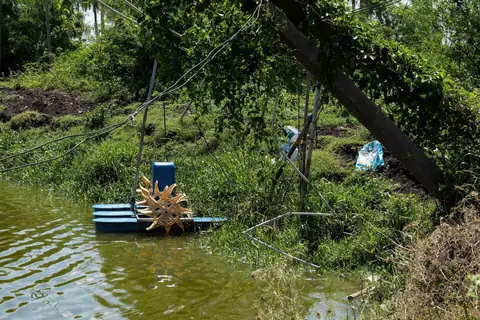 Fisheries